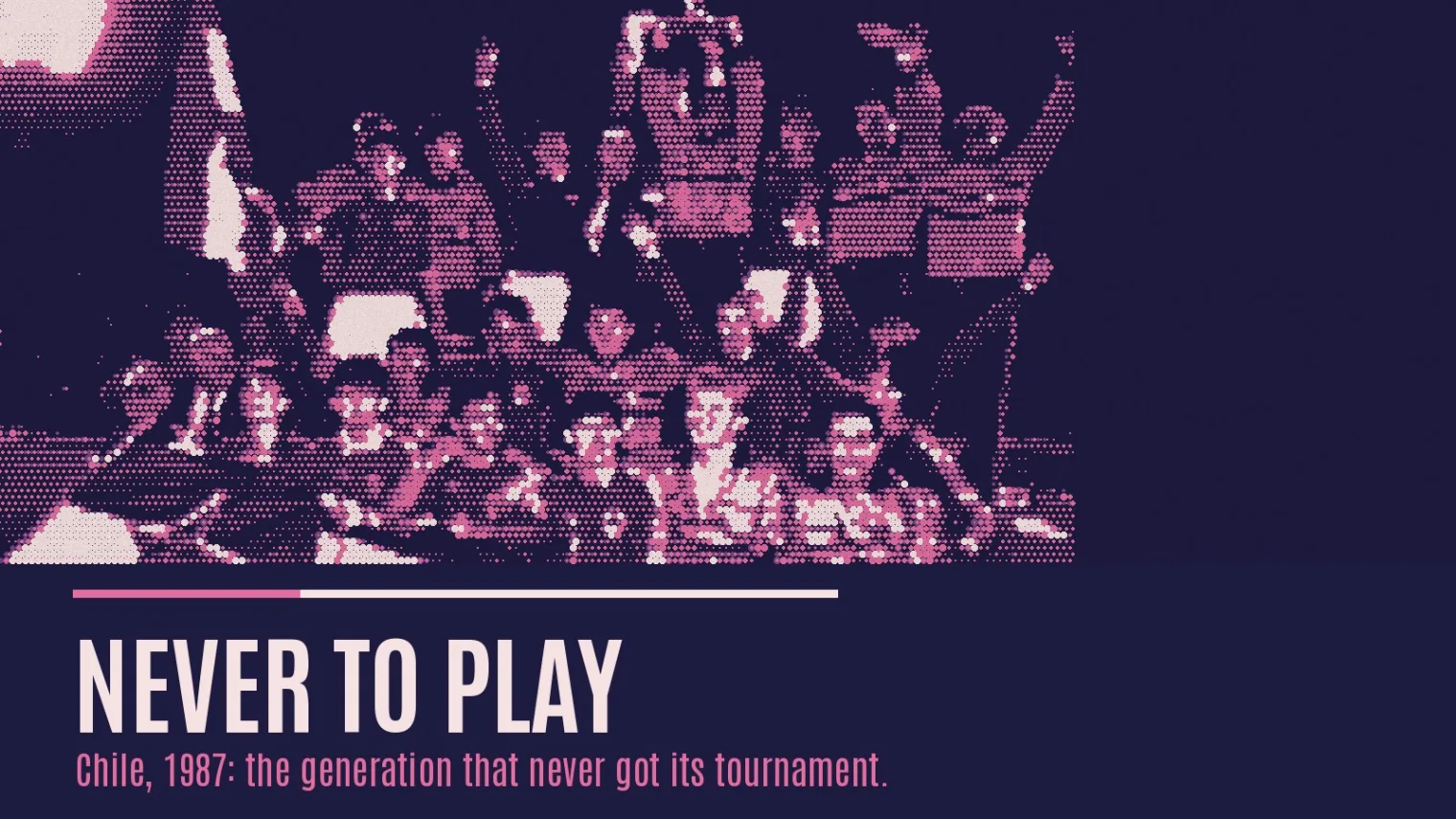
On Sunday, 31 May 1992, in Leksand, in the middle of Sweden, Yugoslavia’s footballers packed up a training camp and went to the airport. Euro 92 was ten days away. They had come to play in it. UEFA, UPI reported from Berne that day, had just “tossed” them out of the tournament and given their place to Denmark, “in accordance with United Nations sanctions placed on the Belgrade government.” The director of the Yugoslav Football Association, Miljan Miljanić, said the players were “in a state of shock.” He called the sanctions “the toughest measure taken in the history of international sport and an aggression against football.”
The day before, in New York, the UN Security Council had adopted Resolution 757. Among the trade bans, the flight bans and the diplomatic measures, paragraph 8(b) required all states to “take the necessary steps to prevent the participation in sporting events on their territory of persons or groups representing the Federal Republic of Yugoslavia (Serbia and Montenegro).” The text is unambiguous. Sweden was about to host a European Championship. Yugoslavia, as far as the Council was concerned, were not to take part in it.
They did not leave at once. “We had to wait two or three days more while they organised a flight to Belgrade,” Slaviša Jokanović later told Sid Lowe. “Then there was a problem with the plane and we couldn’t take off. We waited 10 hours at the airport until they let us leave.” FIFA, the same UPI despatch said, was already preparing to shut them out of qualifying for the next World Cup as well. The final decision would come on the Monday.
Eleven days later, in Malmö, Denmark played England. Jokanović and his teammates should have been there. Two weeks after that, in Gothenburg, Denmark played Germany in the final at Ullevi and won. Jokanović and his teammates could have been there too. “We had a much better side than Denmark,” he said, twenty-eight years on, and the sentence still has an edge on it. “They’re sad memories. The current generation of players won’t play this summer but they’ll get the chance next year; we had the Euros taken away from us and never got it back.”
People have called them the best team never to play. It is a good title, and a dangerous one, because it invites a game that cannot be finished. What can be finished is the record of the side that actually qualified, the year that made them look untouchable, and the speed with which a football team, like the country that had selected it, came to pieces.
A group they were supposed to stroll
The qualifying arithmetic is not romantic, and it does not need to be. In Group 4, Yugoslavia won seven of eight matches, scored 24 and conceded four. Denmark, in second, won six, scored 18 and finished a point behind. Northern Ireland, Austria and the Faroe Islands made up the rest of the section. Only the group winners were supposed to go through. In principle, that was that.
The results have a rhythm once you lay them out. In September 1990, in Belfast, they won 2–0 at Windsor Park, Darko Pančev and Robert Prosinečki scoring. In October, in Belgrade, Austria were beaten 4–1, Pančev scoring three. In November, in Copenhagen, they won 2–0 at a ground packed with 46,600 people, Mehmed Baždarević and Robert Jarni the scorers. The line-ups, preserved by RSSSF, still look like a country: Faruk Hadžibegić of Sochaux at the back, Safet Sušić of Paris Saint-Germain, Jarni of Hajduk Split, Zvonimir Boban of Dinamo Zagreb coming off the bench, Pančev and the Red Star contingent. Boban’s kick at Maksimir, the previous May, had already become a political symbol. It had not yet taken him, or Jarni, or Davor Šuker, out of this team.
Spring 1991 went the same way, with one bruise. At the Red Star stadium on 27 March they put four past Northern Ireland, Pančev scoring three more. On 1 May, in the same ground, Denmark beat them 2–1, Bent Christensen twice, Pančev the reply. It was Yugoslavia’s only defeat in the group. Jokanović, looking back, remembered both legs with Denmark quite clearly. “We had won in Copenhagen, although they beat us in Belgrade.” On 16 May they took the Faroe Islands apart 7–0, and the scorers were a roll-call of the side as it still was: Ilija Najdoski, Prosinečki, Pančev twice, Boban, Zoran Vulić, and Šuker, on as a substitute, for the last. Dražen Ladić came on in goal. That is the last qualifying match in which the Croatian names still appear in the team sheet.
By the autumn they were a different side. In October, the Faroes were beaten 2–0 in Landskrona, Vladimir Jugović and Dejan Savićević the scorers. In November, in Vienna, Austria went down 2–0, Vladan Lukić and Savićević. The line-ups are Serbian, Bosnian, Montenegrin, Macedonian. Boban, Jarni, Šuker, Prosinečki and Ladić are not in them. Jokanović, who by then was in the side himself, did not pretend otherwise. “By the time we reached Euro 92 we were already missing important players.”
Pančev, at the end of it, had ten qualifying goals, the most in the whole competition. UEFA still calls him “The Cobra.” “He scored 10 in qualifying,” Jokanović said. “We could have done something big with the players we still had but a month earlier that team had been even stronger.”
The year they looked untouchable
If there is a reason the calendar still files this story under 1991, it is because that was the year the idea of this team got out of hand, in the best sense. Red Star Belgrade won the European Cup in Bari, a night FBH has already told, and has no business telling again here. Suffice to say that the same names who had been knocking over qualifying groups — Prosinečki, Savićević, Pančev, Jugović, Siniša Mihajlović — were, for one spring, the best club side in Europe, and that the country which had produced them was already dying. FBH has been on that trail in other colours too, up the hill at Juliska with Dukla Prague, another European Cup night from a football world that did not survive in the form that made it. The point, for this story, is simpler. When people say Yugoslavia would have won Euro 92, what they are usually remembering is 1991.
The players were already leaving, because that is what great players from small leagues did, and because the domestic game was becoming impossible. Dragan Stojković was already at Marseille by the first qualifying match in Belfast. Prosinečki went to Real Madrid that June. On 25 June 1991, El País found him in a whirl of a first day: a delayed flight from Belgrade, the nine European Cups in the Bernabéu trophy room, a shirt with the number 2 on it for the photographs, jamón mistaken for prosciutto, a promise to add to the collection. “His first 24 hours in Madrid,” Mábel Galaz wrote, “had been more exhausting than a European Cup match.” It was the same week, as it happened, that Croatia was declaring independence. Football, as usual, had its own calendar, and it did not wait.
Savićević would go to Milan, and FBH has already followed him to the night in 1994 when a different kind of dream died. Pančev, UEFA records, left Red Star for Inter in the summer of 1992, “having been denied the chance to play at the EURO by the break-up of Yugoslavia.” The talent was not in question. The question, by then, was whether there would still be a team for it to belong to.
A manager who could not stay, and a squad that frayed
Ivica Osim had been in charge since 1986. He had taken Yugoslavia to the quarter-finals of the 1990 World Cup, where they lost to Argentina on penalties, a night this piece will not relitigate. He had got them through a qualifying group that was supposed to be the hard part. In 1991 he was also managing Partizan. He was a Sarajevo man, a railwayman’s son, and when the siege of his city began, the job became impossible in a way no football problem is.
He resigned in May 1992, a week or so before the expulsion. “My country doesn’t deserve to play in the European Championship,” he said, in the line Brian Glanville put at the front of his obituary. “On the scale of human suffering, I cannot reconcile events at home with my position as national manager.” He walked out, Glanville wrote, “never to return,” and “did not at any point regret the decision.” The football was already the least of it. He later took jobs at Panathinaikos, at Sturm Graz, and with Japan, and when he died in 2022 the resignation was still the thing everyone reached for, because it was the moment a manager decided that a tournament was not the point.
Pančev pulled out too. Jokanović remembered that, and remembered the mood around the last preparations. “It was a very ugly time. Teams didn’t want to play pre-tournament friendlies against us. We played at Fiorentina, then went to Sweden. There were rumours.” He laughed, a little, at the next bit. “We were the first there, to trick them.” Being in situ did not make them any harder to remove. The last full official match in the record, before the silence, had been on 25 March, a 2–0 friendly defeat by the Netherlands in Amsterdam. Hadžibegić, still captain, was there, with Savićević, Stojković, Jugović, Baždarević and Jokanović among the others. By the time they reached Sweden, even that side had already been thinned again.
“A fortnight in, they banned us. The disappointment was enormous. We wanted to show what we could do but for political reasons we were heading back, feeling awful.” He will not let the sentence sit there on its own. “It was traumatic for many of us. Euro 92 was our first major tournament and many of us we had to wait until we were 30 for another one: in my case, the World Cup in France. It was the same for Pedja Mijatović, [Siniša] Mihajlović, Vladimir Jugović… We were young sportsmen and — without getting too deep into what was happening — we lost that opportunity. But, look, others suffered much more. Our [problems] were sporting; there was so much else happening.”
That last distinction is the only grown-up way to write this story. A football team lost a tournament. A country was at war. The first fact is why there is a piece to write. The second is why the piece cannot pretend the first was the tragedy.
Two weeks, a kitchen, and a trophy that went elsewhere
Denmark had finished second in the same group, which is why they were the side UEFA rang. They had, UEFA later wrote, “just two weeks to prepare after Yugoslavia were barred because of the developing Balkan crisis.” Richard Møller Nielsen, the coach, came back from a domestic chore that has been retold so often it is now part of the folklore. “I should have put in a new kitchen but then we were called away to play in Sweden,” he said after the tournament. “The kitchen is finished now. I had a professional decorator do it.” Michael Laudrup, the best player they had, decided not to take part.
The tournament was already a document of a continent coming apart. The Soviet Union, who had qualified as group winners, took part as the CIS, twelve post-Soviet republics under a temporary name. Germany arrived as a unified team. Yugoslavia, who had also qualified as group winners, were the ones who were not allowed to change kit and carry on. The difference was not sporting. It was Resolution 757, and the fact that this particular successor state had been told it could not send a team to somebody else’s country.
The revised timetable, UPI had already listed it on the day of the ban, gave Denmark England in Malmö on 11 June, Sweden in Stockholm on the 14th, and France in Malmö on the 17th. They began with a 0–0 against England, lost 1–0 to Sweden, and beat Michel Platini’s France 2–1, which was enough to sneak through as runners-up in the group. In the semi-final they took the holders, the Netherlands, to a shoot-out, Peter Schmeichel saving from Marco van Basten. In the final, at Ullevi on 26 June, they beat a newly unified Germany 2–0, John Jensen after 18 minutes, Kim Vilfort after 78. Schmeichel, much later, remembered the feeling arriving only when they were back in Copenhagen, in the town hall. “At this point you’re thinking: ‘Christ, we actually did this — it’s not a dream.'”
It was a genuine miracle, and it has been told a thousand times, usually with the kitchen still in it. Jokanović watched what he could bear. “But a couple of months had passed, a lot had happened, and they arrived relaxed. They only actually won once until the final. But I’ve deleted the tournament from my memory. We couldn’t take part, that’s that. We were banned from qualifiers for USA 94 and Euro 96. People say we could have done many things but we didn’t get the chance.”
The “once until the final” is fair, if you are counting ordinary time in the group stage. It is also the remark of a man who had finished above that Denmark side over eight matches, and who would never get to run the experiment in June. There is no honest way to say what would have happened at Ullevi if Osim’s team, or what was left of it, had still been in the draw. There is only the qualifying record, the list of absentees, and a trophy that went to a very good, very late, very lucky Denmark. Both things can be true. Denmark won it. Yugoslavia never got to find out.
Where they went
The players scattered, as Jokanović said, “across the world,” and friendship, he insisted, “remained even though the team and the country did not.” The map is worth laying out, not as a quiz, but as a picture of a generation that had to finish its career in other shirts.
Savićević went to Milan, and to that night against Barcelona, already told. Pančev, after Inter, eventually played for North Macedonia. In Skopje, UEFA notes, he later opened a café called Devetka — Nine — “in honour of the shirt he wore during his playing career.” Prosinečki, already a Madrid player by the summer of 1991, would, like Boban, Jarni and Šuker, be part of the Croatia side that used Euro 96 to announce a new football nation, another story FBH has already written and will not write again here. Jokanović himself left for Real Oviedo in 1993, later won a league title with Deportivo, and eventually fetched up at Chelsea, slightly too old, by his own admission, for the change in style. “Mario Stanić helped me at Chelsea.” At Oviedo the company included Janko Janković, Nikola Jerkan, and the manager Radomir Antić. “So many stories and I enjoyed it all.”
The younger ones he named — Mijatović, Mihajlović, Jugović — had to wait. When a side calling itself Yugoslavia, now the Federal Republic, Serbia and Montenegro, played again in official friendlies at the end of 1994, the team sheets already read like a Continental tour: Jugović and Mihajlović at Sampdoria, Mijatović at Valencia, Savićević at Milan, Jokanović at Oviedo, Miroslav Đukić at Deportivo, Stojković in Nagoya. They would go on, some of them, to a World Cup in France in 1998, which is a later and different team, and not the one that should have walked out in Malmö. Jokanović played, in his own counting, 64 internationals, “six with the old Yugoslavia, the rest after it disappeared.”
Osim, as we have seen, went on working. The job he had wanted, the last one of a united Yugoslavia, was the one he had to put down. “I must say, I’m still proud that I was the manager of Yugoslavia,” he told the BBC in 2014, in a conversation that was really about Bosnia finding a team of its own. “But it was not my idea to be the last manager — I didn’t know. If I had known, I wouldn’t have gone to Italy and all that. I would have stayed at home — it would have been much better.” Of the resignation itself he was just as clear. “At that time, it was the only thing I could do. No-one made an effort for Bosnia. Europe and the whole world let us fall.”
A title that cannot be proved
“The best team never to play” is the phrase that gets this story commissioned, and it deserves to be handled with a little suspicion. Best is a claim that needs matches. Never to play is the only part that is certain. What the record actually gives us is a qualifying group won at a canter, a European Cup in the same year, a manager who resigned rather than pretend a siege was somebody else’s problem, a UN resolution, a training camp broken up in a Swedish town most of the players had never heard of, and a Denmark side that had two weeks to get ready and somehow won the thing.
Jokanović is entitled to his view that they were better than Denmark. He had played them twice in qualifying, and he had shared a dressing room with Pančev, Savićević, Stojković and the rest. He is also entitled to the sentence he put after it, the one that should close any telling of this story that wants to stay honest. Their problems were sporting. Other people were dying.
The rest is absence. No walk-out in Malmö on 11 June. No afternoon at Ullevi on the 26th. No way of knowing whether Jensen still scores, or whether Schmeichel still has the night of his life, or whether a side that had already started to come apart would have had enough left to do what the folklore says they would have done. The current generation, as Jokanović put it, get the next tournament. This one never did. They had the Euros taken away from them, and they never got them back. That is not a legend. It is a fixture list with a hole in it, and a group of players who spent the rest of their careers walking around it.