


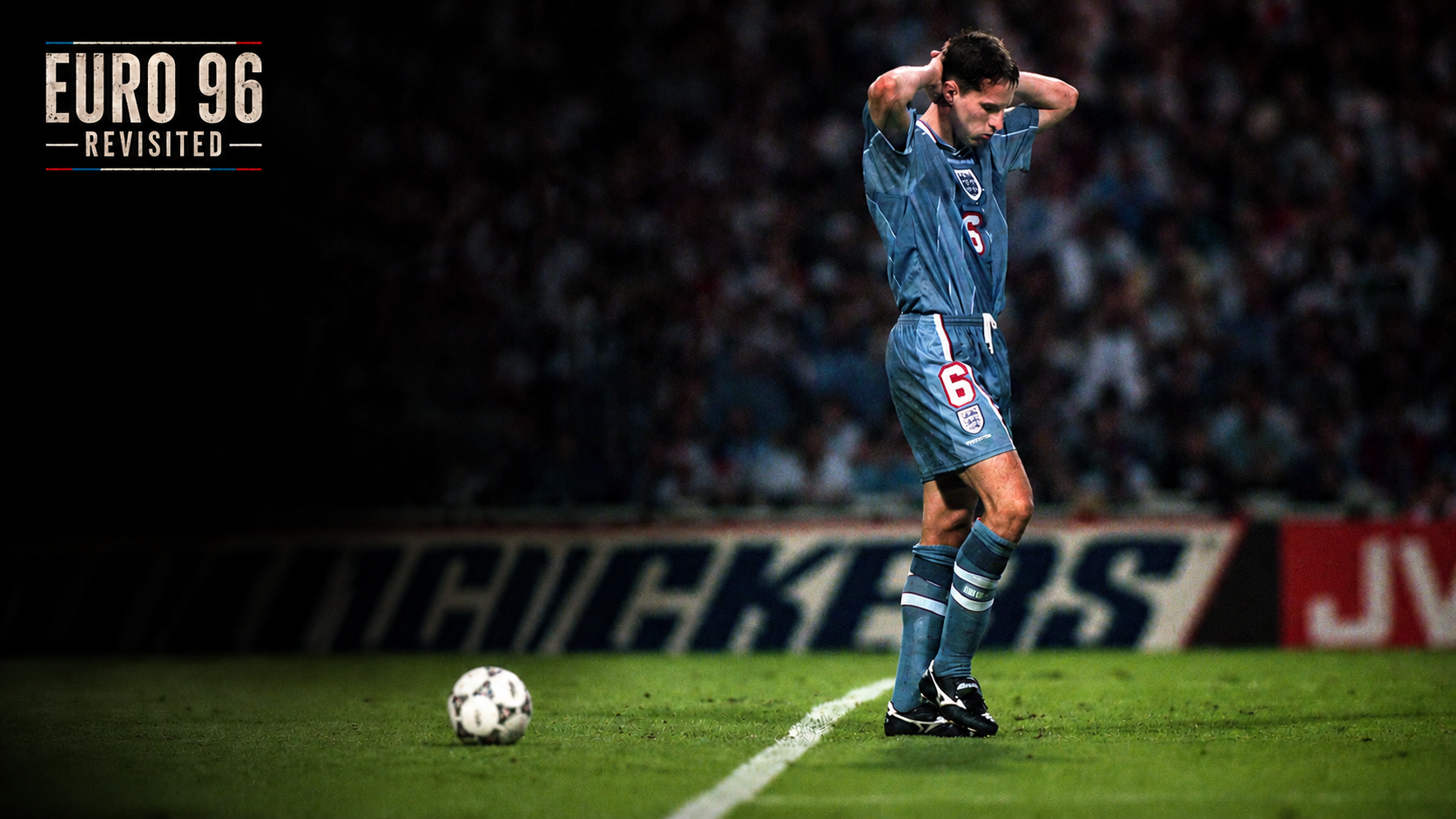
The Monk in Bali
Gareth Southgate had gone to Bali to disappear.
That was the idea, at least.
After Wembley, after Germany, after the walk from the halfway line and the weak side-foot into Andreas Köpke’s gloves, he and Alison travelled as far from English football as seemed possible. No newspapers outside the door. No television panels. No strangers in pubs asking why he had not hit it harder. No one singing Three Lions with the wrong kind of grin.
They found a temple surrounded by lakes and volcanoes.
There are places that appear to exist outside ordinary time. A Balinese temple, far from the noise of Wembley and the English summer, should have been one of them. It should have offered a few hours in which Gareth Southgate could be nobody in particular. Not England defender. Not the man who missed. Not a national punchline before the phrase had even settled into usage.
Then a monk recognised him.
“You Gareth Southgate,” he said.
A pause.
“You England penalty drama.”
It is funny because it is absurd. It is painful because it is true.
As The Guardian later recalled, Southgate had travelled thousands of miles and still found the penalty waiting for him. His name had become portable. His failure had crossed borders faster than he had. What happened at Wembley was no longer confined to a match, a tournament, a dressing room or a nation. It had become a story attached to him, one that others could summon in a sentence.
That is the thing about certain sporting moments. They do not end when the ball stops moving.
Some goals become shared joy. Some misses become private rooms from which the player cannot easily leave. Southgate’s penalty was not simply the last English kick of Euro 96. It became the moment that revealed how poorly English football understood failure, how eagerly it turned disappointment into identity, and how long a nation could ask one man to carry its unease.
The article is not really about a penalty.
It is about what happens when a football culture learns to remember pain more clearly than it learns to recover from it.
England’s Favourite Kind of Failure
English football has often been remarkably forgiving towards its own disappointments.
Not immediately. The first hours after defeat are usually raw, angry and accusatory. Phone-ins search for villains. Newspapers locate scapegoats. Supporters replay moments in their minds, convinced that if a shot had sat half a yard lower or a cross had travelled six inches further, history might have bent in another direction.
Then time begins its work.
Defeat is softened. The sharp edges are rubbed away. Pain becomes anecdote. Regret becomes folklore. Failure, if accompanied by enough sincerity and visible suffering, can eventually be elevated into something almost noble.
By the summer of 1996, English football already possessed a well-developed mythology of honourable disappointment.
The most powerful chapter had been written six years earlier in Turin.
England’s defeat to West Germany in the semi-finals of the 1990 World Cup had initially felt devastating. Bobby Robson’s side had come within a penalty shootout of reaching a first World Cup final since 1966. Stuart Pearce and Chris Waddle became the faces attached to the heartbreak, their misses replayed as West Germany advanced.
Yet the national response that followed was striking. When the squad returned home, crowds gathered at Luton Airport. The players were welcomed not as failures but as heroes. Tears shed in Turin had become proof of commitment. Gazza’s sobs entered English sporting iconography. Pearce’s anguish became evidence of authenticity.
England had lost, but it had lost properly.
Pearce himself never entirely accepted the bargain.
While much of the country began polishing Turin into a cherished memory, he remained trapped inside it. Public forgiveness did little to ease private guilt. He wanted another opportunity, not sympathy. Returning to Nottingham Forest physically exhausted and emotionally hollowed out, he asked Brian Clough for two weeks away from football.
Clough refused.
It was an entirely predictable response from a manager formed in another era. Football in the early 1990s had almost no language for emotional trauma. There were injuries. There was fatigue. There was form. There was pressure. There was no accepted vocabulary for psychological wounds.
If you were tired, you trained.
If you were hurting, you drank.
If you were vulnerable, someone gave you a nickname.
Pearce built armour around himself. “Psycho” became persona and protection. It discouraged questions. It turned private pain into public aggression. His self-punishment would continue for six years until the penalty shootout against Spain at Wembley offered a chance to reclaim something that had been lost in Turin.
England celebrated the scream.
They understood that form of redemption.
The clenched fists. The roar. The face twisted by six years of unfinished business. That was suffering made theatrical. That was forgiveness earned in a language English football recognised. That moment has already been explored in our piece on Stuart Pearce, Euro 96 and the scream that let England breathe again.
The problem was that England had become far better at romanticising failure than recovering from it.
By Euro 96, football occupied a different cultural place from the game Pearce had inhabited in Italy. The Premier League was reshaping the sport’s economics. Britpop sat atop the charts. Football shirts appeared in fashion magazines. Three Lions had become an unofficial soundtrack for a country cautiously rediscovering optimism after years of hooliganism, stadium disasters and international embarrassment.
Euro 96 was intended to be a celebration of a modern, confident England, a theme that sits at the heart of our wider Euro 96 Revisited archive.
For a few intoxicating weeks, it felt exactly like that.
England played with imagination. Terry Venables looked liberated rather than burdened. Wembley rediscovered its voice. The demolition of the Netherlands remains one of the most exhilarating performances ever produced by an England side at a major tournament. Against Spain, Pearce finally escaped Turin.
The nation exhaled with him.
But beneath the celebration sat an unresolved contradiction.
England knew how to commemorate sporting heartbreak. It knew how to create heroes from defeated teams. It knew how to transform disappointment into mythology. What it had never really learned was how to process failure without allowing it to become part of someone’s identity.
On the evening of 26 June 1996, that burden quietly shifted.
Stuart Pearce had spent six years trying to escape a penalty taken in Turin.
Another defender was about to discover that Wembley could cast an even longer shadow.
The Wrong Man Walking
It is easy, with the benefit of hindsight, to imagine Gareth Southgate arriving at Euro 96 already burdened by destiny. The reality was rather more ordinary.
He was 25 years old. He had made his England debut only six months earlier. Euro 96 was his first major tournament and, in many respects, his breakthrough. Venables trusted him, but Southgate was not one of the established stars around whom the summer revolved.
Those belonged elsewhere.
Alan Shearer carried the goalscoring burden, a role explored in our article on Shearer and the modern England centre-forward. Paul Gascoigne remained the tournament’s emotional centre of gravity, as discussed in our piece on Gascoigne and the summer England loved him back. Teddy Sheringham was enjoying the best football of his international career. David Seaman brought assurance behind them. Pearce had become the story of personal redemption.
Southgate was simply doing his job.
He was doing it exceptionally well.
Venables had prepared obsessively for the Netherlands. He altered shape. He studied movements. He gave his defenders specific problems to solve. Southgate’s task was to help control Dennis Bergkamp, a forward whose danger came not only from what he did on the ball but from where he chose to receive it.
It was not glamorous work.
Bergkamp drifted. Southgate followed, judged, passed on, held his position, resisted the temptation to chase too far. Concentration mattered more than confrontation. Reading danger mattered more than appearing busy. By the end of England’s 4-1 victory, Southgate had delivered one of those defensive performances that only seem simple because the player has made the complicated parts invisible.
By the semi-final against Germany, he had played every minute of England’s tournament.
The match itself became a long argument with fate.
Shearer headed England in front.
Stefan Kuntz equalised.
Darren Anderton struck the post in extra time after Steve McManaman’s cut-back, the ball touching German goalkeeper Andreas Köpke before bouncing back into play. Then, a few minutes later, Gascoigne lunged towards Alan Shearer’s cross in front of goal and arrived a fraction too late. Tottenham’s own retrospective on Anderton’s Euro 96 semi-final story captures the cruelty of that extra-time period.
It remains one of English football’s great counterfactuals.
Had Gascoigne connected, Euro 96 might now be remembered as England’s finest modern triumph rather than its most seductive near miss. Venables might have stayed. Southgate’s name might occupy a different corner of the national memory.
Instead, Germany survived.
Penalties arrived.
England’s relationship with shootouts was still underdeveloped. Turin had happened only six years earlier, but six years was not enough time to erase the images of Pearce standing motionless and Waddle sending his effort over the bar. The shootout victory over Spain had eased some wounds, but it had not changed attitudes.
Penalties remained something to endure rather than master.
Venables had prepared for systems.
He had prepared for opponents.
He had prepared for Bergkamp.
He had prepared for Germany.
Yet when England reached the one situation most likely to decide their tournament, they had almost nothing.
No process.
No routine.
No psychology.
No rehearsed emotional response.
Just men volunteering because men were supposed to volunteer.
England’s first five penalty takers did their work. Shearer scored. Platt scored. Pearce scored. Gascoigne scored. Sheringham scored. Germany matched them. Ten penalties. Ten goals.
Sudden death.
Only then did Venables ask Southgate whether he would take the sixth.
There are questions that are not really questions.
Southgate later understood that there had been one acceptable answer. Refusing would have felt cowardly. Hesitating would have invited doubt. Professional football in 1996 had little patience for uncertainty. If you were brave enough, you stepped forward. If you were a professional, you accepted responsibility.
So he said yes.
Bryan Robson sought reassurance. Had Southgate taken penalties before?
Southgate answered affirmatively.
The truth was thin.
His penalty career amounted largely to a missed effort for Crystal Palace several seasons earlier. He was not a designated taker. He had no settled routine. He had not practised this moment throughout the tournament. He had not visualised the walk, the whistle, the goalkeeper, the silence.
He had simply said yes.
Southgate was not walking towards the penalty spot because he was England’s sixth-best taker.
He was walking towards it because he was decent enough to volunteer when the culture demanded decency in its narrowest, most punishing form.
And once he had said yes, there was no way back.
The Moment Wembley Went Quiet
There are sporting moments that survive because they are replayed endlessly. Others endure because people remember exactly where they were standing when they happened.
Gareth Southgate’s penalty belongs to the second category.
Most England supporters can still reconstruct the scene with uncomfortable clarity. The old Wembley floodlights. The white shirts gathered near the halfway line. The German players watching with the cold patience of men who seemed born for this ritual. Andreas Köpke bouncing lightly on his line. The strange stillness that settles over a stadium when tens of thousands of people understand that one touch of a football might determine how an entire summer is remembered.
Southgate’s walk was long because all penalty walks are long.
But his carried an additional cruelty.
He had spent the tournament solving problems through positioning, anticipation and reading the game. None of those qualities mattered now. Defenders rarely grow up dreaming about taking the kick that sends their country into a major tournament final. They dream about heading crosses clear, making tackles, blocking shots, stopping other people’s moments from happening.
Now he had to create one of his own.
As he approached the penalty area, another thought intruded.
People knew.
Not simply who he was.
What he was.
The inexperienced one.
The unexpected one.
The defender who was not supposed to be here.
He looked up.
Köpke appeared enormous.
Goalkeepers often do in moments like these. Rational dimensions disappear beneath pressure. Spaces shrink. Angles distort. Twelve yards becomes further than it has any right to be.
Southgate placed the ball down.
There was no established pause.
No routine.
No breath that belonged to him.
Only noise, expectation, adrenaline and the desire to end the ordeal.
The strike lacked conviction almost as soon as it left his boot.
It travelled low towards Köpke’s left.
The German goalkeeper moved decisively and pushed it away.
For a fraction of a second, Wembley seemed to lose its power supply.
The roar that had followed England through the summer disappeared. The anticipation drained from the stadium. Southgate did not need to look around to understand what had happened. Germany’s players knew. England’s players knew. Everyone watching at home knew.
Andreas Möller stepped forward and scored.
Then came the celebration English memory has never quite forgiven. Chest out. Arms wide. Chin lifted. The victorious strut of a player who knew he had just closed the door.
For Andy Woodman, watching in the stands beside Southgate’s fiancée Alison, the sensation was almost physical.
Everything went dead.
People cried around them. Sheringham’s father and Gary Neville’s father offered quiet consolation. Alison wept. Woodman later described the feeling as being treated like the next of kin, as though they had suddenly become a small family receiving bad news in public.
Southgate himself would remember the responsibility.
Emerging from the dressing room, he gave the sentence that would follow him for years.
“I feel I’ve let the whole country down.”
At twenty-five, he believed it.
Perhaps millions watching at home believed it too.
England had spent the previous month rediscovering itself. Football was fashionable again. The soundtrack of Three Lions echoed from pubs, cars and summer barbecues. The country had convinced itself that this tournament represented renewal, confidence and belonging, a theme also explored in how Euro 96 became a national conversation before social media.
One weak penalty did not destroy that story.
But for Gareth Southgate, it fundamentally altered his own.
England had spent Euro 96 discovering itself.
Southgate, in the space between placing a ball on the spot and watching it return from Andreas Köpke’s gloves, lost sight of himself completely.
Six in the Morning
The immediate aftermath unfolded in much the same way football dealt with emotional pain throughout the 1990s.
There was no debrief.
No quiet room.
No specialist waiting to help a young player understand what had happened.
There was a bus back to the hotel and a bar that stayed open until dawn.
First came the awkward consolations.
John Major attempted comfort.
He called him Gary.
It was a small mistake, but it contained something oddly perfect. The Prime Minister had watched the kick. The country had watched the kick. The man who had taken it still seemed half-known, a figure already being turned into symbol before the person himself had been properly recognised.
Liam Gallagher was there too, offering a rougher form of reassurance. That detail belongs entirely to the summer. Politicians, musicians, footballers and television personalities had all become part of the same national stage. Euro 96 belonged as much to British popular culture as to sport. Even Southgate’s devastation had celebrity witnesses, another sign of the same football-cultural overlap discussed in our article on Britpop, Euro 96 and the summer football became cool.
Back at the hotel, England’s players did what footballers of that period tended to do.
They drank.
The session lasted until around six in the morning.
It was not therapeutic. It was not coherent. It was football’s old coping system, fuelled by alcohol, gallows humour and the urgent need to make the wounded man laugh before the silence became unbearable.
Tony Adams tried to puncture the tension.
“Bleedin’ German,” he joked.
“You know you’ve let us down.”
It was meant affectionately. Dressing rooms often protect their own through cruelty softened just enough to count as love. The joke was an attempt to pull Southgate back into the group, to tell him he had not been exiled.
But it also showed the limit of the culture around him.
Humour could reconnect.
It could not repair.
Southgate spent much of the night talking to Venables and Pearce.
Pearce understood better than anyone.
He knew the replay. He knew the self-punishment. He knew the feeling of becoming the man attached to one kick. He also knew the value of armour. Pearce had built a persona sturdy enough to absorb the blows. “Psycho” could carry things Stuart Pearce might not have wished to expose.
Southgate had no such cover.
He was thoughtful, analytical, more likely to internalise criticism than repel it. He wanted to understand things. He wanted them to make sense. That quality would later become central to his management, but in 1996 it left him exposed.
Later, Andy Woodman found him in the players’ bar.
Woodman had known Southgate since their Crystal Palace apprenticeship. Their friendship contained the bluntness of men who had grown up together inside football’s unforgiving ecosystem. The pair’s unlikely football bond was later covered by The Independent.
He sat down.
Southgate looked at him.
Woodman offered the only analysis that could help.
“Crap penalty, Woody.”
Southgate laughed.
It was probably the first proper laugh of the night.
That line mattered because it reduced the event to its basic football truth. No curse. No destiny. No national psychodrama. Just a poor penalty, badly struck.
But football rarely allows events to remain that simple.
By sunrise, Southgate was no longer merely a defender who had enjoyed an excellent first major tournament before making one costly mistake.
He had become something else.
He had become a symbol.
And symbols have a habit of living much longer than footballers do.
Pizza, Paper Bags and Public Punishment
By the autumn of 1996, Gareth Southgate had discovered something English football supporters rarely admit about themselves.
They are often generous towards failure.
But they can be deeply prescriptive about how failure should be lived.
There is an unwritten code governing sporting disappointment in England. It permits grief. It permits tears. It permits visible suffering. It may even permit eventual redemption. What it struggles to tolerate is an athlete taking ownership of the narrative before the public feels ready to let go.
Southgate learned this lesson the hard way.
For weeks after Euro 96, the penalty followed him everywhere. Reporters camped outside his mother’s house. Newspapers offered money for interviews. Strangers shouted from cars. Complete strangers felt entitled to ask why he had not struck the ball harder, why he had not chosen another corner, why he had been the man to step forward at all.
Even home could not protect him from football’s forensic simplicity.
“Why didn’t you belt it?” his mother asked.
It was perhaps the most English response imaginable.
No psychology.
No discussion of pressure.
No attempt to map the emotional geography of a semi-final penalty at Wembley.
Just the assumption that a firmer kick might have solved everything.
Southgate was searching for a way to regain control over a story that was rapidly ceasing to belong to him.
Then came Pizza Hut.
Few football advertisements have aged quite as strangely.
The commercial featured Stuart Pearce and Chris Waddle sitting in a Pizza Hut restaurant opposite a figure wearing a brown paper bag over his head. Pearce, whose own miss in 1990 had become part of English football’s emotional furniture, teased the anonymous diner.
“It only took me six years to get over it.”
The bag was removed.
It was Southgate.
“Thanks a lot, boys,” he smiled. “I feel much better now.”
He stood up, walked forward and collided headfirst with a wall. The advert has since become one of the strangest cultural artefacts of English football’s penalty complex, and was revisited years later by the Evening Standard.
At first glance, the advert appears little more than mid-1990s self-deprecation. It belongs to the same cultural moment that produced Fantasy Football League, laddish magazine culture and the sense that almost anything could be transformed into a joke if delivered with enough irony.
But the commercial also reveals something more uncomfortable about the relationship between athletes and the public.
Southgate was doing something surprisingly modern.
He was trying to reclaim ownership of his failure.
He was trying to laugh before others laughed at him.
He was trying to dismantle shame by exposing it.
England was not entirely ready.
For many, Euro 96 was still too raw. The semi-final defeat remained unfinished business. Southgate reducing it to a pizza advertisement felt inappropriate, even disrespectful. The criticism reflected an unspoken expectation. England expected its sporting failures to suffer properly. Public grief had to follow accepted rituals.
Pearce had fulfilled the role.
He had punished himself.
He had waited six years.
He had screamed into the Wembley night after scoring against Spain.
That was redemption in a language English football understood.
Southgate offered something else.
Not punishment.
Self-awareness.
Not silence.
Humour.
Not stoicism.
Visible vulnerability.
England did not quite know what to do with that.
Years later, Southgate would warn other penalty victims to keep away from the adverts. By then, he understood how difficult it can be for athletes to commercialise moments of personal pain.
Football supporters often say they forgive.
What they often mean is that they decide when forgiveness becomes acceptable.
Gareth Southgate would spend much of the next twenty years waiting for England to decide that his sentence had finally been served.
The Penalty That England Inherited
There is a tendency to talk about England’s failures in penalty shootouts as though they represent an enduring national flaw, something innate and immutable, woven into the fabric of English football alongside muddy pitches, suspicious tabloids and unrealistic expectations.
The evidence suggests otherwise.
English players are not uniquely poor penalty takers. The mechanics of striking a stationary ball from twelve yards are not substantially different in London, Milan, Madrid or Munich. The difference has often been the story surrounding the kick.
By the late 1990s, England had begun constructing a narrative from which it became increasingly difficult for players to escape. Turin was no longer simply a semi-final lost to West Germany. It was the origin story of English fragility. Euro 96 was no longer simply a wonderful tournament that ended one game too soon. It became confirmation.
The curse had returned.
The mythology thickened with every subsequent tournament.
In Saint-Étienne in 1998, David Batty’s saved penalty against Argentina appeared to validate the fears born in Turin and reinforced at Wembley. At Euro 2004, David Beckham’s miss against Portugal and Darius Vassell’s failure seemed to prove that talent offered little protection. Two years later, in Germany, Frank Lampard, Steven Gerrard and Jamie Carragher all missed in another quarter-final defeat to Portugal.
Each generation inherited more than penalties.
They inherited headlines.
They inherited montages.
They inherited commentators lowering their voices as extra time drifted towards its inevitable conclusion.
They inherited the certainty that something bad was probably about to happen.
That certainty mattered.
By the early years of the twenty-first century, England’s players were not simply taking penalties against opposing goalkeepers. They were taking them against Pearce in Turin. Against Waddle watching his effort disappear over the bar. Against Southgate at Wembley. Against Beckham in Lisbon. Against Gerrard in Gelsenkirchen.
Each miss added weight to the next kick.
Southgate understood this because he had lived inside the mythology itself.
He understood what it meant to become shorthand for disappointment. He understood what it meant for one action to eclipse years of excellent performances. He understood the exhaustion of answering the same question, hearing the same joke and revisiting the same few seconds of footage.
For a long time, he struggled to escape it.
He later admitted that he could not listen to Three Lions for years because the tournament’s joy had become entangled with his own humiliation. A song written to celebrate English hope had become attached to the worst moment of his professional life.
Perspective arrived slowly.
Thousands of letters reached him after Euro 96. Most were supportive. Some were profoundly moving. One came from the babysitter of a child killed in the Dunblane primary school massacre earlier that year. Others came from children and families dealing with challenges immeasurably greater than a missed kick at Wembley. Several of these details were later recounted in FourFourTwo’s account of how the Euro 96 miss shaped Southgate.
Southgate began to understand that shame thrives on distortion.
It convinces people that a single event defines them.
It narrows the world until only one moment appears to matter.
The letters widened the frame.
Football mattered.
It did not matter that much.
Eventually, he found comfort in Theodore Roosevelt’s famous words about the man in the arena. The passage mattered because it changed the angle from which Southgate could view himself.
For years, he had been the man who missed.
Gradually, he could also see himself as the man who stepped forward.
The man who said yes.
The man who accepted responsibility.
The man who failed publicly and then had to continue living.
That distinction did not erase the penalty.
It made it carryable.
Learning to Carry It
By the time Southgate accepted the England manager’s job in 2016, he was no longer simply a former international defender who had missed a penalty at Wembley.
He had become the man most associated with England’s inability to escape them.
It was an irony difficult to ignore.
England had just endured one of the most humiliating defeats in their modern history. The loss to Iceland at Euro 2016 was not another honourable failure. It contained none of the romance of Turin, none of the near-miss quality of Wembley, none of the sympathy attached to losing a shootout against a heavyweight. It felt chaotic, ill-disciplined and directionless. Roy Hodgson had resigned. Sam Allardyce’s reign lasted one match.
The national team felt exhausted.
More significantly, it felt emotionally exhausted.
For years, England had behaved as though pressure was something to endure rather than manage. Players spoke about expectation. They discussed fear of failure. They acknowledged the burden of representing their country. Yet little within the structure of the national team appeared designed to help them navigate those realities.
Southgate knew what happened when players were left alone with disappointment.
He knew what it was like to spend years hearing the same jokes, answering the same questions and watching the same footage replayed as shorthand for an entire career. He knew how quickly football could reduce a person to a moment. More importantly, he understood how damaging it could become when athletes began to believe that reduction themselves.
One of the most significant appointments of his tenure came in 2017, when Dr Pippa Grange entered the England set-up as Head of People and Team Development.
To previous England generations, the role might have sounded alien.
Southgate embraced it.
This was a man who had grown up in dressing rooms where vulnerability was hidden behind pints, nicknames and sarcasm. A man who had spent twenty years carrying a missed penalty because football in 1996 possessed almost no vocabulary for discussing emotional pain.
England’s new environment sought to be different.
Players spoke more openly.
Mistakes were discussed rather than buried.
Pressure was acknowledged rather than denied.
Most importantly, penalties stopped being treated as supernatural events.
Southgate had lived through an era in which shootouts were routinely described as lotteries. He knew from personal experience how dangerous that language could be. If penalties were governed by fate, players approached them hoping to survive. If penalties were skills performed under pressure, they could be prepared for, practised and improved.
England began rehearsing them properly.
Not casually.
Not at the end of training while players waited for lunch.
Systematically.
Goalkeepers were studied.
Takers established routines.
The walk from halfway was considered.
Breathing mattered.
Timing mattered.
Decision-making mattered.
The objective was not to guarantee success. That would have been impossible. The objective was to remove helplessness. Southgate’s belief that penalties were not a lottery was central to England’s preparation, as detailed by The Guardian after England’s 2018 shootout win over Colombia.
Southgate was trying to give England’s players something he himself had not possessed on 26 June 1996.
A process.
When England met Colombia in the last sixteen of the 2018 World Cup, history appeared ready to repeat itself.
Harry Kane scored.
Yerry Mina equalised.
Extra time passed.
Penalties arrived.
Jordan Henderson missed.
Across England, millions felt the old sensation return. Turin. Wembley. Saint-Étienne. Lisbon. Gelsenkirchen. Kyiv. The ghosts assemble quickly when they know the route.
This time, England did not collapse into the story.
Jordan Pickford saved from Carlos Bacca.
Eric Dier scored.
England had won a World Cup penalty shootout for the first time.
The celebrations were understandably euphoric. Yet one image from the evening remains more revealing than the rest.
Amid the chaos, Southgate walked towards Mateus Uribe, whose effort had struck the crossbar. He placed an arm around the Colombian midfielder and offered consolation. The gesture was widely noted, including in The Guardian’s reflection on failure and decency.
There was no triumphalism.
No revenge.
Only recognition.
Southgate knew that expression. He knew the silence around a player who has just missed. He knew the long flight home. He knew the questions, the replayed footage, the years.
Perhaps that was always the point.
England did not need Southgate because he had escaped his penalty.
England needed him because he had not.
He had simply learned how to carry it.
The Penalty That Never Left
Years later, Southgate would return to the story of the monk in Bali.
It stayed with him because of its absurdity.
Here he was, a young man trying to escape. He had travelled thousands of miles from Wembley. Away from newspapers. Away from television. Away from friends asking if he was all right and strangers asking why he had not belted it. He and Alison had deliberately sought somewhere quiet, somewhere ancient, somewhere seemingly disconnected from the noise of modern football.
Then the monk recognised him.
For years, Southgate treated the encounter as an amusing anecdote. Beneath the humour sat a more uncomfortable truth.
Some sporting moments cannot be outrun.
Footballers are encouraged to move on. Managers talk about drawing a line under defeats. Supporters insist that players should forget mistakes and focus on the next game. Professional sport often demands a kind of emotional efficiency that bears little resemblance to how people actually experience disappointment.
Some failures fade.
Others settle in.
They become part of the furniture.
Euro 96 never really left Gareth Southgate.
It was there when people shouted from passing cars.
It was there when he heard Three Lions.
It was there when strangers introduced him to their children.
It was there whenever England approached another shootout.
It was there because England had allowed a single missed penalty to become much more than a missed penalty.
It had become a shorthand for anxiety.
A metaphor for expectation.
A story passed between generations of supporters and players alike.
That is why Southgate’s story still matters. Not because England require another tragic hero from Euro 96. Not because supporters enjoy revisiting old wounds. It matters because most people, at some point, discover that they cannot entirely escape the worst moment of their professional lives. They carry it into new jobs, new relationships and new versions of themselves. They revisit conversations they wish they had handled differently. They replay decisions they wish they could remake.
Time does not erase those memories.
It changes the relationship we have with them.
England eventually stopped seeing Gareth Southgate solely as the defender whose penalty Andreas Köpke saved. Supporters saw the manager who altered the culture around the national team. The coach who understood that bravery is not the absence of fear, but the willingness to act despite it. The older man who crossed a pitch in Moscow to comfort a devastated Colombian because he knew exactly what the next few years might feel like.
Yet even that does not quite complete the story.
The monk in Bali did not ask about Crystal Palace.
He did not ask about Middlesbrough.
He did not ask about England reaching a World Cup semi-final.
He did not ask about Moscow.
He asked about one kick.
Perhaps every football nation carries a handful of moments that refuse to loosen their grip on the collective imagination.
For England, Euro 96 remains one of them.
It gave the country one last analogue summer.
It also gave English football a wound that took a generation to understand.
The strange thing is that the person best equipped to heal it turned out to be the man who made it hurt in the first place.
