


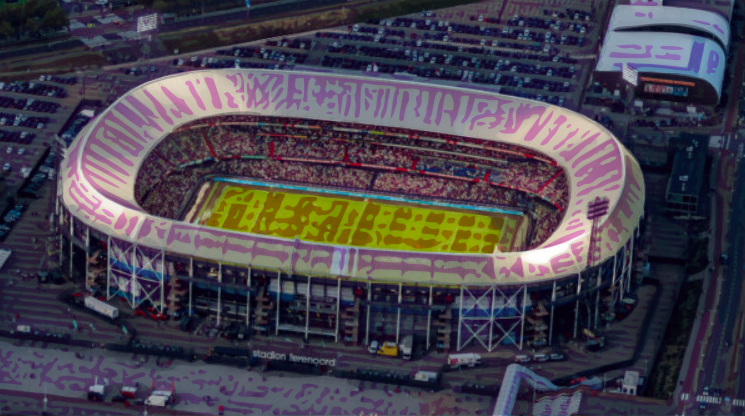
1. Introduction: The Heart of Rotterdam
Nestled in the vibrant city of Rotterdam, De Kuip stands as one of football’s most iconic landmarks, a stadium that resonates deeply within the hearts of Feyenoord supporters and the broader Dutch football community. Known officially as Stadion Feijenoord, De Kuip’s grandeur extends beyond its physical presence. It is a stage where history has unfolded, where the roar of passionate fans has echoed through its tiers, and where the pride of Rotterdam is felt with every match.
For nearly a century, De Kuip has played a pivotal role in shaping the narrative of Dutch football. As the home ground of Feyenoord, one of the country’s most storied clubs, the stadium has witnessed moments of triumph, heartbreak, and everything in between. From the early days of its construction to the electric atmosphere it still generates today, De Kuip’s significance cannot be understated. It is more than just a football arena; it is a symbol of the city’s working-class roots, its resilience, and its deep-seated love for the game.
In a country where football is as much about culture as it is about sport, De Kuip has earned its place alongside other great venues, such as Ajax’s Johan Cruyff Arena. While the latter represents the modern evolution of Dutch football, with its sleek design and high-tech amenities, De Kuip is a reminder of a different era. Its classic bowl shape, open-air stands, and close proximity to the pitch create an atmosphere that is hard to replicate. For many, De Kuip is where football feels most alive – raw, unfiltered, and pulsing with emotion.
Rotterdam’s football heritage runs deep, and De Kuip is at the very heart of it. From its inception, the stadium was designed not just to host matches, but to be a beacon for the city’s footballing ambitions. Feyenoord, with its rich history of domestic and international success, has made De Kuip a fortress, a place where opponents tread cautiously and where fans, draped in red and white, chant with unwavering loyalty. The connection between Feyenoord and De Kuip is a relationship that few clubs and their home grounds share so intimately. It is a bond forged over decades, strengthened by shared moments of glory and perseverance.
De Kuip’s cultural impact stretches beyond Feyenoord’s success. The stadium has become synonymous with Rotterdam’s identity, a symbol of the city’s industrial grit and communal spirit. It stands as a contrast to the more cosmopolitan air of Amsterdam and the Johan Cruyff Arena, offering a glimpse into a different side of Dutch football. Here, in the streets surrounding De Kuip, the energy is palpable on matchdays. Local businesses thrive, and the community gathers, not just for the football, but for what De Kuip represents – a meeting point for shared hopes, dreams, and aspirations.
In the landscape of European football, De Kuip holds a special place. Its historic significance, both for Feyenoord and Dutch football as a whole, makes it more than just a stadium. It is a living monument, a place where past, present, and future collide, where the spirit of the game is as much about the people in the stands as it is about the players on the pitch. Whether it’s hosting a crucial KNVB Cup final or a thrilling European clash, De Kuip continues to leave an indelible mark on all who step through its gates.
This introduction to De Kuip is just the beginning of a journey through one of football’s most cherished arenas, a journey that will explore its history, its role in the rise of Feyenoord, and its enduring legacy as a cornerstone of Dutch football.
2. The Genesis of De Kuip: From Vision to Reality
De Kuip’s story begins in the early 1930s, a time when Feyenoord, like many ambitious clubs across Europe, sought to elevate their stature through a modern stadium. The visionary behind this grand project was Leendert van der Vlugt, an architect inspired by functionalism and modernist principles. His dream was to create a football arena unlike any other in the Netherlands – one that could accommodate tens of thousands of spectators while offering every fan an unobstructed view of the pitch. The design was revolutionary for its time, featuring a two-tier structure with stands close to the field, creating an intimate, intense atmosphere.
However, constructing such a monumental stadium in the midst of economic challenges proved no easy feat. The 1930s brought financial difficulties, and yet, through perseverance and determination, De Kuip rose from the ground. When it officially opened in 1937, the stadium immediately set a new standard in Dutch football, a testament to both van der Vlugt’s architectural genius and Feyenoord’s ambition. De Kuip was more than a football ground – it was a symbol of Rotterdam’s resilience, a city rebuilding itself in tough times.
3. A Fortress for Feyenoord: The Club’s Love Affair with De Kuip
From the moment the gates of De Kuip first opened, Feyenoord and their fans found a home. Over the years, De Kuip has become synonymous with Feyenoord’s most cherished memories. The roar of the crowd, the flags waving in the wind, and the deafening chants have made this ground one of the most intimidating places for opponents to visit.
Feyenoord’s history is deeply intertwined with De Kuip, and some of their greatest triumphs have been forged here. League titles, KNVB Cup victories, and European conquests are all part of this ground’s rich tapestry. The 1970 European Cup Final, where Feyenoord defeated Celtic to become the first Dutch club to lift the trophy, stands out as one of the most iconic moments. The ground’s unique architecture only amplifies the fervour, as fans seem to be right on top of the action, creating a cauldron of noise.
4. A Theatre of Dreams: International Matches and KNVB Cup Finals
Beyond Feyenoord, De Kuip has played host to some of the most prestigious matches in Dutch football. The KNVB Cup final has been staged here numerous times, solidifying the stadium’s reputation as the heart of Dutch footballing excellence. These cup finals are often fiercely contested, with fans from across the country descending on Rotterdam to witness history being made.
De Kuip’s significance extends to European competitions as well. The ground has hosted major European fixtures, including the 1982 UEFA Cup final. Over the years, its ability to create an unforgettable atmosphere has drawn the attention of UEFA, who frequently turned to De Kuip for high-stakes matches. Euro 2000 saw the stadium play a pivotal role, hosting matches throughout the tournament, including the final, where France triumphed over Italy in an unforgettable golden goal finish.
5. Feyenoord’s Golden Era: The Triumphs of the 1960s and 1970s
The 1960s and 1970s are remembered as Feyenoord’s golden era, a time when De Kuip witnessed the club’s ascent to the pinnacle of European football. Under the guidance of legendary manager Ernst Happel, Feyenoord became a force to be reckoned with, both domestically and internationally. The highlight of this era came in 1970 when Feyenoord captured the European Cup, defeating Celtic 2-1 after extra time in the final held at Milan’s San Siro.
De Kuip served as the fortress where this success was built, and the players who graced its pitch – from Coen Moulijn to Willem van Hanegem – are still revered as heroes in Rotterdam. The 1974 UEFA Cup win, which saw Feyenoord defeat Tottenham Hotspur, further cemented De Kuip’s legacy as a venue where dreams are realised and history is written.
6. Modern Upgrades: Keeping Up with the Times
As football evolved, so too did De Kuip. The 1990s brought necessary renovations, as the stadium adapted to the new demands of modern football. The introduction of all-seater stands and upgraded facilities ensured that De Kuip remained a safe and welcoming environment for fans, while still preserving its unique character.
However, the question of whether Feyenoord should remain at De Kuip or move to a new, more modern facility has been hotly debated in recent years. Plans for a new Feyenoord stadium, part of the ambitious “Feyenoord City” project, have been met with mixed reactions. Many fans feel a deep emotional attachment to De Kuip and are hesitant to leave behind the memories and history forged within its walls. The future of De Kuip remains uncertain, but its legacy is undeniable.
7. Stories from the Stands: Legendary Moments and Matches
De Kuip has been the backdrop to countless legendary moments in football. Feyenoord’s fierce rivalry with Ajax, known as “De Klassieker,” has produced some of the most memorable clashes, none more so than the 6-0 demolition of Ajax in 1969. This remains one of Feyenoord’s most cherished victories and is a testament to the power of De Kuip on a charged matchday.
Dirk Kuyt’s final match in 2017, where he scored a hat-trick to secure Feyenoord’s first Eredivisie title in 18 years, is another iconic moment. The emotion that swept through the stadium that day is a reminder of the profound connection between the club, its fans, and De Kuip. For many, it’s these memories that make De Kuip feel like home, a place where dreams come alive and football is at its purest.
8. De Kuip’s Role Beyond Feyenoord: Hosting European and World Finals
De Kuip’s reputation extends far beyond the boundaries of Dutch football. It has been the stage for numerous European finals, including the 2002 UEFA Cup final, where Feyenoord triumphed over Borussia Dortmund. The scenes of jubilation that followed Feyenoord’s victory will forever be etched in the memories of those present, showcasing the unique bond between club and stadium.
Euro 2000 further enhanced De Kuip’s standing on the international stage. Hosting the final between France and Italy, the stadium was filled with drama as David Trezeguet’s golden goal sealed France’s victory. The energy inside De Kuip that night was electric, reaffirming its place as one of Europe’s great footballing theatres.
9. The Future of De Kuip: Enduring Legacy or New Beginnings?
As Feyenoord contemplates a new chapter with plans for a modern stadium, De Kuip’s future hangs in the balance. The “Feyenoord City” project promises state-of-the-art facilities and a larger capacity, but for many supporters, the emotional connection to De Kuip cannot be replicated.
Debates continue to rage within the Feyenoord community about whether moving to a new ground is the right decision. For some, the prospect of leaving De Kuip feels like the end of an era, while others see it as a necessary step for the club’s growth. Regardless of what the future holds, De Kuip’s legacy is secure. It will always be remembered as a symbol of Rotterdam’s spirit, Feyenoord’s home, and a hallowed ground in the annals of football history.
10. Conclusion: De Kuip’s Timeless Legacy in World Football
De Kuip’s contribution to football extends far beyond the matches it has hosted. It is a place where history, passion, and the love of the game intersect. From the stands that have witnessed triumphs and tragedies to the players who have etched their names into folklore, De Kuip stands tall as a living testament to the beautiful game.
As Feyenoord’s home, it has shaped generations of players and fans alike. Its continued presence in Rotterdam, whether in its current form or as part of a new chapter, will forever hold a special place in the heart of Dutch and European football.
