On the night of 22 March 1978, Old Trafford was staging a League Cup final replay. Liverpool, the European champions, had already had the better of a goalless Saturday at Wembley. Four days later, with 54,375 in the ground, they still could not put the ball in the net. Terry McDermott had a goal chalked off for handball. Then, in the 53rd minute, Phil Thompson brought down John O’Hare and the referee, Pat Partridge, pointed to the spot. Thompson later told the Liverpool Echo he had known exactly what he was doing. “It was a professional foul. I knew O’Hare was outside the area when I kicked him. It sounds bad but there it is.” John Robertson converted the penalty, with Clemence, the Echo wrote, only a whisker away with his dive. Nottingham Forest had their first major trophy under Brian Clough.
The goalkeeper at the other end was 18 years old. LFChistory’s match file records why: Peter Shilton, Forest’s new first choice, was cup-tied, having already played for Stoke City in that season’s competition. So Chris Woods, a Lincolnshire farmer’s son who had yet to play a Football League match, kept a clean sheet in a Wembley final and another in the replay that decided it. It was supposed to be a cameo. It became the pattern of his life.
Woods turns 67 today. For most of the next twelve years the man in front of him, at club level and then for England, was the same man who had been cup-tied on that Wednesday night. Woods still calls Shilton “the best in the world”. He also kept a British record of 1,196 consecutive minutes without conceding, won 43 caps, played all three of England’s games at Euro 92, and later spent a second career teaching other people how to do the job. The understudy tag is accurate. It is also the least interesting thing about him.
A farmer’s son at the City Ground
Christopher Charles Eric Woods was born on 14 November 1959 in Lincolnshire. His father was a farmer, a fact that followed him into Clough’s dressing room. “Clough used to make regular fresh vegetable orders to Woods,” Ewan Murray wrote in the Guardian in 2024. The same interview produced a story Woods has clearly been telling for decades, because it is too good to retire. He and Clough played squash on Friday mornings at Trent Bridge. One day a man watching from behind dropped something with a clatter. It was Colin Milburn, the former England cricketer, who had lost an eye in a car accident. “He says: ‘Sorry Brian. I’ve dropped my glass eye.’ Cloughie turned round to me and said: ‘Pick his eye up and go and give it back.’ It was the only time I ever said ‘no’ to him.”
That is the world Woods walked into as a teenager: Clough, the City Ground, and, once Shilton arrived, a goalkeeping education that came with no prospect of a league game. The City Ground’s own record is stark. Woods made seven competitive appearances for Forest, all of them in the 1977–78 League Cup, starting with a 4–0 win over Notts County on 25 October 1977 and ending with the Old Trafford replay. He did not play a single Football League match. The Southampton players’ archive puts the obvious conclusion on it: he was never likely to make a league appearance for as long as Shilton stayed fit.
The seven games still mattered. Martin O’Neill, who played in front of him that night, has called the win over Liverpool “a springboard” for everything that followed. “To beat Liverpool with a couple of players not eligible for us was really fantastic,” he told the BBC in 2023. “It kept the momentum going for us towards the end of the season to go on and win the league. So it was monumental really in many aspects.” Within two months Forest were champions. A year later they were European champions. Woods was an unused substitute in Munich as Forest beat Malmö, the Rangers Archives note, with a young Trevor Francis scoring the only goal. Then, in July 1979, Forest sold him to Queens Park Rangers for £250,000, a fee recorded by Sporting Heroes. He was 19, and at last he would be someone’s first choice.
The established number one
QPR, then in the Second Division, gave him 63 league games over two seasons. In March 1981 Norwich City paid £225,000 to take him to Carrow Road, and it was there, over five full seasons as first choice, that Woods became the goalkeeper Bobby Robson started to trust. The night that still means most to him was 24 March 1985, the Milk Cup final at Wembley, Norwich against Sunderland.
He had already been to Wembley as an 18-year-old deputy. This was different. “I wasn’t the established number one at that time so to go there with Norwich City being the number one meant an awful lot to me,” he told BBC Radio Norfolk in 2025, forty years on. “It’s something that every footballer wants to do, go and play in a cup final at Wembley.”
The game itself was tight and slightly messy, which cup finals often are. Early in the second half, as Jonathan Wilson later reconstructed it, a long ball, a failure to shepherd it out, a cut-back, and an Asa Hartford shot that flicked off Gordon Chisholm and wrong-footed Sunderland’s Chris Turner. The Associated Press report in the Los Angeles Times the next morning called it a deflection by a Sunderland defender and left it at that. Late on, Clive Walker had a chance to equalise from the spot after a handball and hit the post. Woods, looking back, was not about to be modest. “I chose the side I was going to go. Fortunately it hit the post but I probably would have saved it anyway, if it had gone inside. No one will ever know but it’s something I can think to myself.”
What he remembers as clearly as the match is the balcony at Norwich City Hall afterwards, “absolutely packed”. “I think it’s moments like that you tend to relish and think you’ve actually achieved something for everybody to come out and support what you’ve done.” Then the season curdled. Norwich were relegated, and, after Heysel, banned from the UEFA Cup place the League Cup would have given them. Woods stayed. He helped them win the Second Division at the first attempt, and in the summer of 1986, after a season in the Second Division, he went to the World Cup in Mexico as one of Robson’s goalkeepers.
His England debut had already come, on 16 June 1985, in a 5–0 friendly win against the United States in Los Angeles. Englandstats records it as cap number one, at the age of 25 years and 215 days. There would be 42 more. The first four were won at Norwich. The rest came after the move to Glasgow, most of them still as Shilton’s deputy, in the one league in Britain still allowed into Europe.
1,196 minutes
Graeme Souness signed him for Rangers in the summer of 1986 for £600,000. The Rangers Archives call it, briefly, the club’s record fee, and the British record for a goalkeeper. With Terry Butcher, who arrived around the same time, the combined outlay was £1.325 million. FBH has already told the wider story of that recruitment in The English Invasion: Heysel had locked English clubs out of Europe, Scottish clubs were still in, and Souness went shopping in the market he knew. Woods’s own account is simpler. “I went to the 1986 World Cup knowing I was going to Rangers,” he told the Guardian. “We seemed to get on a roll. It’s quite similar to Scotland now in that a group of people came in and just gelled. Everybody was happy around each other, which made for a successful environment. When you are in it, you just enjoy coming to work. We were really happy in Scotland.”
The welcome was less gentle than the memory. On 9 August 1986, in his competitive debut at Easter Road, Souness was sent off and Woods, in a red jersey, raced to the halfway line and into the melee. He was booked for his trouble. Rangers lost 2–1. Within weeks he had kept a clean sheet in his first Old Firm game, and on 26 October he had a League Cup winner’s medal after a 2–1 victory over Celtic at Hampden. The season, which would end with Rangers’ first title in nine years, was only just finding its rhythm.
Then came the run. On 26 November 1986, Uwe Rahn scored for Borussia Mönchengladbach in a UEFA Cup tie at Ibrox, the away goal that put Rangers out. After that, nobody scored against Woods until 31 January 1987. The sequence lasted 1,196 consecutive minutes, a British record recorded by the Rangers Archives, by Sporting Heroes, and by Woods himself. Eleven of the twelve clean sheets, Sporting Heroes notes, came in the Premier Division, in the weeks when Rangers overhauled Celtic at the top of the table.
The goal that ended it was not scored by a European forward. It was scored by Adrian Sprott of Hamilton Academical, in the Scottish Cup, at Ibrox. Woods went in at half-time knowing he had already broken the record. In the 70th minute it went. “It was a ball played across the edge of our penalty area, but it bobbled under big Davie McPherson’s foot and Adrian hit a low shot to my right-hand side and into the back of the net,” he told the Glasgow Times 23 years later, still able to see it frame by frame. “I was so pleased when I managed to set a new record during the first half. Every goalkeeper will tell you they pride themselves on clean sheets and when you go over a 1000 minutes of football without conceding a goal then it’s a fantastic achievement… I was doubly disappointed at the end of the game having not extended it as long as I would have liked and also to have lost the game.”
He has been careful, since, about what kind of record it is. Edwin van der Sar later went longer without conceding for Manchester United, but, as Woods pointed out to the Glasgow Times, van der Sar was rested for games in which United let goals in. Woods’s minutes were consecutive. In his first Rangers season he played 54 of a possible 56 competitive matches and kept 29 clean sheets. The fee, the Archives suggest, had already been repaid.
The rest of the Ibrox years were a mixture of trophies and interruptions. On 17 October 1987 he was sent off after a clash with Frank McAvennie in an Old Firm game that ended in court; FBH has already set out that afternoon, and the fines that followed, in the invasion piece, and it does not need retelling at the same length here. He missed a League Cup final through suspension, missed games with a rib injury, and, more seriously, lost three months to labyrinthitis, an inner-ear condition that affects balance and vision. Even when he came back, he told the Guardian, “he saw a juddering ball as he tried to catch crosses.”
There was a lighter footnote. In a 6–0 European Cup win over Valletta at Ibrox he was called forward to take a penalty, a keen striker in training-ground bounce games, and, Sporting Heroes records, scuffed his right-foot shot wide of the left-hand post. He still left Glasgow with seven honours: four league titles and three League Cups. His last competitive act as a Ranger was a clean sheet against Aberdeen on 11 May 1991, the final-day title decider. Walter Smith, taking over, had the new UEFA three-foreigner rule to think about, and turned to Andy Goram. Woods went south again, to Trevor Francis and Sheffield Wednesday, for £1.2 million.
“Until you actually get to Glasgow and realise the enormity of the Old Firm teams… you try and explain it but until you are in or around it, you don’t really understand it,” he has said. The other part of the job, at a Rangers side that so often had the game in front of them, was concentration rather than volume. “It was mentally taxing because, with all due respect, there wasn’t a lot of work to do during a lot of the games. So on a Saturday you had to make sure if anything did crop up, you could deal with it.” The 1,196 minutes were what that looked like when everything cropped up, and nothing went in.
Forty-three caps in someone else’s shadow
The England career ran in parallel, and it ran on patience. Englandstats gives Woods 43 caps and 26 clean sheets, 16 of them under Bobby Robson and 27 under Graham Taylor, with 20 won at Rangers and 19 at Sheffield Wednesday. For most of the Robson years he was the deputy, as he had been at Forest. He played one game at the 1988 European Championship, the 3–1 defeat to the Soviet Union in Frankfurt on 18 June, and sat through two World Cups, Mexico 86 and Italia 90, without being used.
The second of those still stings in the interviews. England lost the semi-final to West Germany on penalties and then played Italy for third place. Robson kept Shilton in the side for what became his 125th and final cap. Woods, the Guardian wrote, had been “frustrated”. It is the moment at which his story and Shilton’s 125 touch most directly: a record being closed, and a younger man watching from the bench. Woods’s verdict on the man who kept him there is notably free of bitterness. “I thought he was the best in the world. His reactions, dedication to work and general ability made him that way. I just look back and think I couldn’t have had anyone better to learn from.”
After Italia 90, with Robson gone and Shilton retired from international football, Taylor made Woods first choice. He played the qualifiers, and he played all three games in Sweden at Euro 92. The first two, against Denmark and France in Malmö, were 0–0 draws. The third, at the Råsunda in Stockholm on 17 June, was the one that sent England home.
The Guardian’s 2018 reconstruction still reads like a trapdoor. After two 0-0 draws, England had the start they wanted in Stockholm: David Platt, volleying in a Gary Lineker cross after four minutes. Six minutes into the second half Jan Eriksson headed Sweden level from a corner. Taylor substituted Lineker with 28 minutes to play, in what proved to be the captain’s last cap, and Tomas Brolin, after one-twos with Klas Ingesson and Martin Dahlin, finished England off. “It all happened very quickly,” Dahlin told the Guardian. On television, Martin Tyler called it: “Brolin-Dahlin-Brolin! That is glorious. Absolutely glorious.” Woods had finally got the tournament Shilton’s longevity had postponed. It lasted three games and ended with the ball in his net and England out.
His international career finished, neatly and a little cruelly, where it had begun, against the United States. On 9 June 1993, in Boston, England lost 2–0 in the U.S. Cup. It was cap 43. He was 33. The waiting had been long, the first-choice spell shorter than the apprenticeship, and the numbers still stand up: 26 clean sheets in 43 appearances is a ratio a lot of undisputed number ones never manage.
Wembley, again
Wednesday had taken him back to English club football at a high price, and the 1992–93 season took him back to Wembley until he must have known the tunnel by heart. Trevor Francis’s side reached both domestic cup finals and, as Yorkshire Live later put it, made four trips to the stadium in 47 days. The FA Cup final, on 15 May 1993, was a 1–1 draw. Ian Wright headed Arsenal in front after 21 minutes; David Hirst, from a John Harkes knock-down, equalised in the second half. UPI’s contemporary report had Woods making an early save from Wright and, late on, denying both Wright and Alan Smith when either might have ended it in normal time.
The replay, five days later, went to extra time in the rain. The kick-off was delayed after a crash on the M1. Wright scored, Chris Waddle equalised with a deflected shot, and in the last minutes of extra time Andy Linighan headed in Paul Merson’s corner. Woods got a hand to it and could only palm the ball up and over the line. It is the sort of goal a goalkeeper never quite puts down, and the sort other people are happy to hang on him. Hirst, in Daniel Gordon’s history of the club, was having none of it. “Never once did I think ‘F*****g’ hell, Woodsy’,” he said. “You have to ask yourself, ‘Did he mean to let it in? Did he benefit from letting it in?’ And the answer is no.”
It is a useful way of thinking about Woods’s career more generally. Goalkeepers are remembered for the ones that go in, and for the nights they are not selected. The palmed header, the unused World Cup squads, the cameo at 18 that was never allowed to become a league career at Forest: those are the easy lines. The harder ones are 1,196 consecutive minutes, a packed balcony in Norwich, and 26 clean sheets in an England shirt that was never really designed to be his.
Starting from scratch
The last playing years were a winding-down of the sort football rarely advertises. A loan at Reading in 1995, a move to the Colorado Rapids in 1996, a loan back to Southampton that autumn that lasted six games before he broke a leg and returned to the United States to recover. Short spells at Sunderland and Burnley followed, all of it set out in the SaintsPlayers archive. Then, in the summer of 1998, Walter Smith rang.
Smith had left Rangers and was managing Everton. He wanted Woods as a goalkeeping coach, and he was blunt about what that meant. “He spoke about my career but said: ‘Now you are starting from scratch and you have to build your reputation up as a goalkeeping coach,'” Woods recalled. “I took that on board and did what I could. I cannot speak highly enough of Walter.”
He had always told himself he would not stay in football. “Whether I had it in my head I would follow my dad to the farm… but once you are in football for so long it becomes all you really know.” He stayed at Goodison for 15 years, long enough to work with Tim Howard after the American arrived from Manchester United, and then, when David Moyes was appointed to succeed Sir Alex Ferguson in 2013, he followed Moyes to Old Trafford. “To go into Manchester United, you feel like you’ve really achieved something in your career. To work with De Gea and see how he progressed, because he had a tough time when he first went there; the work he did with Eric Steele, then continued with me, was satisfying.”
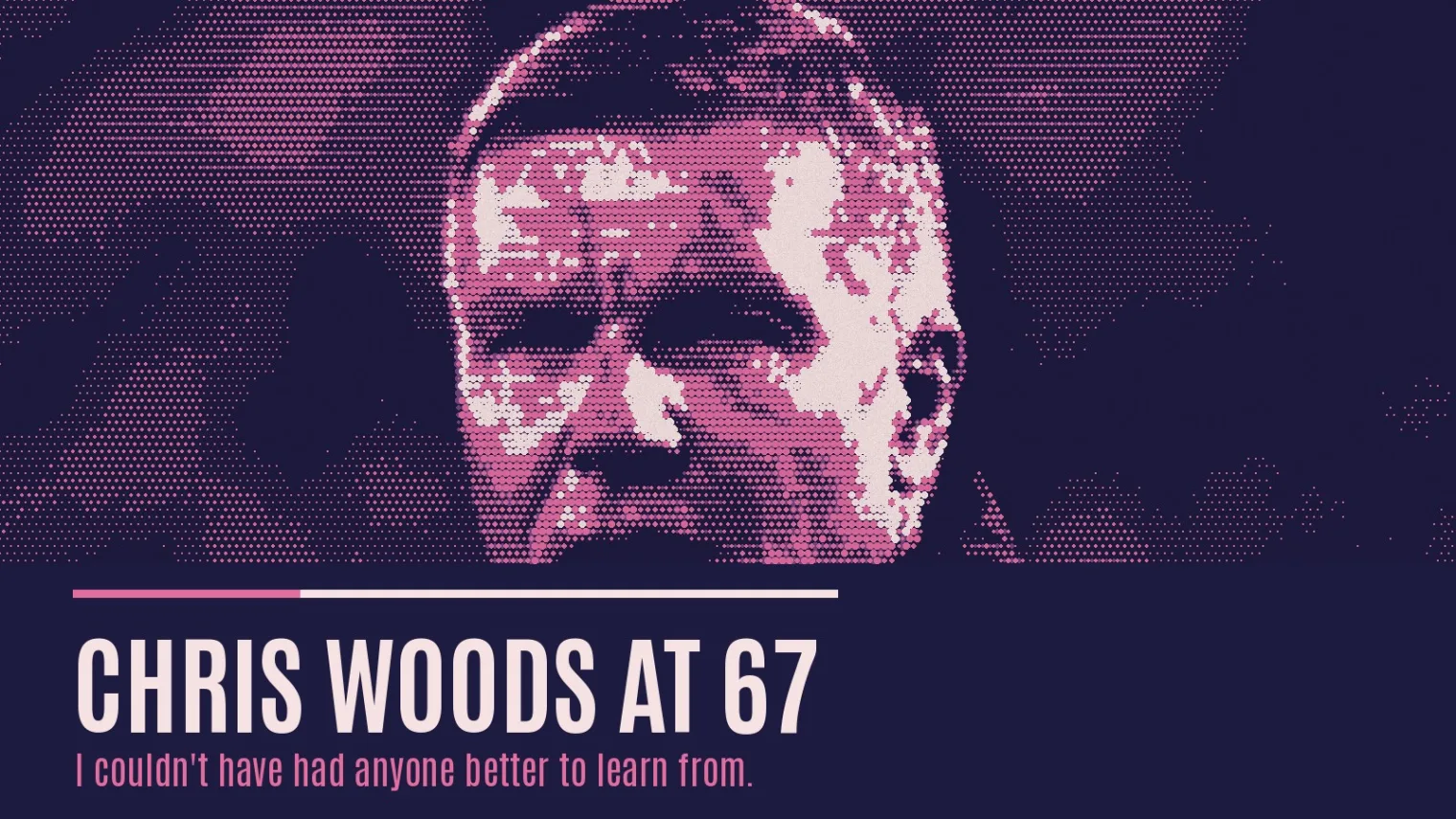
Moyes was sacked. Woods stayed until the end of the season, knowing the next manager would bring his own people. “It was really disappointing, probably one of my low points in my career after one of the high points.” Around the same period he also worked with the United States men’s national team: the photograph that became this piece’s feature image was taken on the touchline in Vienna in November 2013, when he was with the USA for a friendly against Austria. He later reunited with Moyes at West Ham. In 2021, a little out of the blue, Scotland called. The connection was an old Norwich teammate, Tony Spearing, by then on Steve Clarke’s staff. By Euro 2024, in his 65th year, Woods was on the bench in Germany, taking part in his sixth major tournament, still declining to take a bow. “We know we can create history — everybody is aware of it,” he said. “Just don’t expect him to seek acclaim if they do,” Murray added.
The shy bit is important. It is why a player with that list of clubs and caps can reach 67 and still feel slightly under-commemorated, a name that appears in other people’s stories: Shilton’s deputy, Souness’s first goalkeeper, the man in the Wednesday goal on the night Linighan scored, the coach in the background of a Scotland huddle. His own version is drier than all of that, and closer to the truth. He learned from the best in the world. He kept the ball out for 1,196 minutes at a stretch. He said no, once, to Brian Clough, and only because there was a glass eye on the squash-court floor.
The cameo at Old Trafford in 1978 was not, after all, a footnote to Shilton’s Forest. It was the first time the game asked Woods to stand in, and discovered that standing in was something he could do at the highest level. He spent the next decade doing it, and the decade after that doing the job for himself, and a quarter of a century after that teaching other people the same quiet trade. Happy birthday. The understudy kept rather more than the shirt warm.