


Football has lost its soul. The fans have been sold down the river. It is no longer the ‘working man’s game’.
If these grumbles seem familiar it is because in some circles they have become the staple food of normality in recent years. These – and similar gripes and utterances – have taken hold in some quarters, and, to a degree, the disillusionment with football, and the modern game in particular, shows no sign of ebbing any time soon.
While the specific reasons for this sense of disillusionment may vary to a degree, they all relate to a basic concept of ‘betrayal’. So it is with the notion of perfidy in mind that your slightly grumpy middle-aged scribe has landed on a topic for the current article.
‘Betrayal’ – what is it in footballing terms and why does it affect so many of us in ways that other aspects of our lives just do not?
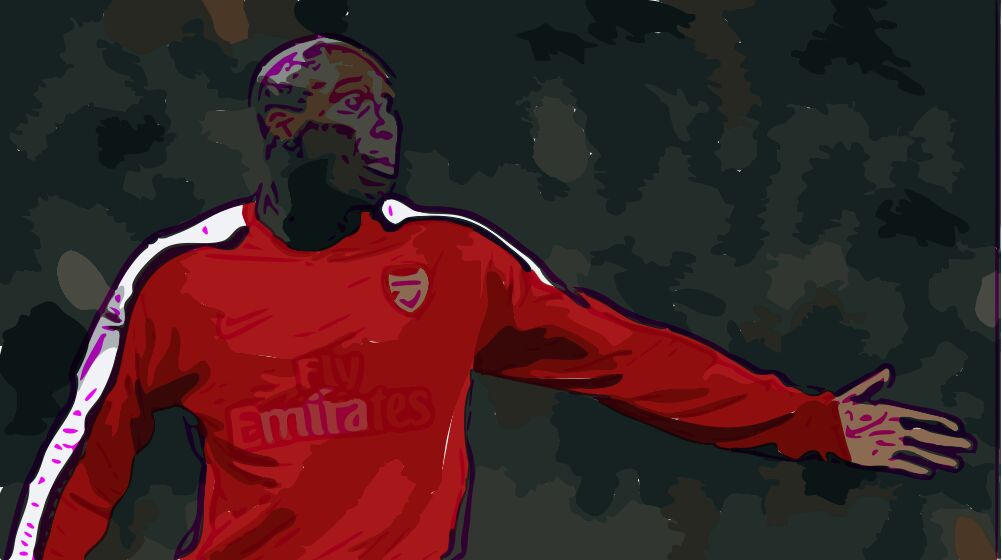
In May 2017, Tottenham Hotspur played the last game at their old White Hart Lane ground and to commemorate the occasion, invited along a myriad of former players and managers associated with the club going back to the 1950s. As each legendary being was invited to tread the hallowed turf one last time, the home crowd rose as one to hail their praises and yet all present were conscious of one ghost from the past conspicuous by his absence. For, much to his chagrin, the powers that be at WHL had seen fit to leave off from the guest list a certain Sol Campbell.
This was no mere oversight. Despite being captain of a Tottenham Hotspur trophy-winning side, Campbell had been deliberately omitted from the festivities due to lingering discord over the way he had departed the club for arch-rivals Arsenal some sixteen years prior.
Indeed, since his acrimonious departure, on the occasions Campbell had been present at WHL in his guise as an opponent, such had been the vitriol pouring from the stands that it had been necessary to incorporate high-level security measures, so quite why Sol imagined his presence would be anything other than the worst of all ideas is perhaps a mystery of our time.
His departure from Spurs, and the manner in which it came about, did invoke in many a Spud fan a sense of ‘betrayal’. Spurs fans, unsurprisingly, were not particularly sold on the idea of him leaving the club at all but had he just declared his intentions to separate at the end of the current season, then emotions would perhaps not have run so high. Instead, Campbell was alleged to have made several declarations of his intent to stay at the club only to ultimately leave ‘on a Bosman’ and to the despised local rivals to boot.
Talking of which, the Tottenham side that won the League Cup in 1999 with Campbell as captain was managed by none other than legendary ex-Arsenal boss, George Graham. It is fair to say that notwithstanding the Wembley success against Leicester, Graham was never welcomed into White Hart Lane by large swathes of the Spurs fanbase, and for a considerable length of time, his reputation suffered amongst a selection of Arsenal fans, too. The same could be said of Rafa Benitez and his somewhat ill-advised decision to take over at Everton some years after being in charge over the other side of Stanley Park, and, amusingly, referring to Everton as a ‘small club’.
This sense of being ‘let down’ is not exclusive to Spurs fans, of course. Almost every club – and therefore, every fan – has had no alternative but to stand idly by as a club icon has made the inconceivable decision to take his talents elsewhere, leaving broken hearts and dreams in his wake. As a Liverpool fan growing up, I couldn’t for a minute begin to fathom why Kevin Keegan, Graeme Souness, or Ian Rush, for example, would choose to take the foreign coin rather than stay and add to the collections of medals and accolades that Anfield had to offer. As I supposedly matured and certainly got old enough to know better I could do nothing but mutter spiteful obscenities in the direction of Fernando Torres, Michael Owen, Xabi Alonso and Steve McManaman as they took themselves off to pastures new.
Although deep down I couldn’t blame any of that latter foursome for moving on, or Rush for that matter, I was less inclined to wish Owen well on his travels when he subsequently turned up at Old Trafford! The guy was – at one point – an absolute giant of a player at Anfield and so to end up pulling on ‘their’ shirt, whatever the mitigating circumstances, was undeniably seen as the ultimate betrayal.
Why should this be, though? Why should we fans feel such an emotional thrust in this manner? After all, as the oft-quoted response goes, wouldn’t we take every opportunity to better ourselves if similar circumstances occurred in our professional lives?
‘Well, it’s not the same is it?’ Would be many a fan’s stock response to such a rhetorical question, and indeed it is not. While football players may feel a sense of belonging while at a club and thus do their very best during the time they play for said club, by and large, their devotion dissipates the moment they walk out the door en route to the next stop in their career. Us ‘Normal Joes’, however, are stuck with our clubs come what may, and I would contend that our connections with our clubs run deeper than even the most legendary of club legends.
For example, Sir Alex of Fergieland and his old sparring partner, Sir Ken of Dalgiwood, are forever synonymous with the north-west giants in red of Old Trafford and Anfield respectively, and yet…they didn’t start life at those clubs and indeed had no connection with them until the age of 42 and 27 respectively. This is in contrast to, well, me, for example, who attached myself to my club at the princely age of 5. This, in my book, makes me more of a ‘true’ beholder of my club than anyone who has ever formed a professional connection to it.
This links, albeit tenuously, to my next bone of contention about ‘betrayal’. This is when managers, players and other talking heads, decide to tell us ‘plebs’ what we should be doing as ‘real supporters’. Again, a classic example that springs to mind involves our main man, Salex. A few years back, the Great Man deemed it appropriate to lecture Man United supporters on what constitutes a ‘real fan’. It was, evidently, someone who ‘backed the Glazers and what they are trying to achieve here.’
Other examples of such patronising nonsense have been spouted by indigent managers and players when supporters have dared to express their dissatisfaction at the perceived dirge unfolding before them. ‘Real supporters do not boo their own team,’ or so the likes of Gareth Southgate and Wayne Rooney would have us believe.
Really? If I lay out the best part of 10K to fly to South Africa to watch you and your mates barely able to raise a jog-trot against the likes of Algeria, Wayne, I think I’m well within my rights to have a mumble and a grumble and if someone who wasn’t even born when I was sitting my A-levels is just going to have to suck it up.
The final area or type of ‘betrayal’ I want to touch upon relates to players themselves. This is not connected to which clubs they choose to play for or why, but rather to the way they conduct themselves and the extent to which they fulfil their potential. I have long thought that there is little to admire in the ‘mavericks’ of football; those guys who entertain but fail to reach the heights due to a lack of commitment.
In days gone by, the likes of Rodney Marsh, Stan Bowles, Tony Currie, and Frank Worthington were all deemed as fantastic players who were, evidently, ‘mistrusted’ or ‘feared’ by managers and coaches for their reluctance to conform, when in reality I contend they were all guilty of squandering their talent and have only themselves to blame for not doing better in their careers. I would even put players such as Paul Gascoigne and George Best into this category, because, as good as they were as players, they still ended up underachieving.
To end on a slightly more positive note perhaps, it seems that not everyone shares my rather rigid views and sometimes it is possible to be welcomed back into the fold following a contentious departure. It is fairly common knowledge that Everton fans were less than amused when Wayne ‘Once a blue always a blue’ Rooney unceremoniously decamped for Old Trafford, and he did indeed take some horrendous abuse over the years whenever he returned in the red shirt of United. However, as time went by, feelings calmed down sufficiently to enable him to make a less-than-glorious playing return towards the end of his career.
Also greeted home with welcoming arms following his foreign travels was the aforementioned Ian Rush, while a couple of recent contentious managerial reappointments are yet to show signs of being universally accepted or rejected either way. When Brendan Rodgers flounced out of Celtic Park in 2019, headed for Leicester City, and Neil Critchley gave up the managerial post at Blackpool to be Steven Gerrard’s assistant at Villa Park in the summer of 2022, neither man was especially wished ‘bon voyage’ by fans of the clubs they had left behind. Yet, here we are now with both back in place and with plenty to do to win over the backing of the entire fan base.
Time will tell.
