


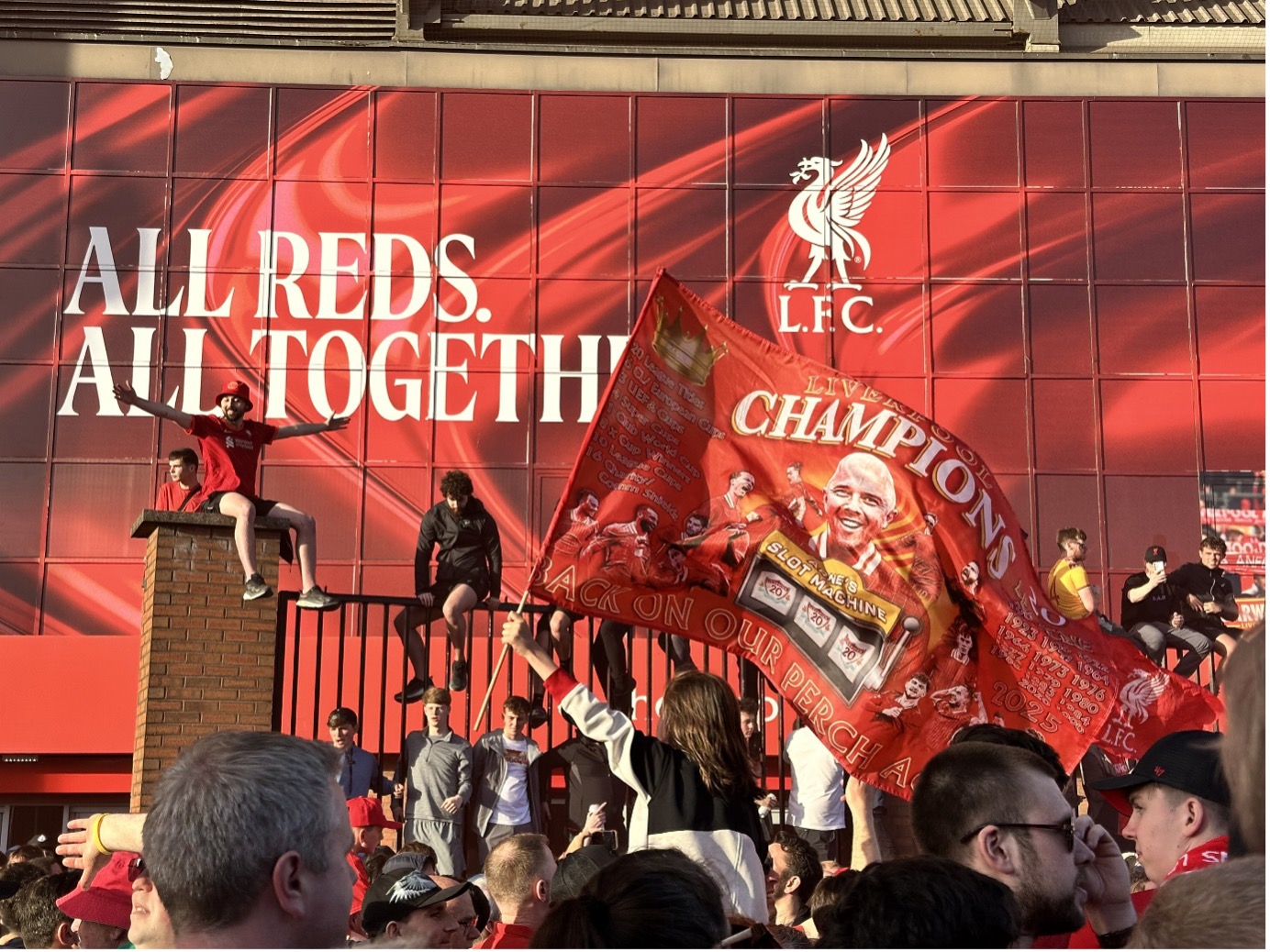
The 2024/25 Premier League season marked the beginning of a new chapter for Liverpool, with Arne Slot taking over from Jürgen Klopp. Despite the significant managerial change, the Reds clinched their 20th top-flight title, showcasing a seamless transition and continued dominance in English football.
The Dutchman’s inaugural season at Anfield demonstrated that success in the Premier League doesn’t necessarily require revolutionary tactics or complex systems. Instead, his approach emphasised mastery of football’s fundamental principles, applied consistently and executed with precision.
Against the expectations of football odds, free bets, and the usual Manchester City appeal for a fifth consecutive crown, the Reds were a pillar of consistency, even with a thin squad and withdrawn expectations.
Slot’s ability to maintain Liverpool’s winning tradition while implementing his own methodical philosophy created a fascinating tactical narrative.
Rather than completely overhauling Klopp’s established framework, the new man in the Anfield dugout refined and evolved it, preserving the club’s attacking DNA while adding his own pragmatic touches.
The myth of overcomplication
In today’s football discourse, there’s a tendency to overanalyse tactics, inundating discussions with jargon and complex diagrams. However, at its core, football remains a game of space, movement, and exploiting weaknesses. Slot’s approach at Liverpool exemplifies this, focusing on fundamental principles rather than convoluted strategies.
Modern football analysis has become increasingly sophisticated, with expected goals, positional heat maps, and progressive passing networks dominating conversations. While these metrics provide valuable insights, they sometimes obscure the game’s essential simplicity: creating opportunities closer to the opposition’s goal while denying them the same.
Beneath the surface of what appears tactically complex often lies an elegant, yet deceptively simple principle – football is fundamentally about spatial control.
As the season progressed, pundits marvelled at Slot’s “innovative” approach, yet the Dutchman himself often emphasised that his system was based on timeless footballing principles rather than revolutionary concepts. This perspective proved refreshing in an era where tactical discourse often values complexity over clarity.
The same, but different
For fans turning up to Anfield every other Saturday, there was obviously going to be some time needed to adapt to the new faces in the dugout.
Under Klopp, Liverpool’s style was characterised by relentless pressing, rapid transitions, and an emotional intensity that often translated into dramatic late goals and memorable comebacks. This approach not only brought success but also fostered a deep emotional connection between the team and the fans.
In contrast, Slot’s tenure has introduced a more measured and structured style of play. Emphasising tactical discipline, positional play, and the key word — control. Liverpool under Slot has become a team that manages games with calculated precision. This shift has led to a different kind of dominance—less about overwhelming opponents with energy and Anfield’s emotion, and more about outmanoeuvring them strategically.
This transformation has inevitably influenced fan expectations and experiences. The electric atmosphere that once surged through Anfield during Klopp’s era, fuelled by the anticipation of late winners and high-tempo football, has given way to a more subdued, albeit confident, ambience. Even the title win over Tottenham Hotspur was all but confirmed with 20 minutes still on the clock.
The fundamentals matter
Liverpool’s success this season underscores the importance of mastering football’s fundamentals. By focusing on space management, player roles, and cohesive team movements, Slot has demonstrated that simplicity, when executed effectively, can lead to remarkable achievements.
But how does this side evolve? The summer transfer window presents Slot with an opportunity to further reshape Liverpool in his image. With Darwin Núñez potentially departing and Trent Alexander-Arnold’s contract situation seeing him leave in June, squad restructuring appears inevitable.
A priority target should be a specialist 1v1 left winger – someone in the mould of Paris Saint Germain’s Bradley Barcola – to complement Mohamed Salah on the opposite flank.
Such a player arriving in Merseyside would provide explosive dribbling ability perfectly suited to exploit the isolated matchups that Slot’s positional approach naturally creates.
Luis Diaz started the season like a house on fire and has finished well, but the Colombian has been far too inconsistent since the injury he suffered at the end of 2023. Diogo Jota’s reliability has also come into question, but his ability to find the back of the net, even when he isn’t playing well, alongside his versatility operating from the left as well as the number nine, makes him a valuable asset.
The departure of Trent would necessitate not just replacing his defensive contributions but, more crucially, his creative output from deep – 64 assists for a defender simply can’t be replaced in the current market. This might prompt further tactical adaptation, potentially increasing the creative burden on Liverpool’s central midfielders if Connor Bradley is given the green light to step up.
Ultimately, the squad evolution must serve Slot’s spatial principles rather than vice versa. Players who can execute his vision of controlled possession, positional discipline, and explosive exploitation of created advantages will be prioritised, regardless of their profile under the previous regime.
- –
As the Premier League season concludes with Liverpool as champions, it’s worth reflecting that the most successful sides aren’t necessarily those with the most complex systems, but those who master the basics that have always governed football. Slot’s title-winning campaign proves that evolution through perfecting fundamentals often trumps revolution through complexity.
