


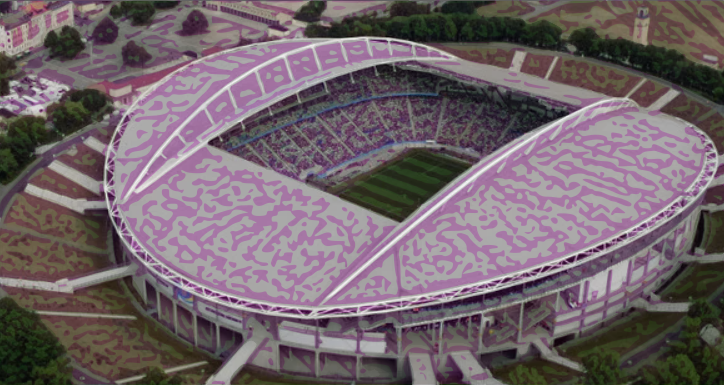
1. Introduction: The Rise of Red Bull Arena
Tucked away in the vibrant city of Leipzig, the Red Bull Arena stands as a symbol of German football’s modern era. This stadium, home to RB Leipzig, has quickly become a pivotal fixture in the Bundesliga landscape. Its sleek, futuristic design mirrors the rapid rise of the club it houses—an ascent that has reshaped not only Leipzig’s footballing identity but also challenged traditional perceptions of German football.
Since its official opening in 2010, Red Bull Arena has established itself as one of the country’s most advanced football venues. It sits on the historic grounds of the old Zentralstadion, which once boasted a colossal capacity of over 100,000 spectators, making it one of the largest stadiums in Europe. Today, Red Bull Arena strikes a perfect balance between preserving this rich history and embracing the forward-thinking nature of modern sport.
The story of RB Leipzig and their home ground is one intertwined with ambition and vision. From the club’s founding in 2009, backed by the energy drink giant Red Bull, to their meteoric rise through the lower tiers of German football, both team and stadium have evolved in harmony. This synchronized growth has turned the Red Bull Arena into a fortress, a place where a new brand of football philosophy thrives and where the aspirations of Leipzig’s devoted fanbase are realized.
Its journey has been swift, but the stadium’s importance cannot be understated. Leipzig’s rapid climb to Bundesliga contenders within a decade of their formation has coincided with the Arena’s transformation into a symbol of modern success. As RB Leipzig emerged as a team to be reckoned with, Red Bull Arena became more than just a venue—it became the embodiment of a project focused on high-performance football and commercial ingenuity.
Architecturally, the stadium is a testament to modern design. With a capacity of just under 50,000, it maintains an intimacy and intensity that amplifies the matchday experience for both players and fans. The sweeping roof, which protects spectators from the elements, and the meticulous attention to detail in the fan areas, reflect a commitment to ensuring the arena is as comfortable as it is visually striking.
The Red Bull Arena, with its contemporary facilities and vibrant matchday atmosphere, represents more than just a place to watch football. It stands as a symbol of the shifting landscape of German football, where tradition and innovation collide. The Bundesliga, a league known for its historic clubs and fervent supporter culture, now includes Leipzig and its modern marvel of a stadium, signifying the changing dynamics of the game in Germany.
What makes Red Bull Arena truly stand out is how it encapsulates the spirit of RB Leipzig—youthful, ambitious, and unapologetically modern. For the club’s supporters, the Arena is not just their team’s home; it’s a beacon of Leipzig’s footballing future. With its striking design and cutting-edge facilities, the stadium provides the perfect stage for the club’s continued success, both domestically and in Europe.
As the Bundesliga’s competitive landscape continues to evolve, Red Bull Arena’s rise remains an emblem of the broader trends shaping modern football. It’s a stadium built not only for today but for the future—a true reflection of the new breed of football that has emerged from the heart of Leipzig.
2. History and Development of the Arena
The history of Red Bull Arena is deeply intertwined with the evolution of Leipzig’s footballing heritage. Before the sleek, modern structure we see today, the site was home to the iconic Zentralstadion, a relic of East Germany’s sporting past. Originally opened in 1956, Zentralstadion was built as a monument to the socialist regime’s ambition, boasting a staggering capacity of over 100,000. For decades, it was one of the largest stadiums in Europe and a proud symbol of East German football, hosting significant international matches, athletics events, and even political rallies. However, as the Cold War drew to a close, the stadium began to fall into disrepair, its grandeur slowly fading into obscurity.
By the early 2000s, the once-mighty Zentralstadion was a shell of its former self. With Leipzig’s football fortunes at a low ebb and the stadium far from meeting modern standards, it became clear that significant investment was needed to revitalize the city’s sporting infrastructure. It was in this context that the idea for a new stadium—one that would befit Leipzig’s ambitions—was born.
The decision to redevelop the site was made as part of a broader strategy to reinvigorate the city’s footballing prospects. In 2000, plans were unveiled to transform the dilapidated Zentralstadion into a state-of-the-art facility that could compete with the most modern venues in Europe. The construction of the new stadium was driven by a desire not only to give Leipzig a world-class football arena but also to provide a foundation for the city’s footballing renaissance.
The redevelopment project was a monumental undertaking. Instead of demolishing the old Zentralstadion, it was decided to build the new Red Bull Arena within its massive bowl. This approach allowed the new stadium to retain a physical connection to its historic predecessor while introducing all the features required of a modern football venue. Construction began in 2002, and by 2004, the new stadium was ready to host matches as part of the 2006 FIFA World Cup, which was pivotal in shaping its early reputation on the global stage.
In 2009, the trajectory of the stadium—and indeed Leipzig football—changed dramatically when Red Bull GmbH purchased the license of SSV Markranstädt, a small local club, with the ambition of creating a football powerhouse in Leipzig. With Red Bull’s financial backing and strategic vision, the newly formed RB Leipzig took up residence at the stadium, which was soon rebranded as Red Bull Arena.
Red Bull’s involvement brought about significant investment, not only in the team but also in the stadium itself. The Arena was upgraded with cutting-edge facilities to match the club’s ambitions of rapid progression through the German football leagues. This investment proved to be a game-changer. While RB Leipzig swiftly climbed the footballing ladder, Red Bull Arena became a central part of the club’s success, reflecting the modernization and professionalization of Leipzig football.
What makes the story of Red Bull Arena’s development particularly compelling is the way it blends Leipzig’s footballing history with the demands of the modern game. By preserving the original structure of the Zentralstadion and building a modern venue within it, the architects created a stadium that bridges the gap between the past and the present. It stands as a monument to Leipzig’s footballing legacy while simultaneously representing the city’s future ambitions.
The redevelopment of Red Bull Arena has had a profound impact on Leipzig as a whole. The stadium not only serves as the home of RB Leipzig but has also helped position the city as an important player in the wider sporting world. From its early days as a World Cup venue to its current status as a top-tier Bundesliga stadium, Red Bull Arena has become synonymous with Leipzig’s resurgence in German football.
Red Bull Arena’s development is also a testament to the long-term vision that has guided both the stadium and the club. Rather than being a quick-fix solution, the redevelopment project was designed to create a sustainable, modern venue that could grow alongside the club. As RB Leipzig continues to push for success at the highest level, Red Bull Arena remains at the heart of their ambitions, serving as both a fortress for their home matches and a beacon of the club’s enduring drive for excellence.
The transformation from the old Zentralstadion to the modern Red Bull Arena is more than just a story of physical redevelopment. It is the story of a city and a football club reinventing themselves, using the past as a foundation for future success. The Arena, with its blend of history and innovation, stands as a symbol of Leipzig’s determination to be a force in German football once again.
3. Design and Architecture
The architectural brilliance of Red Bull Arena reflects both the ambitions of RB Leipzig and the aesthetic standards of modern stadium design. Nestled within the shell of the old Zentralstadion, the stadium is a striking blend of the past and present. With a capacity of around 47,000, it maintains an intimate atmosphere that enhances the intensity of matchdays. One of the stadium’s defining features is its lightweight roof, which arches elegantly over the seating areas, offering excellent sightlines for all spectators. The acoustics are carefully engineered to amplify crowd noise, making it a cauldron of sound when RB Leipzig is on the attack. The design also prioritises fan comfort, with state-of-the-art facilities, spacious concourses, and excellent amenities. The incorporation of modern technology, from high-definition screens to advanced lighting systems, ensures Red Bull Arena remains at the forefront of innovation in stadium design. Its sleek, contemporary look and efficient layout have made it one of the standout venues in the Bundesliga, embodying the forward-thinking philosophy of the club.
4. The Role of Red Bull Arena in Leipzig’s Footballing Renaissance
Red Bull Arena has been central to the transformation of RB Leipzig from an ambitious lower-league side to a Bundesliga powerhouse. The club’s rapid rise through the divisions has been matched by the development of the stadium as a formidable venue for German football. When RB Leipzig secured promotion to the Bundesliga in 2016, Red Bull Arena quickly became a place where the club’s ambitions were realised. The home crowd, energised by the team’s success, has turned the stadium into a fortress. Key matches, such as Leipzig’s 4-0 victory over Hannover in their debut Bundesliga season, have forged a connection between the fans and the stadium. It’s not just about the results; the stadium is a symbol of the club’s rise, providing a platform for RB Leipzig’s style of play and their ambitious European campaigns. The Arena’s presence has attracted world-class talent and contributed to the development of a vibrant football culture in the city.
5. Fan Experience: A Day at Red Bull Arena
Attending a match at Red Bull Arena is an experience designed to engage and delight fans. The stadium’s location, just a short walk from the city centre, makes it accessible and part of the Leipzig football community. On matchdays, the streets are filled with fans wearing RB Leipzig’s red and white, creating a palpable sense of excitement before entering the Arena. Inside, the atmosphere is electric, with organised fan sections leading chants that echo through the stadium. Modern amenities ensure that fans enjoy the experience comfortably, with food and beverage options catering to all tastes. Accessibility is another hallmark of the design, with easy access for disabled supporters and family-friendly areas. The stadium’s connection to the city is evident in every detail, from the fan merchandise to the pre-match rituals. For many supporters, Red Bull Arena is more than just a football ground—it’s a second home where they witness the highs and lows of their club.
6. Red Bull Arena in German Football Culture
Red Bull Arena stands as a unique entity in the landscape of German football stadiums. In a country where tradition is highly valued, the Arena represents the new wave of football that has emerged in recent years. While iconic venues such as Dortmund’s Signal Iduna Park and Munich’s Allianz Arena carry decades of history, Red Bull Arena offers a modern alternative, built on the premise of progress and future success. However, the stadium has not been without its critics, largely due to the commercial nature of RB Leipzig’s rise. Despite this, Red Bull Arena has earned its place in German football culture. Its atmosphere during Bundesliga matches is often praised, and the fan experience is among the best in the country. The stadium has also hosted international matches, further solidifying its status as a key venue in the footballing world. As RB Leipzig continues to challenge the dominance of more established clubs, Red Bull Arena has become a focal point in discussions about the evolution of German football.
7. The Economic and Social Impact on Leipzig
Red Bull Arena has had a profound economic and social impact on the city of Leipzig. The stadium has brought renewed focus to the region, with matchday revenues, tourism, and local business benefiting from the influx of football fans. The investment in the stadium has spurred urban development around the site, turning the surrounding area into a hub of activity on game days. Additionally, the presence of a top-tier Bundesliga club in the city has boosted Leipzig’s global profile, attracting international visitors and media attention. Socially, Red Bull Arena has become a gathering place for the community, where fans of all ages come together to support their team. The stadium’s design ensures that it caters to a wide demographic, from families to hardcore supporters. This blend of economic prosperity and social cohesion underscores the importance of Red Bull Arena beyond the football pitch.
8. Key Matches in Red Bull Arena’s Short Yet Storied History
Though Red Bull Arena is a relatively new venue, it has already hosted some of the most memorable matches in RB Leipzig’s history. One of the standout moments came in 2017 when Leipzig faced Bayern Munich in a thrilling 5-4 match, with Bayern scoring a last-minute winner in front of a stunned home crowd. This match encapsulated the rapid rise of Leipzig as a serious contender in German football. Another significant moment was Leipzig’s 2019 victory over Tottenham Hotspur in the UEFA Champions League, marking the club’s emergence on the European stage. These matches, along with countless others, have helped to define the character of Red Bull Arena. The stadium has seen highs and lows, but every game played there contributes to its growing legacy. As RB Leipzig continues to compete at the highest level, Red Bull Arena will undoubtedly witness more key matches that shape the future of the club.
9. Looking Ahead: The Future of Red Bull Arena
As RB Leipzig’s ambitions grow, so too does the role of Red Bull Arena. Future plans for the stadium include potential expansions to increase its capacity, as well as further technological upgrades to keep it in line with the world’s leading venues. The club’s desire to compete consistently in the UEFA Champions League has placed the Arena at the centre of their long-term vision. With Germany set to host major international tournaments in the coming years, including a European Championship, Red Bull Arena is poised to be a key venue for some of the biggest matches on the continent. As the club continues to evolve, so too will the stadium, ensuring that Red Bull Arena remains at the forefront of both German and European football. The future is bright for Leipzig, and Red Bull Arena will continue to play a crucial role in their journey towards sustained success.
10. Conclusion: A Modern Icon of German Football
In just a short span of time, Red Bull Arena has emerged as one of the Bundesliga’s most important stadiums. It encapsulates the story of RB Leipzig—ambitious, innovative, and determined to succeed. The stadium’s design, its role in the club’s rise, and its significance to the city of Leipzig all contribute to its status as a modern icon in German football. As Leipzig’s journey continues, Red Bull Arena will remain the heart of the club’s ambitions, a place where new chapters of success are written.
