


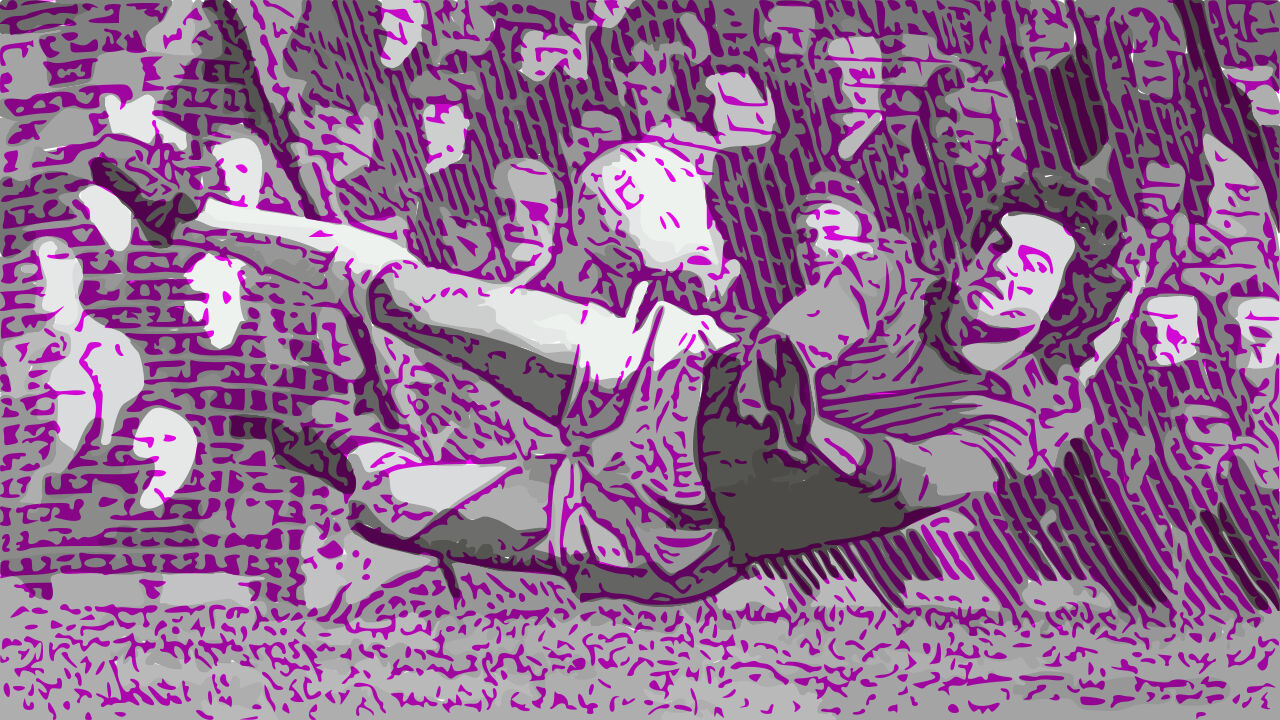
On 27 August 1973, Ipswich Town made the relatively short trip along the A12 from their humble Suffolk abode to Upton Park, home of Ron Greenwood’s West Ham United, and the two teams did battle in an early-season clash that saw six goals equally shared.
If Mervyn Richard Day, just seventeen years, two months and one day of age, felt perturbed to have conceded three goals on his home patch, the fact that he was making his debut between the sticks at such a prodigious time stamp no doubt acted as considerable compensation.
Notwithstanding the trio of net bulges, Day’s performance on that balmy summer evening, more than half a century ago now, was such that he was immediately marked out as one to keep an eye on.
Twenty-odd years later, Day played his last league match and finally bowed out of professional football.
Born in the Essex city of Chelmsford, Day attended Kings Road Primary School where Geoff Hurst had also been a student some fifteen or so years earlier. Being reasonably tall for his age and somewhat agile, Day took up football from a position between the sticks and soon excelled to the extent that he was being scouted by the three ‘big’ clubs most local to Chelmsford; Ipswich Town, Tottenham Hotspur, and West Ham United.
Electing to join the Hammers, Day signed his first professional contract in March 1973 before getting his first chance in the side just five months later. After his auspicious debut, Day dropped back down to the reserves for a few more weeks as the experienced Bobby Ferguson regained his place in the side following injury, but in October Day was once again called into the side for a home match against Burnley. Although this was to result in a single-goal defeat, Day kept his place in the side and over the next three years missed just two games through injury.
Parachuted into a West Ham side known for both its attractive football and defence frailty, Day was at once thrust into the spotlight but conducted himself admirably with a confidence that belied his inexperience. Soon the footballing fraternity was considering the possibility that there was another one off the seemingly never-ending conveyor belt of top-class English goalkeepers.
At a very early stage, Day was being tipped to be a future England goalkeeper, following in the footsteps of the likes of current top-flight keepers such as Peter Shilton, Ray Clemence, Joe Corrigan, Phil Parkes and Jimmy Rimmer. The future was looking bright for the six-foot-two inches youngster as he established himself in a West Ham side that continued to excite and frustrate in equal measures.
1973-74 saw West Ham just about prevail in a relegation scrap in a final position of eighteenth in a twenty-two club First Division. Conceding 60 goals, just a single point separated West Ham and twentieth-placed Southampton in the first three up and three down relegation and promotion season.
The following season was somewhat better with a safe mid-table finish although an almost identical number of league goals were conceded. However, it was West Ham’s FA Cup run that season that really caught the eye and once again catapulted Day to prominence.
2-1 away victories at Southampton and Swindon Town in the third and fourth rounds saw West Ham safely into the last sixteen and a clash with Queens Park Rangers. Yet another win by the odd goal in three saw off one London rival only for another to stand in the Hammers’ way in the quarter-final.
So it was that on a terribly wet and windy day in North London, West Ham wearing a crisp all-white strip devoid of sponsorship, kit manufacturers logo or even club badge, ran out in front of 56,742 rain-drenched souls at Highbury to do battle with Arsenal for a place in the final four.
On a pitch little better than a mud bath, Day was in imperious form. Time and again he repelled the Arsenal attack and when West Ham’s Alan Taylor struck twice to force the Hammers ahead, a place in the semi-finals beckoned. Day was fortunate on the hour mark, however, when a Billy Bonds backpass was intercepted by an Arsenal striker who knocked the ball around the keeper only to be sent sprawling in what was surely the most obvious penalty never given in the history of the famous old stadium.
A titanic tussle in the semi-final was finally settled by Alan Taylor, ably assisted by a legendary performance from celebrity referee Clive Thomas, and so another all-London mash-up awaited in the final in the form of Second Division Fulham.
With the match ending up as a bit of a non-event, West Ham didn’t have to venture out of second gear for much of the 90 minutes, and two second-half goals from that man Taylor once again did the trick. For Day, it was the culmination of a very long journey in a very short time, as at the age of just nineteen he became the youngest goalkeeper to ever play in a Wembley FA Cup Final.
The season ended on another personal high for Day as he was named the PFA Young Player of the Year, and in doing so became the only goalkeeper to have ever won this particular award.
In a way, the spring of 1975 was to prove to be the pinnacle of Mervyn Day’s career and despite the following two decades seeing another 700 or so appearances at all levels, things were never quite as good again.
The next season West Ham once again struggled in the league and found themselves embroiled in a relegation scrap. The constant struggles and pressure of playing in a side usually on the back foot were beginning to take a toll on the still young Day, and his confidence started to take a downwards turn.
The 1976 European Cup Winners’ Cup Final was reached but a 4-2 defeat at the Heysel Stadium put paid to hopes of another winner’s medal, and with Clemence, Shilton, Corrigan et all still in top form, Day was being spoken about as a potential future England goalkeeper somewhat less often than before.
Another struggling season followed in 1976-77 with another 65 league goals flying past Day and relegation once again only being avoided in the penultimate game of the season. Now Day found his place in the West Ham side coming under scrutiny for the first time since his breakthrough almost four seasons earlier.
Despite not making a league appearance in almost three years, Day’s predecessor in goal, Bobby Ferguson, had decided to stay at the club and play for the reserves. In a quirk, Ferguson often turned out for the Central League side as a forward, but in December 1977 he was recalled by manager John Lyall and thrust back into the team with Day relegated to the sidelines. It was the beginning of the end for Mervyn.
After trying and failing for several years, West Ham finally managed to get themselves relegated in 1978, and for the best part of a year Day did not appear in the first team at all as Lyall persevered with Ferguson.
At the end of 1978, Day came back into the side and played a total of fourteen consecutive games. With the club looking at challenging for a direct return to the top flight, it appeared Day’s career was back on track, but then Lyall once again dropped a bombshell.
Opting to pay a world-record fee for a goalkeeper, Lyall signed Phil Parkes from Queens Park Rangers and Day’s time at the Boleyn was up. It was a fairly dramatic and harsh fall from grace for Day, who was still only just twenty-three at the time. He had gone from being one of the country’s most highly acclaimed prospects to a player who couldn’t nail down a place in a Second Division side, and so the decision was taken for him to move on.
He decided not to move too far, however, and opted to try to get his career back on track at local neighbours, Leyton Orient – in those days simply playing under the name of ‘Orient’.
Four seasons at Brisbane Road were fairly uneventful, and Day more or less slipped out of the consciousness of the footballing world at large altogether, but the time out of the limelight possibly assisted him with his confidence levels and in 1983 he was offered a way back into the top flight when the chance came for him to sign for European Champions, Aston Villa.
With veteran Villa keeper Jimmy Rimmer suffering from injuries, and doubts as to the complete readiness of Villa’s European Cup Final hero, Nigel Spink, persisting, Day had the opportunity to stake a claim for a place back at the top level of football.
Unfortunately, it was one that Day never really grasped in his two years at Villa Park, and with Spink continuing to make progress, Day left the Midlands after having only played 30 games.
With his career once more at a crossroads, the next move needed to be the right one. Fortunately for him and all concerned, it turned out to be just that.
In January 1985, Leeds United manager Eddie Gray put in an offer that was accepted by Villa, and Day was headed for Elland Road. Under Gray and his successors, Billy Bremner and Howard Wilkinson, Day would spend the next eight years at the Yorkshire club and would reignite his career. Under Bremner’s tutelage, Leeds reached the 1987 FA Cup semi-final where they lost 3-2 to Coventry City after extra time, and even more agonisingly also lost 2-1 to Charlton Athletic in the play-off final replay after leading with barely seven minutes left on the clock.
After Bremner was sacked, Wilkinson took over and the Second Division title was secured in 1990, so Day was back in the top flight once again. Unfortunately for him, Wilkinson decided to bring Arsenal keeper, John Lukic, back to Elland Road and so Day once again found his first team minutes severely curtailed. Now 35, Day stayed as back-up to Lukic and combined this substitute role with some coaching at the club. http://gty.im/1249270362
After Leeds won the title in 1992, Day made it back to Wembley for the first time in 17 years when he was on the bench for his club’s 4-3 Charity Shield victory over Liverpool.
Loan spells at both Luton Town and Sheffield United followed before Day finally left Leeds United for a final playing swansong at Carlisle United, where he appeared 16 times in the 1993-94 season.
Although never hitting the heights he once seemed destined for, Mervyn Day enjoyed a lengthier professional playing career than most and can look back on his achievements with pride.
After retiring from playing, Day moved into coaching and management, and in December 2006, finally made his way back to Upton Park when he was named as Alan Curbishley’s number two.
