


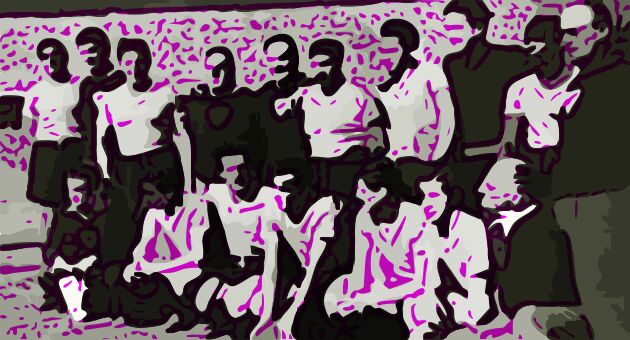
In the History of football, few moments resonate with the seismic force of the event that unfolded on the 16th of July, 1950, in the heart of Rio de Janeiro. This was not just a game; it was a battle that pitted David against Goliath, with stakes that transcended the confines of the lush green pitch of the Maracanã. The final match of the 1950 World Cup, colloquially immortalized as the “Maracanazo,” stands as a testament to the unpredictability of football, where dreams can be both made and shattered in ninety minutes.
The 1950 World Cup was not just a tournament; it was Brazil’s bold assertion on the global stage, a post-war statement of renewal and ambition. As nations rebuilt from the ruins of conflict, football emerged as a beacon of hope and unity. Brazil, with its burgeoning love affair with the beautiful game, was all too eager to showcase its passion and prowess. The tournament itself was unique, not culminating in a traditional knockout final, but rather a final round-robin group to decide the champion. It was within this unusual format that the stage was set for a showdown of epic proportions.
At the heart of this narrative were the main characters: Uruguay’s underdog team, a blend of experience and raw talent, carrying the legacy of their 1930 World Cup triumph; Brazil’s golden generation, a squad brimming with flair, skill, and the weight of a nation’s expectations; and the Maracanã stadium, a colossal architectural marvel, erected as a temple for the football gods, ready to bear witness to the dreams of hundreds of thousands. The Maracanã was not just a venue; it was a symbol of Brazil’s aspirations, its open arms ready to embrace victory.
Uruguay, with a quiet confidence and a tactical acumen honed on the fields of South America, was not to be underestimated. They had battled their way to the final round, ready to defend their legacy against a Brazilian team that was sweeping through opponents with a combination of dazzling skill and overwhelming force. Brazil, led by stars like Zizinho and Ademir, had captivated the world with their samba style, scoring goals with a rhythm and beauty that seemed to declare them preordained champions.
Yet, football, with its cruel twists and unfathomable turns, cares little for scripts written by mere mortals. The Maracanazo would become a tale not of expected triumph, but of a victory so improbable, so heart-wrenching, that it would forever change the fabric of the sport. This is the story of that day, a day when heroes were forged in the crucible of the Maracanã, and the ghosts of defeat would haunt Brazil for generations to come.
As we embark on this journey through time, to relive the drama, the agony, and the ecstasy of the 1950 World Cup final, we delve into a narrative rich with human emotion, strategic genius, and the indomitable spirit of the underdog. Welcome to the Maracanazo: a story of dreams, destiny, and the day the football world stood still.
Chapter 1: The Road to Rio
In the aftermath of World War II, the world sought solace and unity through various means, and football emerged as a powerful vehicle for healing and harmony. Nations, torn apart by years of conflict, found in the beautiful game a source of joy, a reason for hope, and an opportunity to rebuild international camaraderie. It was in this post-war milieu that Brazil aimed to assert itself not just as a recovering nation, but as a burgeoning superpower on the global stage. The 1950 FIFA World Cup, therefore, was more than a tournament; it was Brazil’s clarion call to the world, a bold declaration of its cultural and sporting ascendancy.
The Historical Context
The world of the late 1940s was one of reconstruction and realignment. International institutions were being formed to prevent future conflicts, and amidst this global reset, football found a renewed importance. For Brazil, hosting the first World Cup since the war was a chance to showcase its progress and to unite the globe in a celebration of peace through sport. Football, with its universal appeal, was the perfect medium for this message, and the World Cup the ideal stage.
Qualifying Campaigns
The journey to the 1950 World Cup was marked by the return of nations to the global footballing fold. Uruguay, the victors of the inaugural World Cup in 1930, had boycotted the previous two tournaments in 1934 and 1938, making their return in 1950 all the more symbolic. Their qualifying campaign was a testament to their enduring class and talent, as they secured their place in the tournament without much trouble, underscoring their status as a footballing powerhouse despite their small size.
Brazil, on the other hand, enjoyed a more direct route to the tournament as hosts but did not rest on their laurels. Under the guidance of coach Flávio Costa, Brazil played a series of friendlies and participated in the South American Championship (now known as the Copa América), which they won in 1949, demonstrating their formidable squad depth and tactical versatility. These performances not only solidified their position as one of the favourites for the World Cup but also ignited the passion of the Brazilian public, who began to dream of lifting the trophy on home soil.
Brazil’s Preparation
Central to Brazil’s preparation for the World Cup was the construction of the Maracanã Stadium in Rio de Janeiro. Envisioned as the world’s largest football stadium, its creation was a statement of ambition and an embodiment of Brazil’s desire to present itself as a modern, forward-thinking nation. The government, recognizing the potential of the World Cup to unite the country and enhance its international reputation, invested heavily in the tournament’s infrastructure and in the team itself.
Training camps were established, and the players were given the best possible preparation, with the Brazilian Football Confederation leaving no stone unturned in its quest for glory. The team, a blend of experience and youthful exuberance, was drilled in the tactics and formations that best suited their samba style, emphasizing attack as the best form of defence.
As the tournament approached, anticipation reached fever pitch. The Road to Rio had been paved with dreams of victory, national pride, and the promise of a World Cup that would not only showcase the best of football but also herald Brazil’s arrival as a global leader. The stage was set for a spectacle that would captivate the world, in a tournament that promised to be about much more than just football.
Chapter 2: The Tournament Format and Early Rounds
The 1950 World Cup broke from tradition, introducing a format that would lay the groundwork for one of the most unforgettable climaxes in the tournament’s storied history. Rather than culminating in a knockout stage, the competition’s final phase was a round-robin group, comprising the winners of each of the four initial groups. This format meant that the last match between Brazil and Uruguay, while not a final in the traditional sense, effectively became the title decider, imbuing the encounter with an air of destiny.
Unique Format
The decision to adopt a round-robin format for the final stage was driven by a combination of factors, including the uneven number of teams that participated and the desire to have a more inclusive conclusion to the tournament. This format ensured that each team played against all others in the final group, with the winner being determined by total points. Thus, the competition’s climax was not a single knockout match but a series of games that built tension and drama, culminating in a showdown that had all the hallmarks of a classic final.
Brazil’s Path to the “Final”
Brazil’s journey through the early rounds of the tournament was nothing short of spectacular, affirming their status as footballing royalty. Their campaign was marked by an offensive prowess that left audiences and opponents alike in awe. The team’s performance was a blend of tactical discipline and creative flair, characterized by quick, fluid movements and an unrelenting attack that overwhelmed defenses.
The Brazilian squad’s confidence grew with each victory, beginning with a resounding 4-0 win against Mexico. This was followed by a 2-0 victory over Yugoslavia, setting the stage for their dominance in the final round. Brazil’s offensive machinery then kicked into higher gear, demolishing Sweden with a staggering 7-1 scoreline before overpowering Spain in an emphatic 6-1 triumph. These victories were not just demonstrations of Brazil’s attacking capabilities but also affirmations of their readiness to claim the world title on home soil.
Uruguay’s Journey
Uruguay’s progression to the decisive match was a study in resilience and strategic acumen. Unlike Brazil’s high-scoring exploits, Uruguay adopted a more measured approach, relying on a solid defensive foundation paired with the precision of their counter-attacks. Their path in the final round began with a hard-fought 2-2 draw against Spain, a match that showcased Uruguay’s tactical flexibility and mental fortitude.
The pivotal moment in Uruguay’s campaign came in their match against Sweden. Trailing at halftime, Uruguay mounted a remarkable comeback to secure a 3-2 victory, a testament to their never-say-die attitude and their ability to perform under pressure. This win not only kept their hopes alive but also set the stage for the ultimate showdown with Brazil, a match that would require all of Uruguay’s guile, talent, and spirit.
As the tournament entered its final act, the contrasting styles and paths of Brazil and Uruguay added layers of intrigue and anticipation. The stage was set for a finale that was rich in narrative potential: Brazil, with its dazzling array of attacking talent and dreams of glory, against Uruguay, the steadfast and strategic underdogs. The unique tournament format had delivered the perfect setup for a clash that would be etched in the annals of football history, a match where destiny would play as much a part as skill and strategy.
Chapter 3: The Day of Destiny
July 16, 1950, dawned with a palpable sense of anticipation that swept through the streets of Rio de Janeiro, converging in a sea of humanity at the gates of the Maracanã. The colossal arena, a symbol of Brazil’s ambitious dreams, was on this day a temple to football, its vast expanse teeming with nearly 200,000 souls. The air was thick with expectation, the collective breath of a nation awaiting the crowning moment of glory that seemed preordained. Flags fluttered, songs rose, and the vibrant cacophony of hope and excitement filled the stadium, setting the stage for a battle of epic proportions.
Matchday Atmosphere
As the teams emerged, the roar that greeted Brazil was deafening, a thunderous affirmation of the country’s love for its footballing heroes. The sea of yellow and green in the stands was a testament to a nation’s unity behind its team. Uruguay, undaunted by the overwhelming show of support for their opponents, stepped onto the pitch with a quiet confidence, their calm demeanor belying the fierce determination that lay beneath. The stage was set, not just for a game of football, but for a moment that would forever define the essence of triumph and tragedy in the sport.
Tactical Breakdown
Brazil, led by the charismatic Zizinho, took to the field in their customary formation, poised to unleash their attacking prowess that had been the hallmark of their campaign. Their strategy was clear: dominate possession, use the width of the pitch, and exploit the flair of their forwards to break down the Uruguayan defense. Uruguay, under the tactical nous of Juan López, adopted a more cautious approach, setting up to absorb the Brazilian pressure and counter with precision. Key to their plan was Juan Schiaffino, whose vision and creativity would be crucial in unlocking the Brazilian defense, alongside the industrious Alcides Ghiggia, whose pace and dribbling posed a constant threat on the wing.
The Game Unfolds
The match began with Brazil asserting control, their early dominance reflecting the expectation of a swift victory. However, Uruguay’s defense stood firm, weathering the initial storm with disciplined play. The deadlock was broken in the 47th minute when Brazil’s Friaca seized on a moment of confusion in the Uruguayan box to score, sending the Maracanã into a frenzy. The goal seemed to script the beginning of the end for Uruguay, but it only served to stoke the flames of their resolve.
Uruguay’s response was measured and deliberate, biding their time until the 66th minute when Schiaffino orchestrated and finished a move of sublime craftsmanship, piercing the Brazilian defense to equalize. The goal silenced the crowd and shifted the momentum, setting the stage for a climax fraught with tension and drama.
The decisive moment arrived in the 79th minute, born from the boots of Ghiggia, who, with a burst of speed and a feint that fooled the Brazilian keeper Barbosa, slotted the ball into the net. The goal was a dagger to Brazilian hearts, a stunning turn that transformed the atmosphere from one of celebration to disbelief.
As the final whistle blew, the Maracanã was enveloped in a stunned silence, a stark contrast to the jubilant cacophony that had preceded the match. Brazil’s dream was shattered, not by defeat, but by the manner of it, on home soil, in front of a record crowd, in a stadium built as a monument to their expected triumph. Uruguay, against all odds, had staged one of the most remarkable upsets in football history, not just winning the World Cup but etching their names into the annals of the sport as the architects of the Maracanazo.
This day of destiny was not merely about the 90 minutes of play; it was a story of hope, ambition, and the unforgiving nature of sport, where heroes and legends are made not just by victory, but by the courage to rise to the occasion against all odds.
Chapter 4: The Aftermath
In the moments following the final whistle, the Maracanã, once a cauldron of noise and colour, descended into an eerie silence. This silence spoke volumes, a poignant reflection of the shock and disbelief that gripped the heart of a nation. The Brazilian players, drained of colour, stood frozen on the pitch, their dreams of glory dashed in the most cruel and unforeseen manner. In stark contrast, the Uruguayan contingent, amidst the stunned silence, began to comprehend the magnitude of their achievement, their expressions a mix of disbelief and dawning joy.
Immediate Reaction
The fans, many of whom had never contemplated the possibility of defeat, remained in their seats long after the game had ended, struggling to process the outcome. The tears of the Brazilian supporters were a stark testament to the depth of their investment in the team and the crushing weight of disappointment that now lay upon their shoulders. The Uruguayan players, meanwhile, embraced each other, their joy tempered by the solemnity of their victory amidst the palpable grief of their hosts.
Impact on Brazil
The aftermath of the Maracanazo was profound, rippling through Brazilian society and football with the force of a tidal wave. The nation entered a period of mourning, as if grieving the loss of a collective dream. The defeat was felt not just as a sporting failure, but as a national trauma, affecting the psyche of a country that had seen the World Cup as a symbol of its emergence from the shadows of the past.
The brunt of the blame fell unfairly on goalkeeper Moacir Barbosa, who was scapegoated for the loss due to his mistake in the match’s decisive moment. The criticism and ostracization Barbosa faced for years afterward were emblematic of the deep scars left by the defeat. It was a burden he carried for the rest of his life, a reminder of the cruelty that can emanate from the sport’s heart.
In response to this national tragedy, Brazil underwent a transformation in its football identity, most symbolically represented by the adoption of the now-iconic yellow and green kit. This change was more than aesthetic; it was a deliberate attempt to break with the past and forge a new destiny, reflecting a broader desire to rejuvenate and reinvent Brazilian football.
Uruguay’s Triumph
For Uruguay, the victory in Rio was a reaffirmation of their status as footballing royalty, a small nation with a lion’s heart capable of overcoming the most daunting odds. Their return home was met with euphoria, a national celebration of a triumph that transcended sport. The players were hailed as heroes, embodiments of the Uruguayan spirit of ‘garra charrua’ – a term that captures the country’s indomitable will and fierce pride.
The legacy of Uruguay’s victory in the 1950 World Cup is twofold; it is a story of triumph against all odds and a poignant reminder of the fine margins between glory and despair in football. For Uruguay, the Maracanazo became a symbol of their greatest achievement, a victory that has been etched into the collective memory of the nation and the world of football at large.
The Maracanazo remains one of the most dramatic narratives in the annals of the sport, a tale of dreams made and unmade, of heroes and villains, and of the unscripted drama that makes football a mirror to the human condition.
Chapter 5: Legacy of the Maracanazo
The echoes of the Maracanazo have reverberated through the decades, transcending the confines of a football match to become a cultural landmark, a moment of profound learning, and a historical touchstone that continues to fascinate and educate.
Cultural Impact
In Brazil, the Maracanazo is not merely a memory; it is a narrative woven into the very fabric of the nation’s culture. It has inspired countless works of literature, where authors probe the depths of national identity and collective psyche through the lens of this monumental event. Cinema has portrayed the drama of 1950 from various angles, capturing the passion, despair, and the undying hope that football evokes. Music, too, has echoed the sentiments of the Maracanazo, with songs written to commemorate, mourn, and ultimately find a sense of resilience in the aftermath of the defeat.
The match has become a metaphor for life’s unpredictability, a reminder of humility in the face of arrogance, and the embodiment of the idea that the underdog, no matter how dismissed, carries the flame of potential triumph. It serves as a cautionary tale, reminding generations of Brazilians of the pitfalls of complacency and the virtue of respect for all opponents.
Footballing Lessons
The Maracanazo profoundly influenced Brazilian football philosophy, marking a turning point that led to the embrace of a style of play that prioritized flair, creativity, and the joy of the game. The tragedy of 1950 spurred a reevaluation of tactics, technique, and the psychological aspects of the sport, laying the groundwork for the birth of the Brazilian jogo bonito — the beautiful game. This shift was not just about altering strategies but about nurturing an ethos that celebrated the artistry of football, an approach that would eventually lead to Brazil’s dominance on the world stage and the production of some of the greatest talents the sport has ever seen.
Historical Relevance
The Maracanazo stands as one of the greatest upsets in the annals of sports history, a testament to football’s inherent unpredictability and its capacity to astonish and captivate. It underscores the reality that in football, as in life, there are no foregone conclusions, only possibilities. The match is a cornerstone of World Cup lore, a vivid illustration of why the tournament captures the imagination of millions around the globe — it is a stage where legends can be made, dreams can be shattered, and history is written in the most unexpected ways.
The legacy of the Maracanazo is multifaceted, serving as a cultural touchstone, a lesson in footballing philosophy, and a historical milestone. It is a story that continues to be told, not just as a recollection of a match played decades ago, but as a living narrative that resonates with the themes of hope, ambition, and the undying spirit of competition. The Maracanazo remains a poignant reminder of the beautiful game’s power to unite, inspire, and evoke deep emotion, holding a mirror to the human experience in all its complexity and wonder.
Conclusion
The Maracanazo is more than a chapter in the annals of football history; it is a testament to the sport’s profound impact on society, culture, and the human spirit. The legacy of that fateful day in July 1950 extends far beyond the borders of Uruguay and Brazil, resonating through the corridors of time as a poignant reminder of football’s ability to inspire, devastate, and unite.
For Uruguay, the victory remains a beacon of national pride, a symbol of what can be achieved through unity, determination, and belief in one’s abilities, regardless of the odds. It is a story passed down through generations, not just as a moment of triumph, but as a lesson in resilience, a testament to the power of hope and perseverance.
For Brazil, the Maracanazo has been a source of reflection and motivation, a catalyst for transformation that spurred the nation to embrace its unique footballing identity. The journey from the depths of despair in 1950 to the zenith of world football is a narrative of redemption, driven by a resolve to learn from the past and forge a future filled with success and joy.
Beyond these nations, the Maracanazo speaks to the heart of football as a global sport. It embodies the essence of competition, the unpredictability of the game, and the drama that unfolds when seemingly insurmountable challenges are faced with courage. It serves as a universal metaphor for the underdog’s journey, reminding us that victory is not always about the triumph of the favourites but sometimes about the defiance of expectations.
The match’s legacy is not confined to the records of wins and losses; it lives on in the dreams of every player who steps onto a pitch, in the hopes of fans who support their teams through highs and lows, and in the spirit of communities that find common ground and identity in the love of the game. The Maracanazo teaches us that football is more than a game; it is a reflection of life itself, with its triumphs and tribulations, its moments of sheer joy and profound sadness.
As we look back on the Maracanazo, we are reminded of the enduring power of football to touch hearts, to change destinies, and to shape history. It stands as a testament to the indomitable spirit of those who dare to dream, to the resilience of those who rise after a fall, and to the eternal hope that even in the face of overwhelming odds, there is always the chance for glory. This is the legacy of the Maracanazo, a legacy that continues to inspire and captivate, ensuring that the story of that day in 1950 will forever be etched in the collective memory of football and its timeless capacity to amaze and inspire the world.
