


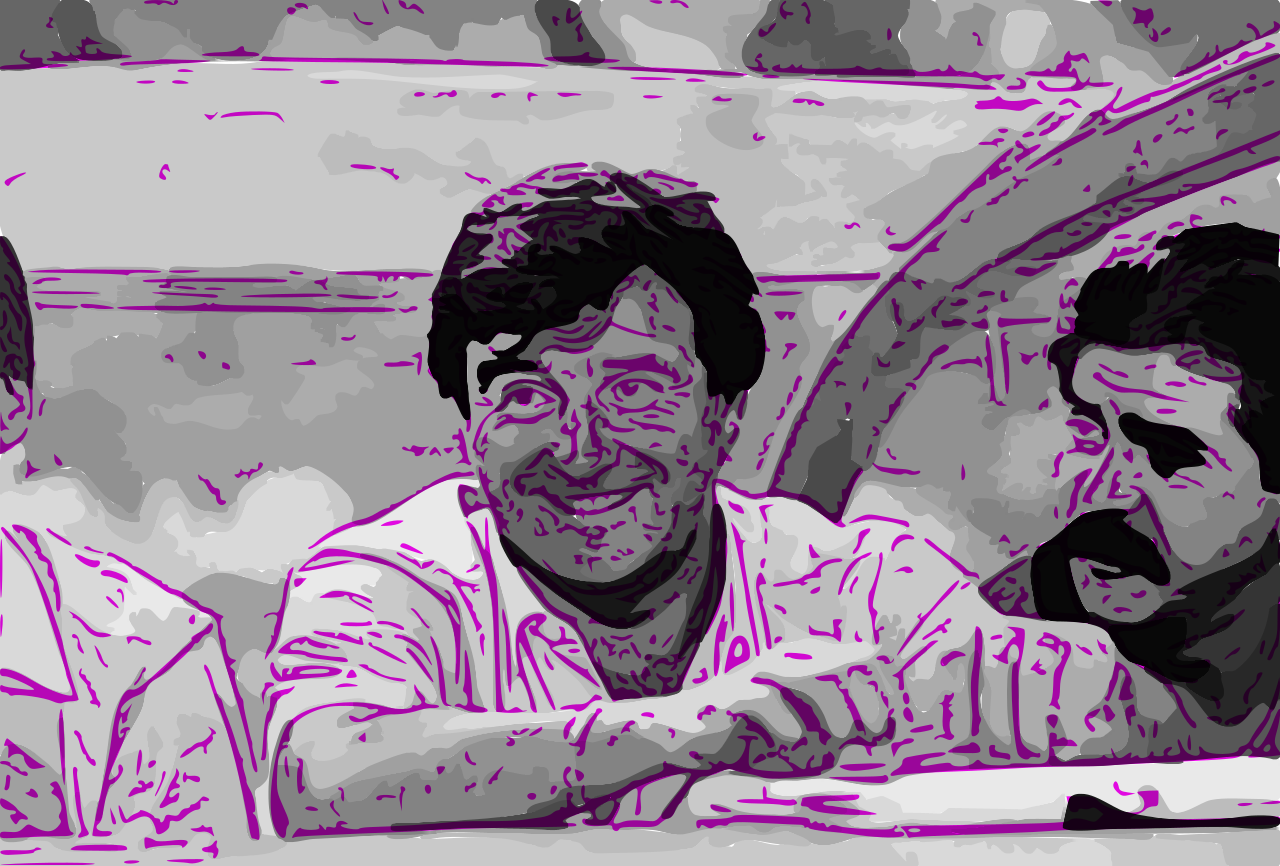
When Terry Venables strode into the Nou Camp in June 1984 he had some convincing to do to win over the public.
He’d learned some Spanish, enough to show his determination to return the club to the top of the tree in Spain. He said the right things, and looked the part, but could he deliver?
Twelve months later there was no doubting his ability as Barca walked off with the La Liga trophy for the first time in 11 years.
El Tel had gone from hired gun to sheriff.
The season was 1984-85. Their last La Liga title was under the management of Rinus Michels in 1973-74. Since then they’d tried 11 different managers, including three in 1979-80. Michels had come back for another go without success, Udo Lattek and Hennes Weisweiler tried their luck too. But no joy.
Terry Venables had taken Crystal Palace from the third tier of English football to the first. He then moved west and dropped back down a division to Queen’s Park Rangers. Four years later he became manager of one of the biggest clubs in Europe.
The English press loved reporting on him. He carried an aura they found irresistible and christened him “El Tel”.
At the time Barca was a sleeping giant, without a league title for 10 years. When they were last Spanish champions the world had yet to see Johan Cruyff and his band of orange total footballers take on the best there was to offer at World Cup ‘74. Alf Ramsey was still England boss and no one had heard of The Sex Pistols.
In July 1983 they appointed Cesar Luis Menotti as boss. The chain-smoking Argentinian, nicknamed “El Flaco” (slim), guided his nation to their first World Cup in 1978. Four years later they made a disappointing defence of their title. Humbled by Belgium in the group stage and well beaten by Italy and Brazil in the second phase, they were further embarrassed when Diego Maradona was sent off against the latter.
The world’s best player had just become the world’s most expensive player when he signed for Barca before the tournament. But Menotti, who’d always been a father figure to him just hadn’t been able to galvanise him, or the club into winners in Spain, let alone Europe.
By April 1984 they finished an agonising one point behind champions, Athletic Bilbao. They won their last six matches, unbeaten in their last nine so defeat in El Clasico at the Bernabeu ultimately meant another season watching someone else open the champagne.
Menotti was off and pretty soon so was Maradona. He hadn’t really settled in Barcelona and had run up debts, some to some rather questionable characters.
But before Maradona left Barcelona conducted the search for a new hand on the tiller.
They interviewed three men, all of whom were associated with British football.
The summer of 1984 had seen Liverpool lift their fourth European Cup. It was the seventh time in eight years an English club were champions of Europe. English coaches were held in high regard in Spain.
Alex Ferguson, who as Aberdeen boss had knocked the old firm off their perch in Scotland and taken his team to a European Cup Winners’ Cup triumph in 1983, was first through the door. He was followed by Bobby Robson, who’d just completed his second season as England national manager. England had failed to qualify for Euro ’84 and Robson was lucky to keep his job. He declined Barca’s offer on account of feeling he had more to give to England. He recommended the next man in the interview chair, Terry Venables.
Initially, the Barca board only wanted to offer him a one-year contract, but he negotiated a three-year one in the end.
No sooner had Venables lined up his pen and pencil on his desk in his Nou Camp office, he found he had to immediately find a replacement for Maradona.
Maradona hit 11 goals in his final season at the club, but his last game ended in shame when he was sent off in the derby against Espanyol.
He wasn’t the only star player at the club. West German, Bernd Schuster was the midfield general. One of the best players on the continent, he’d suffered a bad knee injury from a challenge by Andoni Goikoetxea. Ironically, the same defender who nearly destroyed Maradona’s career when he hit him with “one of the most brutal fouls ever delivered in the history of Spanish football”.
In addition to Schuster, they had five players who wore the red of Spain that year, three of them in the Euro ’84 Final. Striker José Carrasco, midfielder Victor Muñoz and defender Julio Alberto were all in the side which lost 0-2 to France. Goalkeeper Urruti, centre-back José Alexanco, midfielder Tente Sánchez and striker Marcos Alonso had all won national caps.
Venables immediately locked himself in his office and watched game after game of Barca’s matches. He worked out they were a strong side but could be better organised. He set about training them on a pressing system. This was decades before Klopp and Guardiola, and no other teams had seen the like.
Within a few weeks, he coached his defence to be far tighter. A strong defence was the foundation of his plans.
His plan to replace the most valuable player on the planet surprised many.
Glasgow-born Steve Archibald first made his name in Alex Ferguson’s Aberdeen team which won the Scottish Premier Division in 1980. Tottenham snapped him up and he ended First Division top scorer as Spurs won the FA Cup in his first season. They retained their trophy a season later and then the UEFA Cup in 1984.
He’d originally been a midfield player before moving further forward. Venables decided he was an ideal addition to his squad.
Catalonians were even more perplexed as a coach they were unfamiliar with now added a striker they’d barely heard of.
Needless to say the local faithful entered the new season with a sense of dread. As if it wasn’t just enough for El Tel to have the pressure of a huge job like Barca, his best player had been sold from underneath him, their first game of the season was a trip to the Bernabeu for El Clásico, where they’d won just once in their past eight visits.
Real were as desperate as Barca for another title. At this stage, they had 20 La Liga titles to their name but it had been four seasons since their last one. They were still a tough side to beat with José Camacho and Chendo in defence, West German Uli Stielike in midfield alongside Ricardo Gallego and Michel, with one of the most exciting strikers in Europe, Emilio Butragueno.
They too had changed managers in the summer. Alfredo Di Stefano had been moved aside and another former player, Amancio Amaro was promoted from Castilla, their nursery team.
After a goalless first half, the deadlock was broken when Angel, who’d come on for San José just before the break, inexplicably put through his own net when trying to intercept a left-wing cross.
Barca still lead into the final five minutes when Carrasco burst into the area after playing a one-two. He beat the keeper but the angle was too tight for a shot. He played it across the six-yard box and there was Archibald to turn it in for a 2-0 lead. It was a great moment for the Scot and his manager.
Then in the last minute, Barca exhibited their constant pressing as Real couldn’t clear the ball. Eventually, Tenté crossed to the far post where Calderé headed it past Miguel Ángel.
What a start for El Tel, Archibald and Barcelona. They’d won the first El Clásico of the season, 3-0.
As if to emphasise he really had been thrown into the lion’s den, the following week he had to contend with a players’ strike. There had been strikes in 1979 and 1981, so many of the locals weren’t too fussed about it. This one was over image rights. Clubs chose to select teams full of youth players. None of the first team were selected as each club’s teamsheet took on an unusual look. For many players that was the only time they ever appeared in a first-team La Liga fixture. For Venables’ first home game of the season, Real Zaragoza were the visitors. They were dispatched with a thumping 4-0 scoreline and things couldn’t have been better for the new boss.
Midweek saw them enter the European Cup-Winners’ Cup. This was the competition for all the winners of each country’s domestic cup winners. Barca travelled to French side Metz and again scored four in a 4-2 win. With away goals counting double this was a significant win.
It must’ve seemed as if there were greater powers looking to test him as Venables’ third game in La Liga was El derbi Barceloni against Espanyol at Nou Camp. Barca had won nine of the previous 11 meetings of this fixture at home. Buoyed by the win over Real Madrid, a Victor Muñoz goal after just 10 minutes proved to be the only one of the game, and Venables had now given himself considerable breathing space as he looked to marshall his team.
If the locals were worried about Venables’ mettle he showed them there was no cause for alarm. Two of his first three matches had been against Real Madrid and Espanyol. There can’t have been many other managers who’d had as tough a baptism as that.
Real were also beaten by a solitary goal as Sevilla joined Barca at the top of the table with maximum points from their opening three matches.
His first month ended with a trip to Real Betis, who themselves had only dropped one point thus far.
After 272 minutes without conceding a goal in the league, Urruti was finally beaten as Parra gave the home side an early lead. Schuster responded soon after and eight minutes before the break, defender Alexanko gave Barca the lead. They held it to the end for a fourth straight win.
Sevilla were surprisingly held by Elche, who’d lost all their previous matches so now Barca were a point clear at the top.
OCTOBER
Defending a healthy lead in the Cup-Winners’ Cup they welcomed Metz to the Nou Camp. Venables made his first change of the season as Amador replaced Urruti in goal. Trailing 2-4 from their home leg, no one gave Metz a prayer, especially in their own country. No TV or radio station bothered with the game and the Nou Camp was only a quarter full. Metz had just been stuffed, 0-7 in Monaco. When Carraso scored on 33 minutes they had a decent 5-2 lead on aggregate and looked to be cruising. But two goals in a minute, including an own goal from Tente, just made things a little nervy.
Toni Kurbos had scored Metz’s first goal and midway through the second half he added his second. The scores were level but Barca had the edge on away goals. Five minutes from time Kurbos completed his hat-trick and a rather shocked home crowd had just watched their team, which promised so much, get knocked out of Europe at the first hurdle.
It was seen as one of the biggest shocks in European club competition. After the first leg, Schuster had quipped;
“I will give the Metz players some ham when they come to our place to thank them for the present that they give us tonight.”
Metz keeper, Michel Ettore said of the night;
“They really looked down on us and made us angry. When the final whistle went I ran straight up to Schuster and bawled ‘Where’s your ham now?’. I don’t think he speaks French but he understood me that night.”
Unbowed they returned to La Liga action with a 2-0 win over Osasuna, giving them five wins from five and just one goal conceded.
They blinked for the first time in mid-October when held at Real Murcia. Top scorer the previous season, Marcos Alonso, had yet to appear this time round. He replaced Rojo at half-time and within two minutes he opened his account for the season. He is the father of the Marcos Alonso who was formerly at Chelsea and now with Barcelona too.
But instead of kicking on, they seemed to settle for a 1-0 win, when Honduran José Figueroa levelled late in the game. Figueroa had impressed in the World Cup in ’82 in Spain and made his move from Honduras then. He was a bit of a hero as they took a point off the leaders.
Barca were now two points clear at the top as Sevilla were rather surprisingly beaten 0-4 at Osasuna.
After dropping their first point of the season, they followed it up with dropping their first point at home when Real Sociedad visited. Packed with internationals, Sociedad were a good side back then. Luis Arconada in goal, Jesus Zamora controlling midfield and López Ufarte up front they’d won successive La Liga titles at the start of the 80’s.
Right on half-time, López Ufarte became the first visiting player to score at the Nou Camp in the league. Schuster levelled things inside the final 20 minutes but neither side could find a winner.
Barca were still two points clear of three sides on 10, Valencia, Atlético and Sevilla.
A crunch trip to Atlético followed. Defeat would’ve seen the two sides level on points at the top. Ramón Calderé had missed the last three matches but returned for this one and inside the opening 10 minutes he gave Barca the lead. Atlético had Mexican Hugo Sánchez up front and it was he who equalised when he converted a penalty on the hour. With five minutes to go, Migueli scored his first of the season. Nicknamed Tarzan, the big central defender had been at Barca for 11 years at that stage and already hugely popular, this was an important goal over the side in third.
The month ended with a Halloween trip to Elche, who were lurking just above the drop zone. A frustrating match ended goalless. But it wasn’t all bad news as both Valencia and Sevilla lost.
Barcelona ended October with a three-point lead at the top over Valencia, Atlético and Sevilla.
