


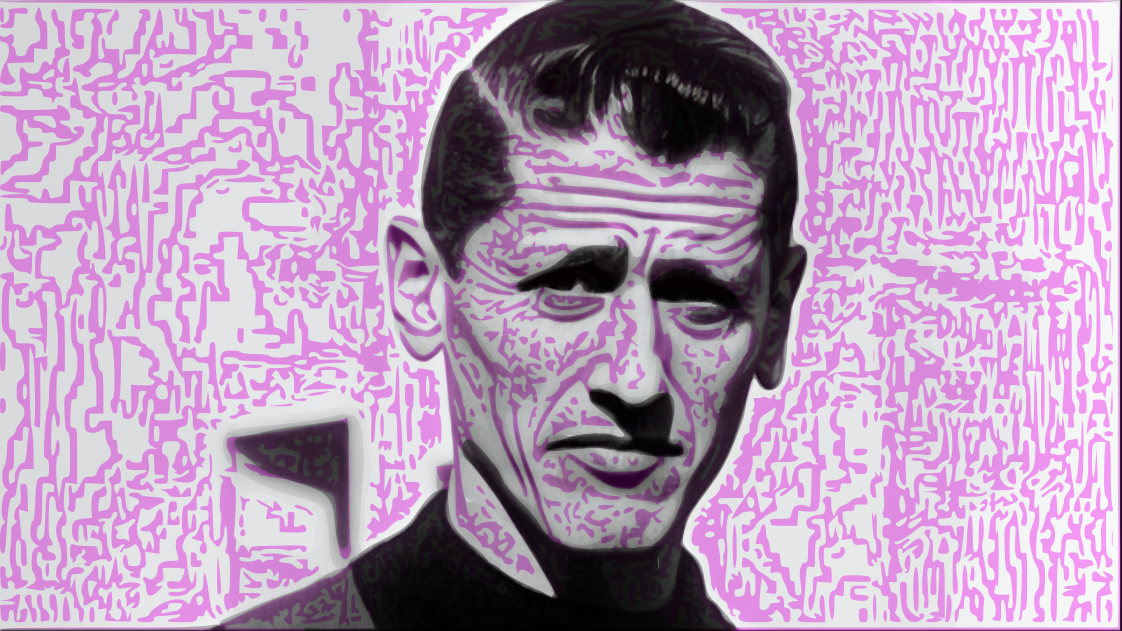
1. Introduction: Uruguay’s Unsung Maestro
To understand Uruguay’s place in football folklore, one must first recognize the heroes who crafted its legacy. Among them stands Juan Alberto Schiaffino, a player of rare intelligence and composure, whose name is forever intertwined with Uruguay’s unexpected triumph in the 1950 World Cup. Often celebrated for his technical ability and foresight on the pitch, Schiaffino embodied a unique style that defied the conventions of his time. He was neither the showy striker nor the pure playmaker; rather, he was a complete footballer who combined vision with execution, guiding his team with a subtle influence that often went unnoticed but was felt profoundly in Uruguay’s successes.
When Uruguay journeyed to Brazil for the World Cup in 1950, few saw them as genuine contenders. After all, the tournament was to be hosted in the nation that, through both investment and sheer national pride, had transformed football into a central part of its identity. Brazil’s team, with its fluid, attacking style, was widely expected to capture the trophy, not least by the hundreds of thousands who would gather in the Maracanã to witness history. For Uruguay, however, this presented an opportunity—a chance to defy the odds and to do so not by mirroring Brazil’s flamboyance but through a meticulous approach that married tactical astuteness with individual brilliance.
At the heart of Uruguay’s game plan was Schiaffino, whose understanding of space, timing, and tempo became instrumental. His influence was not confined to the final third; rather, he shaped the game from deep positions, linking play with an elegance and precision that allowed his teammates to flourish. More than just a scorer, Schiaffino was a strategist on the field, his mind often working two steps ahead, pre-empting moves and anticipating the gaps in the opposition’s setup. In a tournament defined by contrasting styles, his intelligence and calm on the ball became Uruguay’s secret weapon, unsettling opponents who had little answer for his control of the game.
Schiaffino’s pivotal role in Uruguay’s victory at the Maracanã transcended personal glory. It spoke of a nation’s resilience and footballing acumen, challenging preconceived notions of what Latin American teams could achieve on the world stage. His performance in that final, marked by a goal that shifted momentum back to his side, redefined Uruguay’s legacy and showcased an approach to football that was as cerebral as it was skilful. As the dust settled on Brazil’s dreams that fateful day, Schiaffino’s influence lingered, not only in the scoreline but in the broader narrative of world football—a reminder that intelligence and subtlety on the pitch are just as crucial as flair and flamboyance.
This quiet yet profound impact marks Schiaffino as an unsung maestro in the annals of football history, an influence felt long after the final whistle blew at Maracanã.
2. Early Life and Rise in Uruguayan Football
In the modest neighborhoods of Montevideo, Juan Alberto Schiaffino’s football journey began amidst a landscape that prized grit and technical skill in equal measure. His early years at Club Atlético Peñarol reflected the evolution of a player who understood the game at a level well beyond his years. Schiaffino was quick to distinguish himself not merely as a talented forward but as a player with an acute sense of positioning and timing. By his early twenties, he was a fixture in Peñarol’s lineup, blending instinct with discipline, a combination that would prove invaluable in the years to come. Schiaffino’s development was marked by a keen sense of strategy and an understated authority that belied his age, traits that set the stage for his later triumphs on the international stage.
3. The Road to the Maracanã: World Cup 1950 Build-Up
As Uruguay prepared for the World Cup in Brazil, expectations were modest. Yet within the squad, a sense of purpose was building, driven in part by Schiaffino’s quiet leadership. Uruguay had been impressive in the South American Championships, displaying a pragmatic style that combined defensive resilience with incisive attacks—a strategy that would become their trademark in the tournament. Schiaffino emerged as a crucial component of this tactical approach, often dropping deep to orchestrate play and unnerve the opposition with his unpredictable movement. Meanwhile, Brazil, the tournament’s host, carried the weight of national expectation. With Brazil’s famed attacking line, Uruguay’s only chance would lie in controlled, intelligent play—an approach that Schiaffino embodied and executed with unerring precision.
4. Masterclass on the Pitch: The 1950 World Cup Performance
Throughout the group stages, Schiaffino was instrumental in Uruguay’s steady progress, demonstrating his ability to dictate the game’s tempo with both patience and purpose. His tactical awareness and deft passing not only created chances but also controlled the flow of each match, nullifying opponents who struggled to counter Uruguay’s methodical approach. Schiaffino’s performances showcased a footballing intelligence that extended beyond statistics—his movements subtly influencing the outcome of each encounter. In the final round, his interplay with teammates like Obdulio Varela and Alcides Ghiggia became the backbone of Uruguay’s strategy, creating openings and sowing uncertainty among the opposition. By the time Uruguay reached the decisive clash with Brazil, Schiaffino’s importance was undeniable; he was not just another player but the linchpin of Uruguay’s tactical design.
5. Maracanazo: The Defining Moment
The final match at the Maracanã was anticipated as Brazil’s coronation. After they took the lead in the second half, a Brazilian victory seemed assured. But in this pressure-cooker atmosphere, Schiaffino rose to the occasion, finding a rare opening to equalise with an unerring finish that silenced the massive crowd. His goal was the turning point, a moment that shifted both momentum and belief. When Ghiggia scored the winner, it was the culmination of a collective effort orchestrated, in large part, by Schiaffino’s vision and unshakeable calm. The Maracanazo was born, not as a fluke but as a testament to Uruguay’s tactical discipline and Schiaffino’s mastery of the game, forever marking him as a national icon in his homeland and as a figure of quiet brilliance in the annals of world football.
6. Aftermath of Glory: Life Beyond 1950
Schiaffino’s impact did not end with Uruguay’s World Cup triumph. In 1954, he made a landmark move to A.C. Milan, becoming one of the first South Americans to excel in Europe. His time in Italy was characterised by adaptability and success, as he quickly adjusted to the tactical demands of Serie A, leading Milan to multiple league titles. His reputation as a consummate professional followed him, reinforcing his status as a footballing intellect. Despite the allure of European football, Schiaffino remained deeply connected to Uruguay, often returning to offer mentorship and share insights from his experience abroad. His achievements both in South America and Europe set a standard for Latin American players, proving they could excel and adapt on any stage.
7. Legacy of Juan Alberto Schiaffino
Decades after his last match, Schiaffino’s influence endures in Uruguayan football, his legacy upheld by generations who see in him an example of intelligence and understated excellence. His performances in 1950 challenged the traditional expectations of Latin American players, proving that tactical sophistication could match the passion and flair often associated with the region’s football. Schiaffino’s role in Uruguay’s World Cup victory remains a defining chapter in football history, a story of tactical prowess and resilience that inspired future stars. In Uruguay, he is remembered not only for his goals but for his contributions to a footballing philosophy that values intelligence and adaptability. Schiaffino’s legacy is that of a master whose impact on the sport goes beyond records, a lasting testament to a footballer who understood the game’s nuances in ways few others could.
