

1. Introduction: Football’s Expanding Influence Post-War
In the years following the devastation of World War II, Europe found itself in a period of profound recovery, not only in terms of rebuilding cities and infrastructure but in reigniting cultural and social bonds. Among the most significant factors aiding this resurgence was football—a sport that transcended borders, language, and politics. Once again, stadiums across the continent echoed with the cheers of crowds, and football clubs, many of which had suspended activities during the war, began to emerge from the ashes.
The war had left an indelible mark on European society, but football, with its universal appeal, became a crucial vehicle for healing. It offered a sense of normality amidst the chaos of post-war life. Cities scarred by conflict found a form of expression through their clubs, while nations struggling to recover economically discovered in football a rare form of unity and pride. Matches played during this era carried more weight than ever before, becoming emblematic of national recovery and local identity.
As the sport regained its momentum, the need for greater coordination became increasingly apparent. Domestic leagues flourished, yet the lack of a structured international framework for European competition and governance was conspicuous. The conversation surrounding the creation of a continental football governing body, one that could organise and regulate cross-border competitions, had been growing louder since the early 1950s. This movement was spurred on by administrators, players, and fans alike, all of whom recognised that Europe’s unique footballing culture required its own overseeing institution.
Though FIFA remained the global authority in the sport, the realisation was growing that Europe’s needs were distinct. The continent’s nations had diverse football traditions, competitive clubs, and a rapidly growing supporter base, all of which required representation beyond the confines of domestic football associations. The moment was ripe for the creation of a governing body tailored to the demands of European football—a body that would become known as UEFA.
2. The Visionaries Behind UEFA’s Inception
The formation of UEFA in 1954 was not the work of a single moment, nor the product of just one mind. It was the culmination of years of effort by a group of influential figures in European football, each of whom played a crucial role in shaping the future of the game on the continent. At the forefront of this movement was Henri Delaunay, a man whose vision for European football had been clear for decades, and who would ultimately be remembered as the father of UEFA.
Henri Delaunay, a former player turned administrator, had long advocated for the creation of a governing body that could oversee football in Europe. His passion for the sport was matched by his understanding of its potential as a force for unity. Born in France in 1883, Delaunay had been involved in football from a young age, and his early experiences as a referee, followed by his work with the French Football Federation (FFF), convinced him that the sport could become an even greater spectacle with proper coordination. Delaunay’s dream of a pan-European football organization first began to take shape in the 1920s, though at the time, few shared his enthusiasm for such a project.
Delaunay’s determination never wavered, even as Europe descended into the chaos of war. In the post-war years, his vision gained new urgency. As football across the continent recovered, Delaunay recognised that the need for a unified governing body was more pressing than ever. He tirelessly campaigned for the establishment of a European federation, proposing the idea at various international meetings and gatherings of football officials. His foresight proved instrumental in laying the groundwork for what would eventually become UEFA.
Another key figure in UEFA’s founding was Ottorino Barassi, an Italian football administrator who shared Delaunay’s vision for a European football organisation. Barassi had risen to prominence in Italian football as the head of the Italian Football Federation, and he played a pivotal role in organising the 1934 World Cup in Italy. Barassi’s influence in international football circles was significant, and his support for Delaunay’s ideas helped turn the concept of a European football body into a practical reality. His experience in organising large-scale football tournaments proved invaluable as UEFA took its first steps.
The efforts of Delaunay and Barassi were complemented by those of Stanley Rous, the highly respected English football official who later became president of FIFA. Rous, a former referee and football administrator, was deeply committed to the development of football both in Europe and around the world. His involvement in UEFA’s formation was critical, as he provided the bridge between European football and FIFA, ensuring that the new body would not conflict with the existing global structure. Rous’ diplomatic skills were essential in securing FIFA’s blessing for UEFA, and his advocacy for the development of football in Europe strengthened the organisation’s foundation.
Though Delaunay did not live to see UEFA’s official formation—he passed away in 1955, just a year after its founding—his contributions were acknowledged by those who carried his vision forward. His son, Pierre Delaunay, followed in his footsteps, becoming UEFA’s first general secretary and helping to ensure that his father’s dream became a lasting reality.
While Delaunay’s influence was arguably the most significant, it is important to recognise the collective efforts of other football officials from across Europe. These administrators, representing various national football associations, recognised the need for a more structured approach to international football. Their combined efforts in the early 1950s created the momentum necessary to establish UEFA.
However, the path to UEFA’s creation was not without its challenges. There were concerns among some football associations about the potential overlap between UEFA and FIFA, as well as fears that a European body might diminish the authority of national federations. These concerns were mitigated through careful diplomacy and clear communication, with UEFA’s founders emphasising that their aim was not to supplant existing organisations, but to complement them by focusing specifically on the needs of European football.
The groundwork had been laid, and by 1954, the time had come for Europe to finally establish its own governing body. The efforts of Henri Delaunay, Ottorino Barassi, and Stanley Rous, along with other key figures, had set the stage for a new chapter in the history of football on the continent.
3. The Swiss Connection: UEFA’s Birthplace in Basel
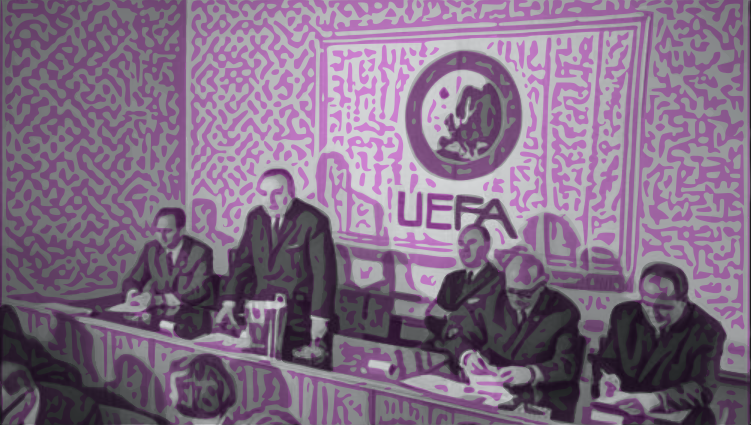
Switzerland played a pivotal role in UEFA’s foundation, providing not only a neutral backdrop but also a symbolic setting for the unification of European football. On June 15, 1954, the founding meeting of UEFA took place in Basel, a city with a rich footballing heritage. Representatives from 25 football associations across Europe gathered to formalise the establishment of the Union of European Football Associations. Basel’s selection as the venue underscored the neutrality needed to unite nations that had been divided by war, politics, and geography. Switzerland, known for its diplomatic prowess and position in hosting international bodies, was the natural choice for UEFA’s birthplace. This meeting was more than just administrative; it was a historic moment where Europe’s football future was being shaped.
4. UEFA’s Early Structure and Governance
Following its formation, UEFA quickly established a governance structure that would guide European football into a new era. Pierre Delaunay, Henri’s son, became the organisation’s first General Secretary, ensuring that his father’s blueprint was faithfully followed. UEFA’s initial Executive Committee was comprised of representatives from various European nations, creating a balanced body that could address the continent’s diverse footballing needs. The decision to set up UEFA’s headquarters in Paris at first, and later in Nyon, Switzerland, allowed for smooth operation at the heart of Europe. The organisation’s early years were marked by a careful balancing act—maintaining a productive relationship with FIFA, while asserting its autonomy in managing the specific needs of European football. UEFA’s early statutes laid out its mission to promote football, encourage unity, and establish a platform for fair competition across Europe.
5. The Birth of European Competitions
One of UEFA’s most significant early achievements was the creation of the European Cup in 1955, a competition that would later evolve into the prestigious UEFA Champions League. This competition was initially the brainchild of French sports journalist Gabriel Hanot, but UEFA’s role in formalising and organising the tournament was crucial. The European Cup allowed the continent’s best clubs to compete against each other, fostering a sense of continental competition that had been missing. Though not all associations immediately embraced the concept, with England initially sceptical, the success of the early tournaments silenced doubts. Over time, the European Cup became a symbol of UEFA’s ability to unite football across borders. Later, UEFA introduced the Cup Winners’ Cup, further expanding its competition portfolio and enhancing the prominence of European football.
6. Politics and Diplomacy in UEFA’s Early Days
The formation of UEFA occurred in the shadow of the Cold War, a period of heightened political tension between Western Europe and the Eastern Bloc. UEFA had to navigate this delicate landscape, ensuring that football remained a neutral space where competition transcended ideological divides. Football matches between Eastern and Western European teams were often seen as proxies for broader political battles, but UEFA’s leadership managed to keep football insulated from these pressures. The organisation’s focus on fostering unity through sport helped maintain football’s role as a bridge between divided nations. UEFA’s governance also involved managing the diverse interests of its member associations, ensuring that each nation’s voice was heard, while promoting the long-term growth of European football as a whole.
7. Impact on European Football: A New Era Begins
The creation of UEFA marked a turning point in European football, ushering in a period of organisation, growth, and professionalism. The new governing body brought structure to cross-border competitions, ensuring that clubs and national teams could participate in fair, well-regulated tournaments. UEFA introduced standardised regulations, disciplinary measures, and competition formats that allowed for smoother and more consistent operations. The impact was immediately felt, with European football becoming more cohesive and competitive. UEFA’s formation also contributed to the rise of the professional game, as clubs adopted modern approaches to management, marketing, and player development. Football, once fragmented by national boundaries, now had a centralised institution dedicated to its prosperity.
8. The Legacy of UEFA’s Founding Fathers
The vision of Henri Delaunay and his contemporaries continues to resonate in European football today. Though Delaunay did not live to see the full impact of UEFA, his ideas laid the foundation for the organisation’s future success. The creation of the UEFA European Championship, first held in 1960, was a direct continuation of Delaunay’s belief in a continental competition for national teams. The work of Ottorino Barassi, Stanley Rous, and other visionaries ensured that UEFA would remain an influential force in world football. As the organisation grew, it adapted to new challenges, expanding its reach and influence. Today, UEFA is responsible for some of the most prestigious competitions in world football, its legacy rooted in the efforts of its founding fathers.
9. Conclusion: UEFA’s Role in Modern Football
From its humble beginnings in 1954, UEFA has grown into one of the most powerful football organisations in the world, overseeing competitions that are watched by millions and shaping the future of the sport. Its creation provided a framework for the professionalisation of football across Europe, ensuring that the game could thrive in a post-war world. The vision of figures like Henri Delaunay and Ottorino Barassi remains central to UEFA’s mission, as the organisation continues to promote unity, excellence, and fair competition. European football today owes much of its success to the foresight and dedication of those who gathered in Basel all those years ago, and UEFA’s role in shaping the sport’s future is as vital now as it was in 1954.
