


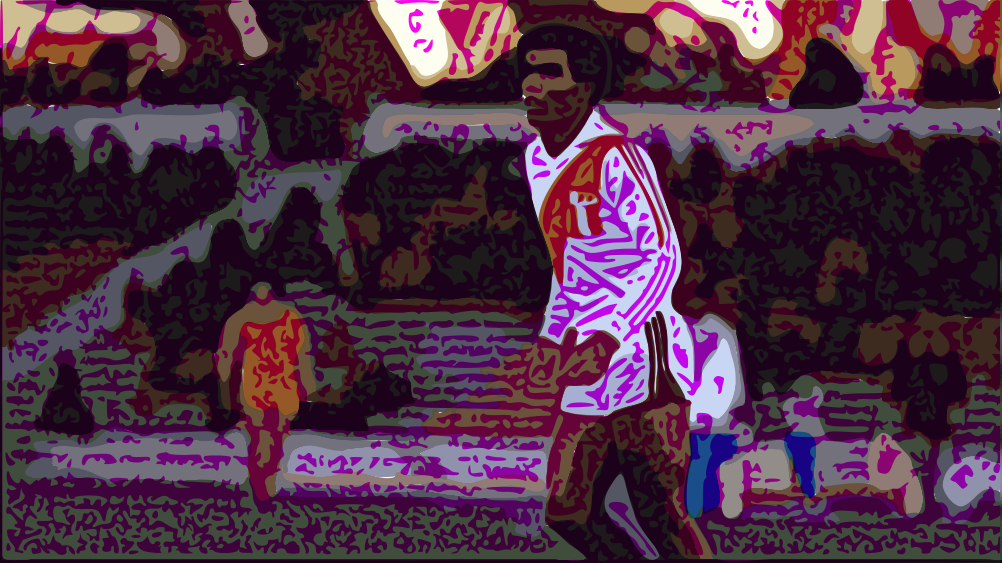
Introduction: The Rise of a Peruvian Legend
Setting the Scene
In the bustling streets of Lima, where the rhythms of life moved to the beat of the Andean drums, football was more than just a sport—it was a way of life. The 1960s and 70s were a golden era for South American football, a time when the continent produced a plethora of talents that dazzled the world. Brazil’s footballing samba, led by the likes of Pelé and Garrincha, dominated headlines, while Argentina’s emerging stars were beginning to make their mark on the global stage. In Uruguay, memories of the Maracanazo of 1950 still lingered, inspiring a new generation of players. It was a time when football was played with flair, passion, and an almost mystical sense of artistry. Amidst this rich tapestry of talent, a young Peruvian emerged, destined to etch his name among the continent’s greats—Teófilo Cubillas.
Brief Overview
Teófilo Cubillas was not just another name in the annals of football; he was the embodiment of Peru’s footballing hopes and dreams. Born in 1949, in the port city of Puente Piedra, Cubillas grew up with a ball at his feet, his natural talent quickly setting him apart from his peers. As the world watched South American football with eager eyes, Cubillas emerged as a beacon of skill and creativity, an attacking midfielder whose vision and goal-scoring prowess transcended borders.
His rise to prominence was no mere accident. From his early days at Alianza Lima to his unforgettable performances on the global stage, Cubillas became a symbol of what Peruvian football could achieve. In a continent overflowing with footballing brilliance, Cubillas carved out a unique place for himself, not only as Peru’s finest but as one of the greatest attacking midfielders of his time. His contributions to the game were not confined to the fields of South America; his influence reached Europe and beyond, leaving an indelible mark on the sport’s history.
As we journey through the story of Teófilo Cubillas, we delve into the life of a player who brought pride to his nation and joy to football lovers across the world. His story is one of triumph and excellence, a tale that continues to inspire future generations of footballers both in Peru and around the globe.
1. Early Life and Beginnings
Humble Origins
Teófilo Juan Cubillas Arizaga was born on March 8, 1949, in the modest town of Puente Piedra, a district on the outskirts of Lima, Peru. The Cubillas family, like many in the area, lived a life marked by simplicity, where football served as both an escape and a source of hope. Growing up in a community where the streets doubled as playgrounds, the young Cubillas was drawn to the game from an early age. The dusty, uneven pitches of his neighborhood became the stage for a boy who, even then, showed signs of the greatness that lay ahead.
His father, a hardworking man, and his mother, who instilled in him a strong sense of discipline, nurtured his early passion for football. While the family lived a humble life, Cubillas’ parents were determined to support their son’s burgeoning talent. They often recounted stories of how, as a young child, Teófilo would spend countless hours kicking a makeshift ball, crafted from rags, against the walls of their home. It was in these formative years that his exceptional control, vision, and flair began to take shape.
First Steps in Football
Cubillas’ journey from the streets of Puente Piedra to the professional arena began in earnest when he was scouted by a local coach who recognized the young boy’s extraordinary talent. At the age of 13, he joined the youth ranks of Alianza Lima, one of Peru’s most prestigious football clubs. The transition from street football to a structured environment could have been daunting for some, but not for Cubillas. He thrived, quickly making a name for himself as a prodigious talent with a natural flair for the game.
At Alianza Lima, Cubillas was mentored by experienced coaches who honed his raw talent and helped him develop the technical skills that would become his trademark. Even at a young age, he possessed a footballing intelligence that set him apart. His ability to read the game, combined with his composure on the ball, caught the eye of everyone who saw him play. It wasn’t long before he was fast-tracked through the youth system, with the club’s senior team keeping a close watch on his progress.
Youth Successes
As Cubillas continued to develop, his performances in youth competitions were nothing short of spectacular. He became the linchpin of Alianza Lima’s youth sides, consistently delivering match-winning displays. His knack for scoring goals from midfield, coupled with his ability to create chances seemingly out of nothing, made him a standout player. Coaches, teammates, and opponents alike were struck by his mature approach to the game, a quality rarely seen in someone so young.
Cubillas’ growing reputation soon transcended the youth leagues. By the time he was 16, whispers of a young prodigy at Alianza Lima had begun to circulate throughout Peruvian football. His performances earned him the nickname “El Nene,” a term of endearment that highlighted both his youth and his burgeoning stardom. Despite his tender age, there was an air of inevitability about his rise—Cubillas was destined for the top.
It was during this period that Cubillas began to draw comparisons with some of the greats of South American football. His style of play, characterized by elegant dribbling, precise passing, and an eye for goal, evoked memories of legendary figures from the continent’s footballing past. However, there was something uniquely Peruvian about Cubillas—a blend of creativity and determination that resonated deeply with the fans who saw him as the future of their national team.
The young Cubillas was acutely aware of the expectations that surrounded him, but he remained unfazed. His focus was unwavering, his ambition clear. He wasn’t just playing for himself; he was playing for his family, his community, and an entire nation that would soon come to see him as their footballing savior.
As the 1960s drew to a close, the stage was set for Cubillas to make the leap from promising youngster to full-fledged star. The world was about to witness the rise of a player who would go on to redefine Peruvian football, bringing a level of skill and artistry that would captivate fans far beyond the borders of his homeland.
2. Alianza Lima: A Star in the Making
Debut and Impact
The transition from the youth ranks to the senior team is often a daunting leap for many young footballers, but for Teófilo Cubillas, it seemed almost effortless. At the age of 17, in 1966, Cubillas made his senior debut for Alianza Lima, a club steeped in history and tradition. The expectations were immense, but Cubillas carried the weight with remarkable poise. His debut came in a fiercely contested match against one of Alianza’s traditional rivals, and the young midfielder immediately made an impact, demonstrating the technical brilliance and footballing intelligence that would become his hallmark.
Cubillas was not just a promising young talent; he was a game-changer. From the moment he stepped onto the pitch for Alianza Lima, he commanded attention. His vision and creativity in the midfield allowed him to orchestrate play, while his powerful and accurate shooting made him a constant threat in front of goal. Fans quickly took to the young star, whose every touch of the ball seemed to carry a spark of magic. In a league known for its physicality, Cubillas’ elegant style of play provided a refreshing contrast, endearing him to supporters and neutrals alike.
Style of Play
Cubillas was a quintessential South American playmaker, combining flair with precision, creativity with discipline. His ability to glide past defenders with ease, coupled with his exceptional dribbling skills, made him a nightmare for opponents. Yet, it was his vision and intelligence that truly set him apart. Cubillas had an uncanny ability to read the game several steps ahead, often seeing passes and opportunities that others missed. Whether threading a perfectly weighted through ball or launching a long-range shot that left goalkeepers helpless, Cubillas had a diverse arsenal that made him one of the most complete midfielders of his time.
In addition to his technical attributes, Cubillas possessed a calmness and maturity on the pitch that belied his young age. He was never one to shy away from responsibility, often stepping up in crucial moments to deliver for his team. His ability to perform under pressure earned him the respect of his teammates and opponents alike. Despite being a natural playmaker, Cubillas was also a prolific goal-scorer, a rare quality for a midfielder. His goals often came in spectacular fashion—powerful drives from outside the box, delicate chips over advancing goalkeepers, and precise free-kicks that curled into the top corner. This combination of playmaking and goal-scoring made Cubillas the heartbeat of Alianza Lima’s attack.
Domestic Success
Cubillas’ influence on Alianza Lima was immediate and profound. During his time with the club, he played a pivotal role in leading them to multiple domestic titles. The 1967 season was particularly noteworthy, as Cubillas’ contributions helped Alianza Lima clinch the Peruvian Primera División title. His performances that season were nothing short of extraordinary, as he finished as the league’s top scorer—a remarkable feat for a midfielder. This achievement not only underscored his goal-scoring prowess but also solidified his reputation as one of Peru’s brightest footballing talents.
The titles continued to flow, with Cubillas leading Alianza Lima to further success in the following years. His partnership with other key players of the era, such as Pedro Pablo León and Julio Baylón, formed the backbone of a team that dominated Peruvian football. Alianza Lima’s success during this period was built around Cubillas’ ability to dictate the tempo of matches and unlock defences with his inventive play. His performances drew widespread acclaim, and it became increasingly clear that Cubillas was destined for even greater things.
Influence on Teammates
As Cubillas’ star continued to rise, so too did his influence within the Alianza Lima squad. Despite his young age, he emerged as a leader on and off the pitch. His professionalism, work ethic, and dedication to the game set a standard that inspired his teammates. Cubillas’ ability to remain grounded, despite his growing fame, earned him the respect of senior players and coaches alike. He was often the player his teammates turned to in moments of adversity, knowing that he could provide the spark needed to change the course of a match.
Cubillas’ leadership was not confined to vocal encouragement or motivational speeches; it was exemplified by his actions on the pitch. He led by example, always giving his best and pushing those around him to raise their game. His presence in the team was a unifying force, and Alianza Lima thrived under his influence. The young midfielder’s commitment to the club and his unwavering desire to succeed became a source of inspiration, driving Alianza Lima to reach new heights.
3. International Recognition: The 1970 World Cup
First World Cup Appearance
By the time the 1970 World Cup in Mexico rolled around, Teófilo Cubillas was already a household name in Peru, and his exploits with Alianza Lima had earned him a call-up to the national team. Peru, a nation with a rich footballing tradition but limited success on the global stage, placed its hopes on the shoulders of the 21-year-old playmaker. The 1970 World Cup would prove to be the tournament that catapulted Cubillas onto the world stage, earning him international recognition as one of the finest talents of his generation.
Peru’s journey to the World Cup had been arduous, and the team entered the tournament as underdogs. However, with Cubillas in the squad, there was a sense of optimism. The tournament began with a group stage that pitted Peru against Bulgaria, Morocco, and West Germany—formidable opponents by any measure. In the opening match against Bulgaria, Peru found themselves trailing by two goals, but Cubillas, showing remarkable composure and skill, played a pivotal role in the comeback. His goal, a stunning strike from outside the box, helped Peru secure a 3-2 victory, setting the tone for the rest of the tournament.
1970 World Cup Campaign
Cubillas’ performances throughout the 1970 World Cup were nothing short of spectacular. In the group stage, he scored in all three of Peru’s matches, demonstrating his ability to perform on the grandest stage. His goal against Morocco, a powerful header that showcased his aerial prowess, and his brilliant solo effort against West Germany, where he dribbled past several defenders before finishing with aplomb, were highlights of the group stage. Peru advanced to the quarter-finals, where they faced Brazil—a team that would go on to be regarded as one of the greatest of all time.
The quarter-final match against Brazil was a thrilling encounter, with both teams displaying attacking football at its finest. Although Peru ultimately lost 4-2, Cubillas’ performance earned him widespread acclaim. He scored one of Peru’s goals with a powerful shot from the edge of the penalty area, a moment that encapsulated his talent and fighting spirit. Despite the defeat, Cubillas left the tournament with his head held high, having scored five goals and established himself as one of the standout players of the World Cup.
Legacy of 1970
The 1970 World Cup marked a turning point in Cubillas’ career. His performances in Mexico earned him the Bronze Boot as the third-highest scorer of the tournament and a place in the hearts of football fans around the world. Cubillas had announced himself on the global stage, and his reputation as a world-class player was firmly established. The tournament also elevated Peru’s status in international football, with Cubillas becoming a symbol of the nation’s footballing renaissance.
Cubillas’ success in the 1970 World Cup had far-reaching implications. It opened doors for him to move to Europe, where he would continue to showcase his talents on an even larger stage. Moreover, his performances inspired a new generation of Peruvian footballers, who saw in Cubillas a role model and a source of pride. The young boy from Puente Piedra had become a global footballing icon, and his journey was far from over.
4. European Adventure: FC Basel and FC Porto
Transition to Europe
Following his World Cup heroics, it was only a matter of time before European clubs came calling for Teófilo Cubillas. In 1973, Cubillas made the move to FC Basel in Switzerland, marking the beginning of his European adventure. The transition from South American football to the European game is often challenging, but Cubillas adapted quickly. His technical skills and footballing intelligence allowed him to thrive in the more tactical and disciplined environment of European football. Basel, a club with a proud history in Swiss football, provided the perfect platform for Cubillas to continue his development.
Cubillas’ time in Switzerland was a success, both individually and collectively. He quickly became a key player for Basel, contributing to the team’s success in the Swiss league. His ability to unlock defences with his passing and movement, combined with his goal-scoring ability, made him a fan favourite. Cubillas’ performances in Switzerland did not go unnoticed, and in 1974, he secured a move to FC Porto in Portugal, a club with a rich tradition and a passionate fanbase.
Playing in Switzerland and Portugal
Cubillas’ move to FC Porto represented a significant step up in his career. The Portuguese league was more competitive, and Porto, one of the country’s most storied clubs, had high expectations for their new signing. Cubillas did not disappoint. He quickly established himself as a key figure in Porto’s midfield, helping the team to challenge for domestic honours. His creativity and vision were instrumental in Porto’s attacking play, and his ability to score goals from midfield added a new dimension to the team.
During his time at Porto, Cubillas became known for his consistency and ability to perform in big matches. He developed a strong understanding with his teammates, particularly with the forwards, and his ability to deliver precise passes and create scoring opportunities made him one of the most feared playmakers in the league. Cubillas’ performances in Portugal further enhanced his reputation, and he was now widely regarded as one of the best midfielders in Europe.
Cultural Impact
Cubillas’ impact in Europe was not limited to his performances on the pitch. He was one of the first high-profile South American players to make a significant mark in European football, paving the way for future generations of players from the continent. His success in Switzerland and Portugal demonstrated that South American players could thrive in Europe, bringing their unique style and flair to the game. Cubillas’ influence extended beyond the football pitch, as he became a cultural ambassador for Peru and South America in Europe.
His time in Europe also contributed to the growing appreciation of South American football in the continent. Cubillas’ performances helped dispel the notion that South American players were purely flair players with little tactical discipline. He showed that they could combine technical brilliance with tactical intelligence, making a lasting impression on European football. Cubillas’ success in Europe was a testament to his adaptability, professionalism, and unwavering dedication to the game.
5. The Pinnacle: The 1978 World Cup
Preparation for 1978
By the time of the 1978 World Cup in Argentina, Teófilo Cubillas was at the peak of his powers. Having honed his skills in Europe, he returned to the international stage as one of the most complete midfielders in the world. Peru, now regarded as a serious contender, had built a strong team around Cubillas, with the player himself seen as the key to their success. The build-up to the tournament was filled with anticipation, and Cubillas was determined to lead his country to glory.
Peru’s preparation for the 1978 World Cup was meticulous. Under the guidance of manager Marcos Calderón, the team was well-organized and tactically astute, with a blend of experienced campaigners and emerging talents. Cubillas, as the team’s captain and talisman, took on the responsibility of leading by example. The 1978 World Cup was held in Argentina, a country with a rich footballing history, and the stage was set for Cubillas to once again showcase his brilliance on the world stage.
1978 World Cup Campaign
The 1978 World Cup would prove to be the pinnacle of Cubillas’ international career. Peru were drawn into a group with Scotland, the Netherlands, and Iran—a challenging group, but one that offered Cubillas the opportunity to shine. In the opening match against Scotland, Cubillas produced one of the finest performances of his career. He scored two goals in a 3-1 victory, including a stunning free-kick that curled into the top corner, leaving the Scottish goalkeeper with no chance. His display against Scotland set the tone for the rest of the tournament, with Cubillas playing a pivotal role in Peru’s progress.
Peru topped their group, with Cubillas scoring five goals in the first round, including a memorable hat-trick against Iran. His performances were a masterclass in midfield play, combining creativity, precision, and goal-scoring ability. In the second round, however, Peru faced stiffer competition, and their campaign came to an end with a series of defeats, including a heavy loss to Argentina. Despite the disappointing finish, Cubillas emerged from the tournament as one of its standout performers, having scored five goals and provided several assists.
Iconic Moments
Cubillas’ performances in the 1978 World Cup were filled with iconic moments that would be remembered for years to come. His free-kick against Scotland was one such moment—a goal that epitomized his technical brilliance and composure under pressure. His hat-trick against Iran was another, showcasing his clinical finishing and ability to dominate a game from midfield. Perhaps most iconic of all was the grace and sportsmanship he displayed throughout the tournament, even in the face of defeat.
Cubillas’ contributions to Peru’s campaign were widely recognized, and he was named in the tournament’s All-Star Team. His performances earned him comparisons with some of the greatest players in football history, and he was hailed as one of the best midfielders in the world. The 1978 World Cup cemented Cubillas’ legacy as a footballing legend, and his place in the pantheon of greats was assured.
Impact on World Football
The 1978 World Cup had a profound impact on Cubillas’ legacy. His performances in Argentina elevated him to the status of a global football icon, with fans and pundits alike marveling at his talent. Cubillas had once again demonstrated that he could compete with the best in the world, and his influence on the game was undeniable. His ability to combine flair with tactical discipline made him a role model for aspiring midfielders, both in South America and beyond.
Cubillas’ impact extended beyond the footballing world. His performances brought pride and joy to the people of Peru, who saw in him a symbol of national excellence. Cubillas became a source of inspiration for future generations of Peruvian footballers, who aspired to follow in his footsteps. His influence on the global game was also significant, as he helped to raise the profile of South American football and demonstrated that players from the continent could excel at the highest level.
6. Return to Alianza Lima and the Later Years
Homecoming
After his successful stint in Europe, Teófilo Cubillas made the decision to return to his beloved Alianza Lima in 1977. His return was greeted with widespread excitement and anticipation, as fans eagerly awaited the homecoming of their prodigal son. Cubillas’ return to Alianza Lima marked a new chapter in his career, one that would see him continue to excel on the domestic stage while also playing a pivotal role in nurturing the next generation of Peruvian talent.
Cubillas’ second spell at Alianza Lima was marked by both personal and collective success. He continued to perform at a high level, leading the team to further domestic titles and cementing his status as one of the club’s all-time greats. His experience and leadership were invaluable to a team that had undergone significant changes during his time in Europe. Cubillas’ presence brought stability and inspiration, as he led by example both on and off the pitch.
Final International Appearances
Despite his advancing years, Cubillas remained a key figure for the Peruvian national team. He was called upon to represent his country in the 1982 World Cup in Spain, his third and final World Cup appearance. Although Peru’s campaign was less successful than in previous tournaments, Cubillas’ presence was a source of pride for his countrymen. He played in all three of Peru’s group stage matches, but the team was unable to progress to the knockout stages.
Cubillas’ final appearance for the national team came in 1982, bringing to an end a remarkable international career that spanned over a decade. His contribution to Peruvian football was immense, and his name became synonymous with the golden era of Peruvian football. Cubillas’ international career was characterized by moments of brilliance and unforgettable performances that earned him a place among the greatest players in South American history.
Mentorship and Legacy at Alianza Lima
As Cubillas’ playing career began to wind down, he took on a new role at Alianza Lima—one of mentorship and guidance. He became a mentor to the younger players at the club, passing on his knowledge and experience to the next generation. Cubillas’ influence extended beyond the training pitch, as he played a key role in shaping the club’s culture and ethos. His commitment to Alianza Lima, both as a player and a mentor, was unwavering, and his legacy at the club was assured.
Cubillas’ impact on Peruvian football was profound. He not only inspired a generation of players but also helped to elevate the status of Peruvian football on the global stage. His success paved the way for future Peruvian stars, who looked to Cubillas as a role model and a source of inspiration. Cubillas’ legacy at Alianza Lima and in Peruvian football as a whole is one of excellence, dedication, and a deep love for the game.
7. Beyond the Pitch: Cubillas’ Influence on Peruvian and South American Football
Cultural Icon
Teófilo Cubillas’ impact extended far beyond the football pitch. He became a cultural icon in Peru, representing not just footballing excellence but also national pride and identity. In a country where football is deeply ingrained in the social fabric, Cubillas was more than just a player—he was a symbol of what Peru could achieve on the global stage. His success brought joy to millions of Peruvians and provided a source of pride in a nation that had often been overshadowed by its more illustrious South American neighbours.
Cubillas’ influence on Peruvian culture was profound. His achievements were celebrated across the country, and he became a household name. Streets, schools, and stadiums were named in his honour, and his image was immortalized in murals and statues. Cubillas was not just admired for his footballing talent; he was revered for his humility, his dedication, and his unwavering commitment to his country.
Inspiration to Future Generations
Cubillas’ legacy as an inspirational figure in Peruvian football is undeniable. His success provided a blueprint for future generations of Peruvian players, who aspired to emulate his achievements. Cubillas showed that it was possible for a player from Peru to reach the pinnacle of world football, and his story inspired countless young players to pursue their dreams.
Cubillas’ influence extended beyond Peru, resonating throughout South America and beyond. His success demonstrated the potential of South American football and helped to raise the profile of the continent’s players on the global stage. Future stars, such as Paolo Guerrero and Jefferson Farfán, often spoke of Cubillas as a role model who had paved the way for them to succeed. His legacy is one of inspiration, and his impact on the game will be felt for generations to come.
Comparison to Contemporaries
Teófilo Cubillas’ place among the greats of South American football is secure. Throughout his career, he was often compared to other legends of the game, such as Pelé, Maradona, and Zico. While each player had their unique qualities, Cubillas stood out for his ability to combine creativity with discipline, flair with consistency. He was a player who could change the course of a game with a single moment of brilliance, yet he also possessed the tactical intelligence and work ethic to contribute to the team in every match.
Cubillas’ achievements are all the more remarkable considering the context in which they were made. Unlike some of his contemporaries, who played for countries with rich footballing traditions and numerous World Cup titles, Cubillas carried the hopes of a nation that had not enjoyed the same level of success. His ability to shine on the global stage, often against the odds, is a testament to his extraordinary talent and character.
8. The Legacy of Teófilo Cubillas
Peru’s Greatest Player
Teófilo Cubillas is widely regarded as the greatest footballer in Peruvian history. His achievements on the pitch, both at club and international level, set him apart as a true icon of the game. Cubillas’ ability to combine technical brilliance with a deep understanding of the game made him a complete midfielder, and his influence on the teams he played for was immeasurable. He was not just a great player; he was a leader, a mentor, and a symbol of excellence for Peruvian football.
Cubillas’ place in the history of Peruvian football is secure. He remains the all-time top scorer for Peru in World Cup tournaments, and his performances in the 1970 and 1978 World Cups are still celebrated as some of the finest in the history of the competition. His contributions to Alianza Lima, where he is regarded as one of the club’s greatest players, are also part of his enduring legacy. For many Peruvians, Cubillas is not just a footballer; he is a national treasure.
Contribution to Football History
Teófilo Cubillas’ contribution to football history goes beyond his achievements on the pitch. He was a trailblazer for South American players in Europe, demonstrating that they could succeed at the highest level of the game. His success helped to break down barriers and open doors for future generations of South American footballers, who followed in his footsteps. Cubillas’ influence on the global game is still felt today, as his legacy continues to inspire players and fans around the world.
Cubillas’ place in football history is also marked by his impact on the way the game is played. His ability to combine creativity with discipline, to play with flair while maintaining tactical intelligence, set a new standard for midfielders. Cubillas showed that a player could be both an artist and a tactician, and his style of play influenced a generation of players who sought to emulate his approach to the game.
Cubillas Today
Even after retiring from professional football, Teófilo Cubillas has remained an influential figure in the sport. He has taken on various roles within football, including coaching and mentoring young players, and he continues to be involved in initiatives that promote the game in Peru and beyond. Cubillas’ passion for football is undiminished, and he remains a respected ambassador for the sport.
Cubillas’ legacy is one of excellence, inspiration, and a deep love for the game. His achievements on the pitch are matched by his contributions off it, as he continues to give back to the sport that gave him so much. For fans of football, Teófilo Cubillas is not just a player; he is a legend, a figure who embodies the best of the beautiful game.
