


The journey leading to winning the UEFA European Championship in 1996 was not a rosy one for Germany. After winning the competition as West Germany in 1980, the team struggled to lift the trophy, but couldn’t until 1996. They were eliminated severally in the finals by different teams, including Czechoslovakia and Denmark. That didn’t stop the German team from participating in the next Euro Cup in 1996 and winning it this time.
This article will explore the outstanding performance of Germany in Euro 1996 and the glory days of the German National Team. Keep reading to get more information below.
Previous Winners of the UEFA European Football Championship
The UEFA European Football Championship is a competition hosted once in four years across different countries in Europe. It was formerly called the UEFA European Nations Cup before it got a name change in 1968.
The first-ever UEFA European Nations Cup was hosted by France in 1960, which had 17 teams competing for the prestigious cup. After all the matches had been played, the last game of the competition was played between the Soviet Union and Yugoslavia in Paris. The Soviet Union defeated Yugoslavia by two goals to one, making them the first team to lift the trophy.
Spain hosted the second UEFA European Nations Cup in 1964. Interestingly, the Spanish team clashed with the defending champions – the Soviet Union in the final game and won the cup.
It was 1968 the competition got a name change to the UEFA European Championship. This competition was hosted by Italy with small changes made to the rules of the competition. Italy won the competition by beating Yugoslavia in both legs.
West Germany won its first-ever UEFA European Football Championship in 1972. This competition was hosted by Belgium and had several teams competing for the title. The Soviet Union made it through to the finals again but lost the cup to West Germany by three goals to nil.
West Germany was among the favourites to win the 1976 UEFA Championship Cup because they won it four years earlier. The team clashed with Czechoslovakia in the final and lost the match through penalty shootouts.
The West Germany team was resilient and came back stronger in 1980 after its disappointing loss to Czechoslovakia in 1976. It got into the final and defeated Belgium by two goals to one to be crowned the UEFA European Champions of 1980.
The 1984 UEFA European Championship was hosted by France. It was a disappointing outing for the West Germany team because it didn’t get into the final this time. Spain and the host nation – France clashed in the final, and France eventually won the match by two goals to nil.
Germany hosted the 1988 UEFA European Championship but didn’t get through to the Final. The team was defeated by the Netherlands in the Semi-Finals, which was the first victory for the Dutch team since 1956.
Germany got into the championship finals but lost to the Denmark team who were the underdogs. The final match of the competition ended 2-1 in favour of Denmark.
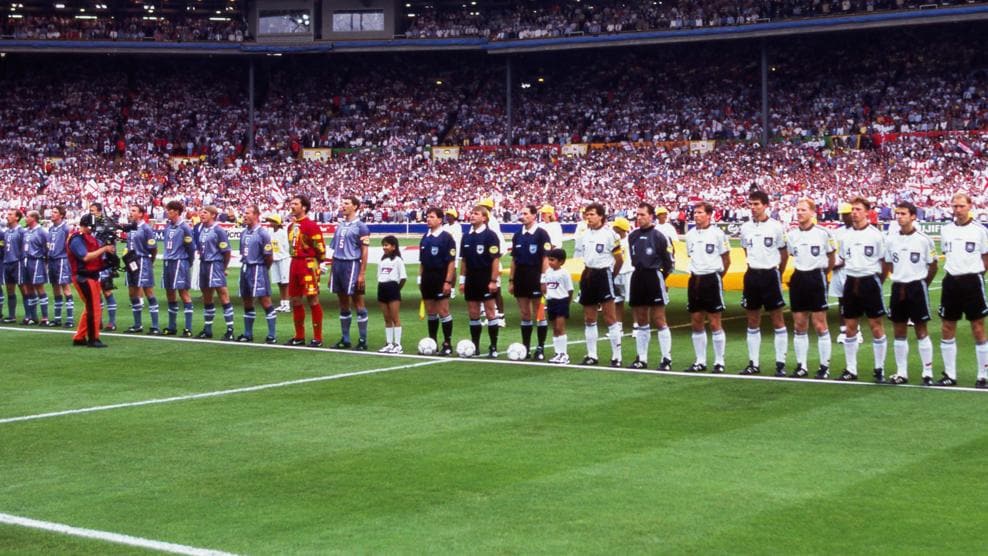
The German team came back hungrier and stronger for the Euro 1996. It won its third European Championship by defeating the Czech Republic two goals to one at Wembley Stadium, in London.
The History of the German Team in the UEFA European Football Championship Before 1996
Germany did not participate in the UEFA European Nations Cup in 1960 and 1964. It participated as West Germany but didn’t qualify for the competition in 1968.
Interestingly, the team came to its first UEFA Championship in 1972 and won the competition. West Germany defeated the Soviet Union in the finals by three goals to nil. West Germany was the better side in the final match because they dominated the match in both halves. Two goals from Gerd Muller and another goal by Herbert Wimmer helped the German team to win the Euro 1972 final match.
After the team’s impressive outing in Belgium, West Germany gave another classy performance in the Euro 1976. The German side got into the finals of this competition but lost the final game to Czechoslovakia.
West Germany won the Euro 1980, making it the second title won by the team. The team clashed with the Belgium team in the final and won by two goals to one. Horst Hrubesch’s opening goal gave the German side an early lead in the first ten minutes of the match. Belgium responded with a penalty kick taken by Vandereycken in the 75th minute of the match. Everything was looking as if the match would go into extra time before Hrubesch responded with a superb header to give the German side a late win in the 88th minute.
West Germany couldn’t make it past the group stage in the UEFA European Championship 1984. The team drew its first group match against Portugal, won its second match against Romania, and lost its final match against Spain.
The German team didn’t go past the semi-finals in the UEFA European Championship 1988. It was defeated by the Netherlands by two goals to nil.
Unified Germany came close to winning the UEFA European Championship but lost to Denmark in 1992. Denmark beat the German team by two goals to nil to lift the trophy for the first time.
The Journey to Being Unified Germany
We will explain how the German team moved to becoming a unified team below.
Why was Germany not Previously Unified?
In 1945, the United States, Great Britain, and the Soviet Union agreed to divide Germany into four occupational zones – one for each nation, including France. Each country was assigned a quadrant of Germany. The Soviet Union was in charge of the northeast quadrant, including Berlin.
Everything was going smoothly until the biggest rift between the Soviet Union and the rest of the nations happened. This rift was formed around the issue of war reparation.
Then, in 1947, Great Britain and the United States decided to combine their zones to boost economic cooperation between them. More tension arose when the Western allies tried to circulate the new Deutsche Mark in Berlin. The Soviet Union tried to overturn what had been done, but it was too late – The West stood its ground.
In response, the Soviet Union cut off all access to West Berlin by road, train, and ship, but not by air. Other regions like the United States, Great Britain, and France quickly introduced the Berlin Airlift, a campaign to send food and fuel into West Berlin, which broke the Soviet Union’s blockade in 1949.
In 1949, France merged its region with the United States and Great Britain. This merger resulted in the establishment of the Federal Republic of Germany or West Germany. In the same year, the Soviet Union established the German Democratic Republic known as East Germany.
West Germany was the team that represented Germany in different competitions between 1949 and 1990.
How did the German Team move from West Germany to Unified Germany?
On November 9, 1989, East Germany said it was re-opening its border at midnight for people from the West to come in. After the opening of the Berlin Wall, West Germany’s Chancellor, Helmut Kohl called for the unification of Germany. It seemed like it was the United States that was pushing for this unification, other countries were a bit laid back about it.
In January 1990, East Germany experienced chaos, which led to bloodshed. Workers didn’t go to work and they took to the streets to protest. Talks about Germany’s unification came up again on February 9, 1990, when the US Secretary of State, James Baker met with Soviet leader, Gorbachev in Moscow. A definite agreement wasn’t reached at the end of this meeting about Germany’s unification.
In the same year, East Germany held its first election in 57 years, which recorded ninety-three percent of its citizens casting their votes. Most of the votes cast went to the party that had the backing of Helmut Kohl. This made it clear that the East German citizens wanted Germany’s unification.
On May 31, 1990, Gorbachev finally agreed to the unification of Germany. Eventually, Germany’s unification came on October 3, 1990, and Berlin was reinstated as the capital of United Germany. The reunification led to the establishment of the Unified German team in the same year.
What were the Glory Days of the German Team?
The German team have experienced the good, the bad, and the ugly in its various outings for different tournaments. They have played in different popular competitions like the FIFA World Cup, UEFA European Championship, and the Confederations Cup Champion.
The team’s first major break was in the UEFA European Nations Cup in 1972 when they won the trophy for the first time. It took another eight years before the team could replicate what it did in 1972 when it won the UEFA European Championship in 1980. Subsequent outings after the UEFA European Championship in 1980 were impressive but were not enough to win them the trophy. The Unified German team showed up for the UEFA European Championship 1996 in style and won the trophy for the first time as a unified team.
The German team won its first World Cup in 1954 when the team was still known as West Germany. It won another World Cup title in 1972, two years after winning the UEFA European Nations Cup. A United German team won its first World Cup title in 1990, and its second in 2014.
What was the Impact of the Team’s Unification?
The East German Football Association (DFV) and the West German Football Association (DFB) became the Unified German team 49 days after Germany’s unification in 1990. Undoubtedly, West Germany’s team was a more popular side than the East German team. This popularity can be attributed to the achievements of the West Germany’s team. The big question in the minds of people was – how do we merge both teams into one? Playing as a team was difficult at first, but everyone soon became familiar with each other after a while.
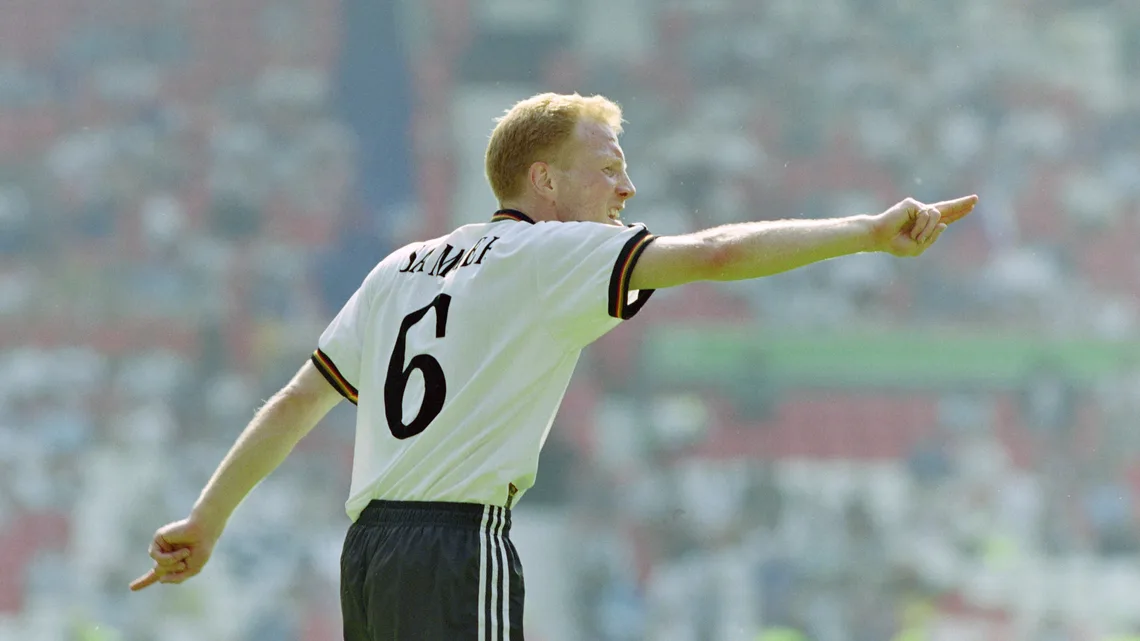
The Unified German team had more entries from West Germany than East Germany. Andreas Thom and Matthias Sammer were the first East German players who joined the unified team. The German Unified team won its first match by four goals to nil against Switzerland on 19 December 1990. One of the remarkable moments for this team was when it won the UEFA European Championship in 1992.
The UEFA European Football Championship in 1996 – A Focus on the German Team
Germany had impressive stats coming into this competition. For example, they got into the semi-finals of the competition in 1988 and lost to the Dutch team by two goals to nil. That didn’t stop the team from putting up a superb performance in the UEFA European Championship in 1992. They got into the finals and lost to Denmark.
The team’s hard work and persistence eventually paid off in the UEFA European Championship of 1996. We’ll be exploring how Unified Germany won the UEFA European Football Championship in 1996 below:
An Overview of Each Match that led to the Team’s Victory
The German team was put in Group C alongside Czechia, Italy, and Russia. You can say this is one of the toughest groups of the tournament because it had three football giants in it. It played the first match of the tournament against Czechia and won by two goals to nil. This gave the team a confidence boost to go into its next game with Russia. The result of the match against Russia was better than the first, as the team won with a convincing three-goal margin. This impressive result is enough to get the German side out of this group safely. It played its last group game against Italy, which ended as a goalless draw. Germany finished on top of the table with seven points clear.
Now, it is to a bigger stage – quarter-finals. The German team played its quarter-final match against Croatia and won by two goals to one. All thanks to the 59th-minute goal by Sammer that sent the Berti’s boys into the semi-finals of the tournament.

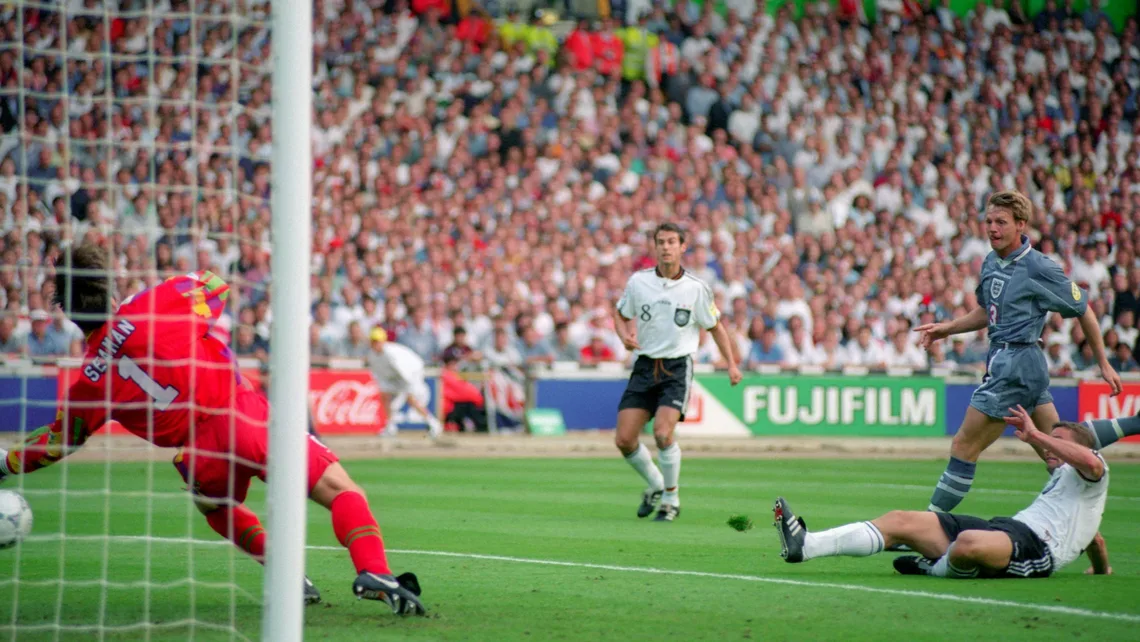
The team’s semi-final game was against the Three Lions of England. Alan Shearer scored the opening goal of this match, giving England an early lead in the first three minutes. Germany quickly responded in the 16th minute of the match to level the scoresheet. Each team had their chances in the extra time, but none of them could convert these chances, which led the game to penalty shootouts. Germany finally won the penalty shootout by six goals to five. It was tough, but the team made it through to another final.
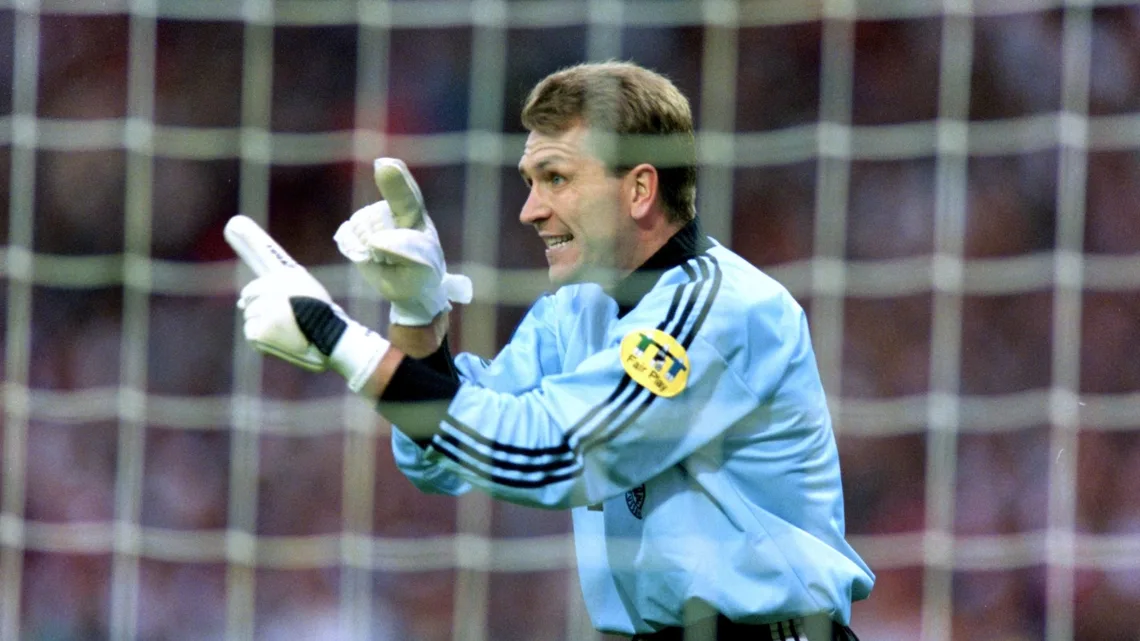
Germany faced Czechia in the final and won by two goals to one. The Czech Republic opened up the scoresheet with an impressive penalty shot from Berger in the 59th minute. Bierhoff’s stunning header in the box gave the German team an equalizer in the 73rd minute. It was in the extra time that Bierhoff gave the team the winning goal, which made him the hero of the day. Unified Germany was crowned the UEFA European Champions at the end of this game.
The Manager’s Impact on the Overall Team’s Performance
One man comes to mind when you think about the overall team’s performance in the Euro 1996 – Berti Vogts. He took over the affairs of the German team after Franz Beckenbauer resigned in 1990. His first appearance in the UEFA European Championship was in 1992, but his side lost to Denmark in the final. The team’s overall performance was not entirely poor under the management of Vogts. He came back with a stronger and more determined team in UEFA Euro 1996 and won the trophy. Outside the field of play, he kept players in check and didn’t give in to the pressure of bringing some players into the team. He also managed the team’s injuries and suspensions well and found suitable replacements for injured and suspended players.
What Happened to the Unified German Team After Winning the UEFA European Football Championship in 1996
Berti Vogts stepped down as the coach of the German National Team in 1998 and was replaced by Erich Ribbeck. After the Euro 1996 victory, the German team participated in the FIFA 1997/1998 World Cup but was eliminated by Croatia in the quarter-finals. Subsequently, the team participated in other Euro and World Cup competitions and didn’t win.
The team had to wait 18 years after winning Euro 1996 before they could win a cup – the FIFA World Cup 2014. It was Joachim Löw who helped the team win its first trophy after Jürgen Klinsmann left the team at the expiration of his contract. The new man changed the structure of the German national team and improved on the strategies of Klinsmann. Löw couldn’t replicate what he did in 2014 at the FIFA World Cup 2018 as his side failed to make it past the group stage.
Joachim Löw stepped down as Germany’s head coach in March 2021 and was replaced by his former assistant Hansi Flick. The new coach took the German team to the FIFA World Cup 2022, but the team failed to get out of the group again. Julian Nagelsmann took over the team’s management from Flick in September 2023 because it looked like the team was in dire need of a saviour.
What do the Bookmakers Think About Germany in the UEFA EURO 2024
Bookmakers have high hopes that Germany will put up an impressive performance in the UEFA Euro 2024. Although the team has not been brilliant in its previous tournaments, bookmakers still think they’ve got what it takes to win the competition. It is among the teams with the highest odds of winning the competition. Betting on Euro 2024 in Germany is easy if you know what to look for in the betting site you want to use. What you should check is the security, bonuses, and odds at your preferred betting site.
Conclusion
The German National Team is one of the biggest football sides worldwide. Some remarkable achievements of the German team include four World Cup titles and three UEFA European Championships. The most memorable among these achievements has to be the FIFA World Cup 2014 because no one saw the win coming. Another memorable achievement from the German team was when they won the UEFA Euro Championship 1996 as Unified Germany. Will Germany bring back the glory days under the supervision of Julian Nagelsmann? We’ll see as it all goes down in the UEFA European Championship 2024.
