


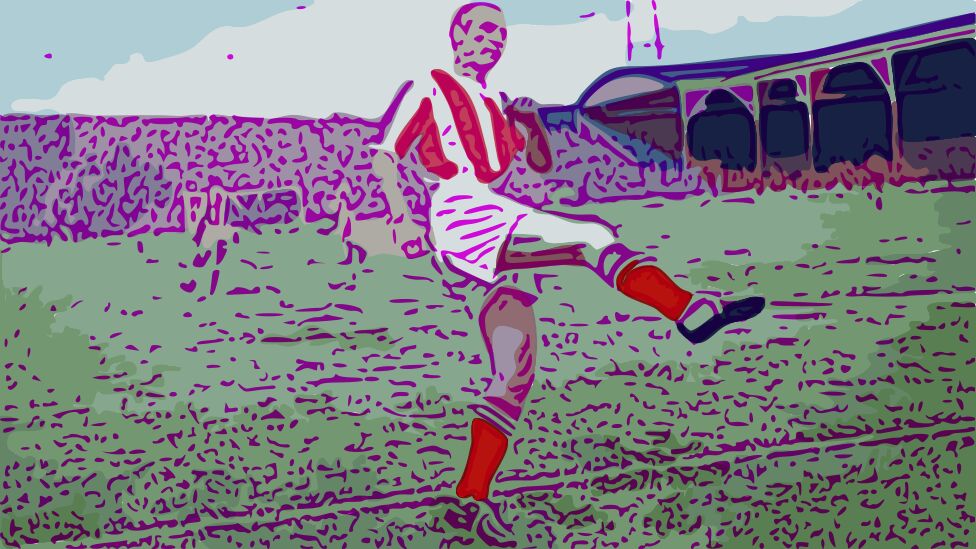
In the pantheon of football legends, few names resonate with the timeless elegance and profound impact of Sir Stanley Matthews. His career, spanning the pre-war and post-war eras of the 20th century, serves as a bridge between two distinct ages of football, encapsulating the transformation of the sport from a local pastime to a global phenomenon. Matthews, known affectionately as “The Wizard of the Dribble,” was not merely a player but an institution, whose style, ethos, and dedication to the beautiful game left an indelible mark on football’s very soul.
Sir Stanley’s legacy is one of unparalleled longevity and brilliance on the football pitch. Born on the 1st of February 1915, in Stoke-on-Trent, England, his career stretched over an astonishing 35 years, during which he bewitched defenders with his dribbling, outpaced opponents with his speed, and inspired fans with his humility and sportsmanship. Matthews’s influence extended beyond his playing days, through his commitment to football development worldwide, especially in countries far removed from the footballing mainstream.
The image of Matthews in British football culture is akin to a cherished artefact, one that embodies the ideals of sportsmanship, skill, and perseverance. His story is often told with a mix of reverence and awe, a testament to his character both on and off the field. In an era dominated by physicality and hard tackles, Matthews’s playing style was a beacon of creativity and flair. He danced around opponents with a grace that seemed to belong to another world, earning him the nickname that would become synonymous with his legend.
To understand the magnitude of Matthews’s career and legacy, one must consider the backdrop against which his story unfolded. The early to mid-20th century was a period of profound change for football. The sport was evolving rapidly, with tactical innovations, professionalization, and the global expansion of the game. Amidst this transformation, Matthews’s career stood as a bridge between the rugged, industrial roots of English football and its modern incarnation as the world’s game. His longevity allowed him to witness, influence, and adapt to the sweeping changes of his time, making him a unique figure in football’s history.
Matthews’s journey through the decades of football was marked by iconic moments, none more so than the 1953 FA Cup Final, often referred to as the “Matthews Final.” This match, a dramatic comeback victory for Blackpool against Bolton Wanderers, epitomized not just Matthews’s skill but his indomitable spirit. However, his contributions were not confined to moments of individual brilliance. Matthews was a pioneer in the truest sense, advocating for professionalism, sportsmanship, and the global spread of football ideals.
As we delve into the story of Sir Stanley Matthews, we explore not just the narrative of a footballer but the evolution of the game itself. His life and career offer a window into the soul of football, reflecting the changes, challenges, and constants of the sport. In tracing his journey, we uncover the enduring image of a man whose legacy is etched not only in the records and accolades but in the hearts of all who cherish the beautiful game.
Chapter 1: The Early Years
The story of Sir Stanley Matthews begins in the heart of England, in the industrial town of Stoke-on-Trent, Staffordshire. Born into a sporting family on February 1, 1915, young Stanley was introduced to the world of football at an early age. His father, Jack Matthews, was a local boxing enthusiast and trainer, instilling in Stanley the values of discipline, hard work, and the importance of physical fitness from a young age. This upbringing in a milieu where sports were revered not just as a pastime but as a way of life, sowed the seeds of what would grow into an extraordinary footballing journey.
From the cobbled streets of Stoke-on-Trent to the lush green pitches of the English Football League, Matthews’s early years were a harbinger of the greatness that was to come. His prodigious talent was evident from the outset, as he demonstrated an exceptional affinity for the ball at his feet. Neighbours and schoolmates would recall the sight of a young Matthews, tirelessly practicing his dribbling and control, often with a rag ball or a bundle of rags, dreaming of emulating his footballing heroes of the time.
Matthews’s formal entry into professional football came at the tender age of 17 when he signed for Stoke City in 1932. This was a pivotal moment, not just in Matthews’s career but in the narrative of English football, for it marked the arrival of a player who would redefine the art of dribbling and wing play. His debut season was a glimpse into the future, showcasing his natural talent, speed, and an uncanny ability to glide past defenders with ease.
The making of Stanley Matthews’s footballing philosophy was influenced by a combination of his natural talent, the environment of his upbringing, and the mentors who guided him in his early years. Among these influences was Stoke City’s manager, Tom Mather, who recognized Matthews’s potential early on and nurtured his skills. Mather’s guidance was instrumental in refining Matthews’s natural abilities, focusing on enhancing his strengths rather than conforming to the physical style of play that was prevalent at the time.
Another significant influence on Matthews was the football culture of the Potteries, a region with a rich footballing heritage. The local football scene was competitive and passionate, with a deep love for the game that was ingrained in the community. This environment fostered Matthews’s love for football, teaching him the value of teamwork, community, and the joy of playing for the love of the game.
As Matthews’s career progressed, so too did his footballing philosophy. He became known for his dedication to training, his commitment to improving his skills, and his unwavering professionalism. These early years laid the foundation for what would become a hallmark of Matthews’s style: a blend of exceptional skill, sportsmanship, and a dedication to the beautiful game that was unmatched.
In these formative years, Matthews not only honed his skills but also began to carve out a niche for himself as a player of extraordinary talent and character. His journey from the streets of Stoke-on-Trent to the heights of professional football was a testament to his hard work, determination, and an unrelenting love for the game. As we delve deeper into the story of Sir Stanley Matthews, we uncover the legacy of a player whose early years were a prologue to a career that would forever change the landscape of football.
Chapter 2: The Playing Style That Charmed a Nation
Sir Stanley Matthews’s playing style was a symphony of grace, agility, and artistry on the football pitch, an embodiment of the game’s beauty and elegance. In an era when football was often characterized by its physicality and brute strength, Matthews’s approach was a refreshing antithesis, captivating audiences and redefining the expectations of a winger’s role in the team.
The Art of Dribbling and Ball Control
At the heart of Matthews’s game was his exceptional dribbling ability. With the ball seemingly tied to his feet, he could weave through defences with an ease that belied the complexity of his movements. His dribbling was not just about evading tackles; it was about creating space, manipulating the ball to dictate the pace of the game, and, most crucially, entertaining the crowd. His speed, while notable, was always a secondary trait to his incredible ball control. Matthews could change direction almost instantaneously, leaving defenders bewildered and often stranded.
Comparing Matthews’s style to that of his contemporaries and modern players highlights the timeless nature of his skill set. While players like Tom Finney and Wilf Mannion were also lauded for their technical abilities, Matthews’s style was unique in its blend of flair, precision, and consistency over a career that spanned three decades. In the modern era, players such as Lionel Messi and Cristiano Ronaldo have been compared to Matthews in terms of their impact and skill, yet Matthews’s play remains a gold standard for wing play, a testament to his mastery of the game’s fundamentals.
Personal Anecdotes and Testimonies
Teammates, opponents, and commentators alike have shared countless stories of Matthews’s prowess on the field, each anecdote adding to the legend of “The Wizard of the Dribble.” Stan Mortensen, Matthews’s teammate at Blackpool, once remarked, “Stanley could dribble his way through a crowded room and still come out with the ball at his feet,” a testament to his exceptional control and agility.
Opponents often spoke of the futility of trying to dispossess Matthews. Rather than resort to foul play, many defenders admitted to simply being spectators to his artistry, acknowledging the privilege of witnessing his talent firsthand. Commentators, too, were never short of superlatives when describing Matthews’s performances, with phrases like “dancing feet” and “magician with the ball” regularly featuring in match reports.
Antithesis of the Era’s Physicality
Matthews’s playing style represented a stark contrast to the hard-tackling, physical ethos of football in his era. At a time when the game was dominated by robust challenges and a more direct approach, Matthews championed a style that prioritized skill, intelligence, and finesse. This approach not only endeared him to fans but also inspired a generation of players to value the art of dribbling and the importance of technical skills in football.
His influence extended beyond the pitch, challenging the prevailing notions of how football should be played and watched. Matthews showed that football, at its core, was about joy, creativity, and the pursuit of excellence through skill and dedication. His legacy, therefore, is not just in the records he set or the matches he won but in the enduring appeal of a playing style that charmed a nation and shaped the future of the beautiful game.
In a career that spanned the muddy fields of post-war England to the illuminated stages of the World Cup, Sir Stanley Matthews’s style of play remains a beacon for those who cherish the beautiful game. Through his dribbling, speed, and ball control, Matthews not only carved his name into the annals of football history but also left an indelible mark on the heart of the nation, embodying the spirit and beauty of the sport in its purest form.
Chapter 3: The 1953 FA Cup Final – A Performance for the Ages
The 1953 FA Cup Final, often heralded as the “Matthews Final,” stands as one of the most iconic moments in football history, embodying the quintessence of drama, skill, and sportsmanship. This match, a contest between Blackpool and Bolton Wanderers, was not just a showcase of two great teams but became a testament to the genius of Sir Stanley Matthews and his indelible mark on the beautiful game.
The Stage is Set
The build-up to the final painted a picture of high stakes and historic possibilities. Blackpool, under the guidance of Joe Smith, had reached their third final in six years but had yet to secure the trophy. For Matthews, then 38, it was perhaps his last chance to claim the one major honour that had eluded him throughout his illustrious career. Bolton Wanderers, formidable opponents, stood in their way, setting the stage for an epic encounter at Wembley Stadium.
Matthews’s Magical Influence
From the outset, the final was a pulsating affair, with Bolton taking an early lead. However, as the game progressed, Matthews began to exert his influence, his every touch and movement electrifying the crowd. Despite Bolton extending their lead to 3-1, the spirit of Blackpool, epitomized by Matthews’s relentless energy and skill, remained undaunted.
Matthews’s performance was a masterclass in wing play, as he tormented the Bolton defence with his dribbling, precision crossing, and unwavering determination. With Blackpool trailing, it was Matthews’s brilliance on the right flank that began to turn the tide, his cross in the 68th minute leading to Blackpool’s second goal.
The Dramatic Comeback
The final 22 minutes of the match were a testament to Blackpool’s resolve and Matthews’s influence. In the 75th minute, Matthews, undeterred by the physicality of Bolton’s defence, delivered a perfect cross for Stan Mortensen to complete his hat-trick, drawing the teams level. The atmosphere was electric, with the crowd sensing the momentum had shifted irreversibly in Blackpool’s favour.
With the match poised at 3-3 and time running out, Matthews embarked on another of his mesmerizing runs, his cross finding Bill Perry, who slotted home the winner with just seconds to spare. Blackpool’s 4-3 victory was complete, a comeback for the ages, but more so, it was Matthews’s crowning glory.
Legacy and Lore
The aftermath of the 1953 FA Cup Final saw Matthews’s legacy transcend the boundaries of the game. Though Stan Mortensen scored a hat-trick, the final is remembered as the “Matthews Final” for the sheer force of Stanley’s will and skill that defined the match. It was a victory not just for Blackpool but for the ideals of sportsmanship, skill, and perseverance that Matthews embodied.
Matthews’s performance in the final cemented his place in football folklore, becoming a symbol of hope and inspiration for future generations. The match’s impact extended far beyond the immediate glory, influencing the way football was played and appreciated. Matthews had not only secured his place in history with his FA Cup victory but had also showcased the enduring power of individual brilliance within the collective spirit of the team.
The 1953 FA Cup Final remains one of the most storied chapters in the annals of football, a narrative enriched by the magic of Sir Stanley Matthews. His legacy, encapsulated in this singular performance, continues to inspire a reverence for the beautiful game, reminding fans and players alike of the joy, beauty, and drama that football, at its best, can provide.
Chapter 4: Longevity in the Game
The remarkable career of Sir Stanley Matthews, which spanned an astonishing three decades, is a testament to his unparalleled dedication, professionalism, and love for football. His journey through the years not only defied the conventional age barriers of professional sport but also set a new benchmark for athletic longevity, influencing countless generations to follow.
A Career Across Ages
Matthews’s career, remarkably extending from the 1930s into the 1960s, saw him grace the football pitch with an elegance and skill that seemed to defy time itself. His ability to compete at the highest level, well into his 50s, remains one of the most extraordinary achievements in sports history. This longevity was not a product of mere talent alone but was sustained by an unwavering commitment to maintaining his physical condition and honing his footballing skills. Matthews was not just surviving in the game; he was thriving, adapting, and innovating, proving that age was but a number to those willing to dedicate themselves to their passion.
The Foundation of Success: Training, Diet, and Dedication
Central to Matthews’s sustained excellence was his rigorous approach to training and preparation. At a time when specific dietary regimes and personalized training plans were not the norm, Matthews was a pioneer, intuiting the necessity of such practices for prolonged success. He adhered to a strict diet, eschewing alcohol and tobacco, and incorporated a variety of physical activities into his routine, including swimming, tennis, and even ballet, to enhance his agility and flexibility.
His training regimen was equally disciplined. Matthews spent countless hours practicing with the ball, focusing on his dribbling, control, and stamina. This dedication to self-improvement not only allowed him to outpace younger defenders but also to continue crafting those moments of magic on the pitch that had become his hallmark.
Paving the Way for Future Generations
Matthews’s professionalism and dedication to the sport had a profound impact on the generations that followed. His career served as a blueprint for how athletes could extend their playing days through meticulous care of their body and constant skill development. Players like Ryan Giggs, Paolo Maldini, and Tom Brady, across different sports, have emulated Matthews’s approach to prolonging their careers, underscoring the timeless relevance of his methods.
Moreover, Matthews’s legacy transcends his physical regimen, embodying a spirit of perpetual improvement and a never-ending love for the game. His story is a beacon for professional athletes, demonstrating that the twilight of one’s career can be just as bright as its dawn, provided there is a commitment to excellence and a passion for the game.
The impact of Sir Stanley Matthews’s professionalism extends beyond the record books; it is etched in the very fabric of sport itself. His longevity in the game is a narrative of inspiration, a reminder that the boundaries of age and time can be transcended through dedication, discipline, and an undying love for one’s craft. Matthews not only left an indelible mark on football but also charted a path for future generations to follow, proving that with the right approach, the end of an athlete’s career can be just as impactful as its beginning.
Chapter 5: Beyond the Pitch
While Sir Stanley Matthews’s on-field achievements are well-documented and celebrated, his contributions to football and society extend far beyond the confines of the pitch. His role in promoting the sport worldwide, coupled with his philanthropic efforts and eventual recognition, highlights a legacy that is both profound and inspiring.
Promoting Football Globally
Matthews was not content with merely being a star within the boundaries of England; his vision for football was truly global. Post-retirement, he embarked on numerous tours around the world, particularly in countries where football was still finding its footing. His visits were not merely ceremonial; Matthews conducted coaching clinics, shared insights from his vast experience, and played in exhibition matches, all aimed at igniting a passion for football.
His efforts were instrumental in promoting the game in countries far removed from the football mainstream. In doing so, Matthews became not just a global ambassador for the sport but a bridge connecting different football cultures, showcasing the universal language of the game.
Philanthropy and Football Development in Africa
One of Matthews’s most enduring legacies is his philanthropic work and involvement in football development in Africa. In the 1950s, he first visited South Africa, a country deeply divided by apartheid, to coach local children, irrespective of their racial background. This was a bold move that transcended sport, highlighting Matthews’s belief in the unifying power of football.
His commitment to Africa did not end there; Matthews would later move to Soweto, South Africa, dedicating himself to coaching and developing young talent in the region. His work in Soweto and other parts of Africa has had a lasting impact, nurturing a generation of players and fostering a love for the game in communities where such opportunities were rare. Matthews’s efforts in Africa are a testament to his vision of football as a force for good, capable of breaking down barriers and bringing people together.
Knighthood and Recognition
In recognition of his contributions both on and off the field, Stanley Matthews was knighted in 1965, becoming the first footballer ever to receive this honour. This was a fitting tribute to a man who had not only reached the pinnacle of his sport but had also used his status to impact society positively. The knighthood was a reflection of Matthews’s standing in the game and his contributions to sport and society.
Throughout his life, Matthews received numerous accolades and honours, but perhaps his most significant legacy is the respect and admiration he earned from fans, peers, and communities around the world. His knighthood, while a personal achievement, also symbolized the potential of sport to make a real difference in the world, a principle that Matthews embodied throughout his life.
Chapter 6: The Influence That Lingers
The legacy of Sir Stanley Matthews in the world of football is both profound and enduring, transcending generations through the elegance of his style and the depth of his impact on player development and the sport’s ethos. His influence persists, not only in the memories of those who witnessed his magic firsthand but also in the principles and aspirations of players and coaches who continue to draw inspiration from his illustrious career.
A Blueprint for Style and Development
Matthews’s approach to football, characterized by impeccable dribbling, unwavering sportsmanship, and a dedication to the craft, has become a blueprint for player development. His belief in skill over physicality, creativity over brute force, offers a timeless model for players aspiring to make their mark on the game. Matthews demonstrated that football, at its best, is an art form, inspiring players to prioritize finesse, control, and flair.
The emphasis Matthews placed on personal discipline, continuous improvement, and a deep love for the game has influenced coaching philosophies and training methodologies around the globe. His legacy is evident in academies and clubs that prioritize technical skill development, encouraging young players to cultivate their unique talents and play with joy and creativity.
Voices of Inspiration
Numerous players and coaches, spanning various eras, have cited Matthews as a pivotal figure in their footballing journey. Icons such as Pelé, George Best, and more recently, Lionel Messi, have spoken of Matthews not just with admiration for his skill but with respect for his ethos and the way he carried himself both on and off the pitch. Interviews and autobiographies are replete with references to Matthews’s influence, underscoring his role as a paragon of the sport’s highest ideals.
Coaches, too, from Sir Alex Ferguson to Pep Guardiola, have acknowledged Matthews’s impact on their understanding of football. They highlight his career as a case study in longevity, adaptability, and the importance of nurturing skill and intelligence on the field.
Dribbling and Flair in English Football
Matthews’s legacy is particularly resonant in the context of English football, where he has left an indelible mark on the national sporting consciousness. His style of play, especially his dribbling and flair, challenged and eventually transformed the English game, which had traditionally been more physical and direct. Matthews’s influence paved the way for future generations of technically gifted players, shifting the narrative towards a more skilful and entertaining brand of football.
This legacy of dribbling and flair has been carried forward by English talents across decades, from Sir Bobby Charlton to David Beckham, and more recently, players like Phil Foden, who embody the spirit of creativity and skill that Matthews championed. The English game today, with its emphasis on technical ability and attacking football, is a testament to Matthews’s lasting impact.
Conclusion
The journey through the life and career of Sir Stanley Matthews brings us to a profound appreciation of his unparalleled contribution to football. Known affectionately as “The Wizard of the Dribble,” Matthews’s legacy is a tapestry of remarkable skill, enduring sportsmanship, and an unwavering commitment to the beauty of the game. His story is not just a chronicle of individual achievement but a narrative that has enriched the entire footballing world.
Matthews’s magic on the pitch—characterized by his legendary dribbling ability, speed, and ball control—transformed the way football was played and perceived. He was a virtuoso with the ball at his feet, capable of captivating audiences and confounding defenders with equal aplomb. Yet, it was his grace, humility, and professionalism that truly set him apart, embodying the spirit of fair play and respect that lies at the heart of the sport.
What made Matthews “The Wizard of the Dribble” was not merely his technical prowess but the joy and artistry he brought to every performance. He played with a smile, embracing the game with a childlike love that never faded. This passion, coupled with his extraordinary talent, made every match a spectacle, every touch of the ball a moment of possibility.
The timeless nature of Matthews’s legacy is evident in the values he espoused and the impact he had on generations of players and fans alike. His dedication to improving himself and those around him, his belief in the power of football to unite and inspire, and his commitment to playing the game with flair and fairness continue to resonate. Matthews’s career serves as a beacon for those who aspire to greatness in any field, reminding us that talent, when coupled with dedication and integrity, can leave a lasting mark on the world.
As we reflect on the story of Sir Stanley Matthews, we are reminded of the beauty and potential of football to not only entertain but to elevate and inspire. His journey from the streets of Stoke-on-Trent to global acclaim is a testament to the enduring appeal of the game and the power of one individual to shape its course. Matthews’s legacy transcends the boundaries of time and geography, ensuring that “The Wizard of the Dribble” will forever remain a symbol of the sublime artistry and human spirit that football can embody.
