


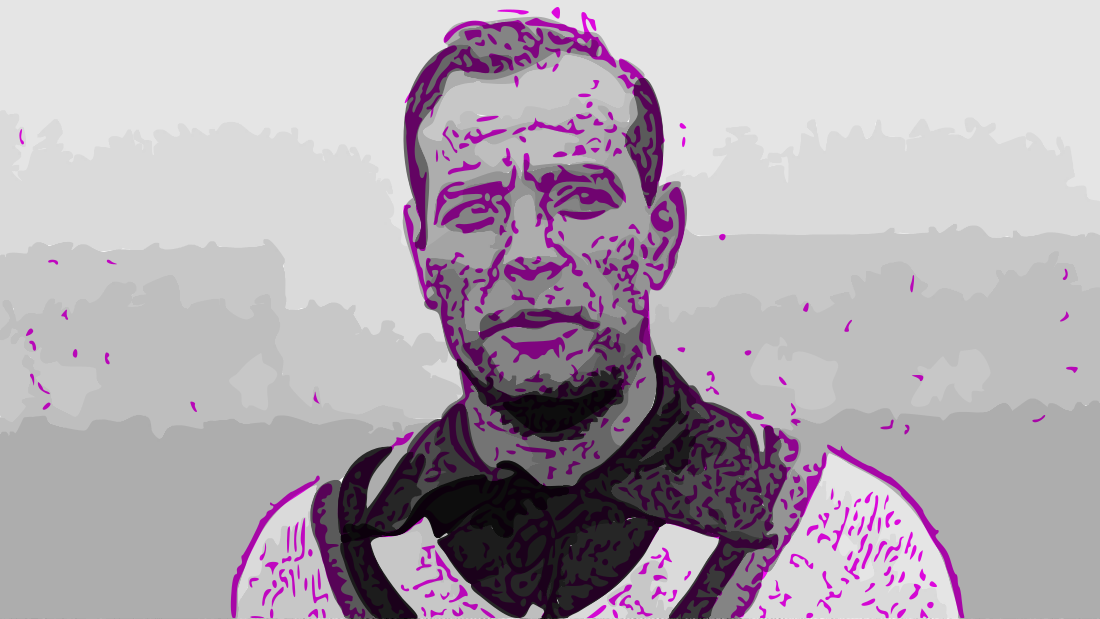
I. Introduction: Unveiling the Guardian of the Net
In the roaring twenties, the world danced to the frenetic rhythm of jazz, economies boomed in the glittering aftermath of the Great War, and football, that most bewitching of sports, began its ascendance to the global phenomenon it is today. It was an era when the sport transcended mere play, morphing into a spectacle of passion, skill, and unparalleled excitement, captivating the hearts of millions. Amidst this backdrop of cultural and sporting renaissance, a figure emerged from the vibrant streets of Barcelona, destined to redefine the very essence of goalkeeping – Ricardo Zamora.
Zamora, with his enigmatic aura and pioneering spirit, was not just a player; he was the embodiment of footballing innovation and excellence. His journey through the annals of football history began under the Spanish sun, where the leather ball was not just an object to be kicked but a dream to be followed, a destiny to be fulfilled. In a time when goalkeepers were considered mere backdrops to the dazzling artistry of outfield players, Zamora stood as a colossus, turning the goalpost into a fortress that few could breach.
His early years were marked by a palpable sense of destiny. Born into the bustling life of Barcelona, the city’s Gothic quarters, and modernist Eixample districts whispered the tales of legends past and those yet to be. It was here, amidst the clash of tradition and modernity, that Zamora’s love for football blossomed. The streets of Barcelona, alive with the echoes of footballs against ancient walls, served as the cradle for his burgeoning talent.
From these humble beginnings, Zamora’s reputation grew, heralding the arrival of a goalkeeper whose skills would become the stuff of legend. His ability to anticipate the striker’s intent, to move with the grace of a dancer and the agility of a cat, set him apart in an era when the role of the goalkeeper was often underestimated. Zamora was not merely a guardian of the net; he was its master, reshaping the position with his innovative techniques and unyielding spirit.
As football’s popularity soared, so too did Zamora’s, becoming synonymous with goalkeeping excellence. His contributions to the sport went beyond mere saves and clean sheets; they were a testament to the power of innovation, courage, and indomitable will. In the annals of football history, the 1920s are remembered not just for the birth of professional leagues and international competitions but as the era when Ricardo Zamora, the enigmatic guardian of the goal, began his ascent to immortality.
Thus, the stage was set, the backdrop painted with the vibrant hues of an era unlike any other. Into this world of boundless possibility and fervent passion for football, Zamora emerged as a beacon of excellence, his legacy foretold in the very streets that had witnessed his first steps towards greatness. As the tale of this legendary goalkeeper unfolds, it becomes clear that his impact on the sport was as profound as the era that shaped him, forever etching his name in the pantheon of football’s greatest icons.
II. From the Vibrant Streets to the Pitch: Zamora’s Beginnings
In the heart of Barcelona, where the cobblestone streets echo with the history of centuries and the air is thick with the promise of tomorrow, Ricardo Zamora’s tale began. This was a city where artistry and rebellion blended seamlessly, a place that breathed life into the aspirations of a young boy whose destiny was yet unwritten. Barcelona in the early 20th century was a canvas of vibrant colours, a melting pot of cultures and ideas, and it was here, amid the clamour and charm of his birthplace, that Zamora’s love affair with football commenced.
Zamora’s childhood unfolded like a scene from a vividly painted mural, full of passion and play. The city itself, with its architectural marvels and bustling marketplaces, served as the backdrop to his early escapades with the ball. Football was not merely a game in this part of the world; it was a language, a means of expression that transcended words, and young Ricardo became fluent in its artistry. The streets of Barcelona, alive with the sounds of makeshift football games, were the crucibles in which his talent was forged. Here, amidst the laughter and shouts of his peers, Zamora discovered not just the joy of football but the essence of competition and camaraderie.
It was in these impromptu street matches that Zamora’s natural affinity for goalkeeping began to surface. While others chased the glory of scoring, he found his calling in the whispers of the wind as it carried the ball towards the net, in the thrill of thwarting an opponent’s best-laid plans. His hands, quick and sure, became the bane of strikers in those narrow alleys, earning him a reputation as a formidable last line of defense. This was a time of discovery, of learning to read the game not just with his eyes but with his heart, intuiting the flow of play with a precocious understanding that belied his years.
Zamora’s passion for football was nurtured not only in the streets but within the walls of his home. In a city where the sport was akin to a religion, his family’s support was unwavering, fueling his dreams and ambitions. They recognized early on that their son was not meant for the mundane but for the extraordinary, and they stood by him, their faith unshakable even in the face of the unknown.
As Ricardo grew from a boy to a young man, so too did his aspirations. The local pitches that had once felt like vast arenas began to shrink, their confines too narrow for his burgeoning talent. It was clear that Zamora was destined for greater stages, for crowds that numbered in the thousands and moments that would echo through history. His transition from the street games of his youth to the structured world of professional football was not just a step; it was a leap, fueled by an unquenchable thirst to prove himself against the best.
In every save, every leap, and every command he bellowed from the goalmouth, Zamora carried with him the spirit of Barcelona. The city’s influence was indelible, shaping his style, his demeanour, and his very approach to the game. Football had given him a language with which to express himself, but it was Barcelona that taught him the poetry of play, the beauty of a well-timed save, and the artistry of goalkeeping. His journey from the vibrant streets to the lush pitches of professional football was a testament to the city that raised him, a tribute to a place where dreams are not just born but fervently pursued.
Thus, the stage was set for Zamora to embark on a journey that would see him transform from a local talent to a national icon. His early years, steeped in the culture and passion of Barcelona, had laid the foundation for a career that would redefine the art of goalkeeping. In every challenge he faced, in every accolade he earned, the spirit of his beginnings remained, a reminder of the path he had traversed from the lively streets to the grandeur of the pitch.
III. The Ascent of a Goalkeeping Prodigy
Ricardo Zamora’s journey through the annals of football history was not merely a progression; it was a meteoric ascent that captured the imagination of all who witnessed it. His initial foray into the professional realm with Espanyol marked the beginning of an era that would see him redefine the art of goalkeeping. In the early days of his career, the young Zamora, with eyes alight with ambition, stepped onto the pitch for Espanyol, unaware of the legacy he was about to forge.
At Espanyol, Zamora quickly distinguished himself as a keeper of extraordinary talent and intuition. It wasn’t just his ability to stop shots that set him apart; it was the way he commanded his area, the way he seemed to orchestrate the defence with the poise of a seasoned maestro. His innovative techniques—daring dives, acrobatic saves, and an uncanny ability to read the game—were unheard of at the time. Zamora was not content to merely react; he anticipated, moving with a grace that belied the ferocity of his play.
His prowess between the posts did not go unnoticed. Fans flocked to see the young goalkeeper who played with the heart of a lion, and his performances for Espanyol became the stuff of legend. Yet, it was his move to Barcelona that would elevate his career to new heights. The transition was more than a change of clubs; it was a testament to his growing influence in the game, a signal that Zamora was not just a player to watch but a force to be reckoned with.
At Barcelona, Zamora found a stage worthy of his talents. Here, against the backdrop of a club rich in history and ambition, his abilities flourished. Barcelona’s style of play, focused on skill and creativity, complemented Zamora’s approach to goalkeeping. He was a keeper who thought like an outfield player, understanding the ebb and flow of the game, and his contributions were pivotal in transforming Barcelona into a powerhouse of Spanish football.
Zamora’s impact was immediate and profound. Under his guardianship, Barcelona’s goal became a fortress, and his leadership on the field inspired those around him to greater heights. His style—aggressive yet elegant, forceful yet refined—changed the way goalkeepers were perceived. No longer were they the last line of defence; in Zamora’s hands, they were the first step in the attack, the foundation upon which victories were built.
His time at Barcelona was marked by triumphs and challenges, each met with the unwavering determination that had become his hallmark. Zamora’s influence extended beyond the confines of the pitch. He became a symbol of innovation in football, a pioneer who pushed the boundaries of what was possible. His techniques, once revolutionary, became the gold standard for goalkeepers everywhere. He demonstrated that goalkeeping was not just about stopping goals but about starting plays, about vision, courage, and an indomitable will to succeed.
As he stood between the posts, a sentinel in the swirling chaos of the game, Zamora embodied the spirit of a prodigy who had risen to the zenith of football. His journey from the vibrant streets of Barcelona to the hallowed grounds of Espanyol and then to the grandeur of Barcelona was a testament to his skill, his passion, and his relentless pursuit of excellence. In every save, in every command, Zamora left an indelible mark on the sport, transforming goalkeeping into an art form and setting the stage for the legends who would follow in his footsteps.
Thus, the ascent of Ricardo Zamora, from a goalkeeping prodigy to a legend of Spanish football, was not just a story of individual achievement. It was a narrative that intertwined with the evolution of the game itself, a saga of how one man’s vision and dedication could change the face of football forever. As the chapters of his career unfolded, Zamora’s legacy became clear: he was not merely a player of his time but a visionary who transcended it, whose influence would resonate in the annals of football history for generations to come.
IV. Zamora and the Spanish National Identity
In the annals of Spanish football, the 1920s and 1930s are etched with the exploits of a man whose contributions extended far beyond the confines of the club pitch, anchoring him in the hearts of a nation. Ricardo Zamora, already a colossus in the domestic game, took his place between the posts for the Spanish national team, and in doing so, became a linchpin in the crafting of a national football identity that was imbued with pride, passion, and an indomitable spirit. His tenure with the national side was not merely a series of matches; it was a saga that intertwined with the very soul of Spanish football.
Zamora’s debut for Spain heralded the onset of an era where the national team emerged from the shadows, stepping onto the international stage with a newfound confidence. It was an epoch when every save, every command from Zamora, resonated like a clarion call, rallying his teammates and supporters alike. His presence in goal for Spain was akin to a fortress wall, unyielding and steadfast, inspiring those in front of him to strive for greatness.
One of the most emblematic moments of Zamora’s international career came during the 1920 Antwerp Olympics, where Spain, against all odds, clinched the silver medal. In a tournament replete with formidable opponents, Zamora’s performances were nothing short of heroic. His remarkable saves, particularly in the semi-final against Sweden, transcended the mere act of goalkeeping; they were acts of defiance against the tide of opposition, securing Spain’s place in the final and, ultimately, in the annals of Olympic history.
But Zamora’s contribution to the Spanish national team was not confined to his athletic prowess alone. In an era rife with political turmoil, his presence on the field served as a unifying force, a beacon of hope and solidarity for a nation divided. Zamora, with his unparalleled skill and indomitable will, became a symbol of national pride, embodying the resilience and passion of the Spanish people.
His performances in the subsequent international friendlies and competitive matches only served to bolster his reputation as Spain’s guardian. Each appearance was a masterclass in goalkeeping, showcasing Zamora’s innovative techniques and his uncanny ability to read the game. He was not just a player; he was a strategist, a leader whose influence permeated every facet of the team.
Yet, it was perhaps in the adversities he faced that Zamora’s true impact on Spanish football was most profoundly felt. In matches fraught with tension, where the stakes were as high as national prestige, Zamora’s composure under pressure was the lynchpin of Spain’s defence. His resilience, his refusal to yield even in the face of the most daunting challenges, became a metaphor for the nation’s spirit, galvanizing his teammates and endearing him to fans across the country.
As the decades passed, Zamora’s legacy with the national team grew to legendary proportions. His tenure was a testament to the transformative power of sport, how it can elevate a nation’s stature, and forge a collective identity from the diverse strands of individual glory. Through his exploits on the international stage, Zamora did not just elevate Spain’s footballing reputation; he etched his name into the very fabric of Spanish national consciousness.
In the twilight of his career, as he stepped away from the international arena, Zamora left behind a legacy that was as enduring as it was illustrious. He had not merely contributed to Spain’s footballing identity; he had become inseparable from it, a national hero whose name evoked not just memories of spectacular saves and victories but of a unifying spirit that transcended the boundaries of the pitch. In the story of Spanish football, Ricardo Zamora stands as a towering figure, a guardian of the net and of a nation’s dreams, whose influence continues to resonate through the ages.
V. An Era Defined: Zamora’s Barcelona Legacy
At FC Barcelona, a club where history is rich with tales of glory and passion, Ricardo Zamora’s epoch was a defining chapter, reshaping its legacy with every match he played. His transition to the club marked not just a change of jersey but heralded a new era of excellence and innovation in goalkeeping that would leave an indelible mark on the Blaugrana tapestry.
Zamora’s influence on Barcelona’s fortunes was immediate and profound. In an age when the role of the goalkeeper was often relegated to that of a mere last line of defense, Zamora elevated it to an art form. His style of play, characterized by audacious saves and unparalleled agility, introduced a new dimension to the game. Under his guardianship, the goalmouth became a fortress, and his presence on the field was a constant reassurance to teammates and a looming threat to adversaries.
But Zamora’s contribution to Barcelona transcended the tangible statistics of clean sheets and spectacular saves. He brought a gravitas to the position, a sense of responsibility that inspired those around him to elevate their own performances. His leadership was not loud or ostentatious but rooted in the calm confidence with which he patrolled his domain. In moments of high tension, when the roar of the crowd swelled like a storm, Zamora’s composure was the eye of the hurricane, a beacon of stability in the tumultuous world of football.
The legacy Zamora left at Barcelona is not merely a collection of individual accolades but a foundational stone in the club’s storied history. He was a pioneer, a player whose approach to goalkeeping influenced not just the tactics of his time but the very philosophy of the club. In his wake, the role of the goalkeeper at Barcelona was forever transformed. Future generations of keepers at the club would be measured against the Zamora standard, a benchmark of excellence and innovation.
Zamora’s time at Barcelona also forged a deep, enduring connection with the fans. In him, they saw not just a guardian of their goal but a symbol of Catalan pride and resilience. His performances on the pitch spoke a universal language of passion and dedication, endearing him to the Blaugrana faithful. This bond, forged in the crucible of competition, transcended the temporal confines of his career, embedding Zamora in the collective memory of the club.
Reflecting on Zamora’s impact at Barcelona, it’s clear that his tenure was more than just a chapter in the club’s history; it was a transformative era that reshaped its identity. His legacy of excellence in goalkeeping continues to inspire, serving as a touchstone for both current players and those who dream of donning the Barcelona jersey. Zamora’s influence on the club’s goalkeeping tradition is a testament to his visionary approach to the game, an enduring legacy that continues to shape the future of FC Barcelona.
In sum, Ricardo Zamora’s era at Barcelona was a period of monumental influence and inspiration, a time when his prowess and philosophy elevated the club’s stature and set new standards in goalkeeping. His legacy is woven into the very fabric of Barcelona’s identity, an indelible reminder of the impact one individual can have on the fortunes and future of a footballing giant.
VI. Overcoming Adversity: Zamora’s Resilience
Ricardo Zamora’s journey through the world of football was not a tale of unbroken triumphs but rather a narrative rich with the struggles and adversities that test the mettle of a man. His career, luminous as it was with accolades and acclaim, was also marked by moments of hardship and challenge, both on the pitch and beyond its boundaries. Yet, it was his indomitable spirit and unwavering resilience in the face of these trials that truly defined his legacy, transforming him into a paragon of perseverance in the annals of the sport.
On the field, Zamora faced adversaries not just in the form of opposing teams but in the very nature of the game itself, which, in his era, was far more perilous for goalkeepers. The absence of the protective gear that today shields the modern footballer made each dive and each save a testament to Zamora’s courage. Injuries were frequent, and the physical toll was substantial, yet Zamora’s resolve never wavered. His dedication to his craft and his team was unassailable, a beacon of determination that inspired those around him to push beyond their limits.
But Zamora’s battles were not confined to the physical demands of the game. He played in a time of political turmoil, when Spain itself was torn by conflict and division. The Spanish Civil War and the ensuing political climate posed profound personal challenges, including threats to his safety and moments when the very game he loved became a battlefield of ideologies. Zamora navigated these treacherous waters with a grace and dignity that belied the turmoil surrounding him, remaining steadfast in his commitment to football as a unifying force, transcending the fractious political landscape.
Perhaps one of the most poignant examples of Zamora’s resilience came during his internment in a concentration camp in France. This period of his life, fraught with uncertainty and danger, could have spelt the end of his career. Instead, it served as a crucible, forging a strength and determination that would carry him through to his return to the game. Zamora’s eventual comeback was not just a personal victory but a triumph of the human spirit, a powerful narrative of perseverance that resonated deeply with fans and fellow players alike.
Off the pitch, Zamora’s resilience was no less evident. He faced personal losses and the vicissitudes of life with a stoic grace, drawing on the same well of strength that saw him through the challenges of his career. His ability to endure, to rise above adversity, became a source of inspiration not just to those who watched him play but to anyone who faced their own battles, in football or in life.
In the twilight of his career and in the years that followed, Zamora’s legacy of resilience became a touchstone for future generations. His story is a reminder that true greatness in sport is not just measured by victories and accolades but by the ability to persevere, to stand tall in the face of adversity, and to emerge not just unbroken but stronger for the experience.
Thus, Ricardo Zamora’s resilience, his unwavering spirit in the face of adversity, stands as a testament to his character, both as a player and as a man. In every challenge he overcame, he left an indelible mark on the world of football, not just as a legendary goalkeeper but as a symbol of fortitude and perseverance, whose influence extends far beyond the confines of the pitch.
VII. The Zamora Trophy: A Legacy Honoured
In the pantheon of football, where the feats of the greats are immortalized, the Zamora Trophy stands as a sentinel of goalkeeping excellence, a lasting homage to the man who redefined the art of guarding the net. Conceived as an enduring tribute to Ricardo Zamora, this prestigious award celebrates the goalkeeper in Spain’s top league with the lowest goals-to-games ratio each season, a fitting testament to the brilliance and resilience of its namesake. Since its inception, the Zamora Trophy has not only honoured the legacy of one of football’s greatest but has also elevated the status of goalkeepers, recognizing their pivotal role in the beautiful game.
The significance of the Zamora Trophy within Spanish football cannot be overstated. In a sport often dominated by the accolades bestowed upon goal scorers, this award shifts the spotlight to the custodians of the goal, those whose contributions are crucial yet frequently overshadowed. It underscores the importance of defensive prowess, of the artistry and skill involved in denying the opposition. Each recipient of the trophy is linked not just to a tradition of excellence but to the spirit and legacy of Zamora himself, reminding us of the courage, innovation, and resilience that define the ultimate goalkeeper.
The impact of the Zamora Trophy extends far beyond the acknowledgement of a season’s statistical achievements. It serves as a beacon for young goalkeepers, a symbol of what is possible when talent is coupled with dedication and hard work. In celebrating the best among them, the trophy inspires all goalkeepers to strive for greatness, to push the boundaries of their abilities, and to aspire to the heights reached by Zamora. It is a reminder that their role is not just a position on the team but a craft, honed over countless hours of training and perfected in the crucible of competition.
Moreover, the trophy embodies the connection between past and present, a thread that weaves through the history of Spanish football, binding generations. Each year, as the trophy is awarded, it evokes memories of Zamora’s legendary saves, his grace under pressure, and his indomitable spirit. It is a celebration not just of individual achievement but of a rich legacy that continues to influence and inspire. The Zamora Trophy is a bridge between eras, a dialogue between the legends of yesteryear and the stars of today, all united by a shared passion for the game and the pursuit of excellence.
The legacy of Ricardo Zamora, immortalized in the trophy that bears his name, remains a cornerstone of Spanish football. It is a legacy that transcends records and statistics, embodying the essence of what it means to be a goalkeeper. In the recipients of the trophy, we see reflections of Zamora’s brilliance, echoes of his determination, and the continuation of his journey. They carry forward a tradition of excellence, each save, and each match adding to the rich tapestry of football history that Zamora helped to weave.
In conclusion, the Zamora Trophy is much more than an award; it is a symbol of enduring greatness, a celebration of the goalkeeper’s art, and a tribute to the man who elevated it to new heights. Through this trophy, Ricardo Zamora’s legacy lives on, eternally honoured in the annals of the sport he loved, ensuring that his contributions to football will never be forgotten. The trophy not only commemorates a legendary career but also inspires future generations to reach for the same stars that Zamora once grasped with his indomitable hands.
VIII. A Legacy Beyond the Posts
Ricardo Zamora’s influence on the world of football extends far beyond the parameters of his own legendary career, weaving through the fabric of the sport like a golden thread that connects past, present, and future. His pioneering spirit and innovative techniques in goalkeeping have left an indelible mark on generations, shaping the evolution of this critical role in ways that continue to resonate across continents and cultures. Zamora’s legacy is not confined to the records he set or the trophies that bear his name; it is found in the very ethos of goalkeeping, in the principles and practices that define excellence in this most solitary of positions.
The essence of Zamora’s impact lies in the artistry and athleticism he brought to goalkeeping. In an era when the role was largely viewed through a prism of mere functionality, Zamora introduced a flamboyance and flair that were previously unseen. His ability to anticipate the actions of attackers, coupled with his acrobatic saves and commanding presence, revolutionized the position. Goalkeepers of subsequent generations looked to Zamora not just for inspiration but as a model to emulate, a benchmark of skill and courage against which their own performances were measured.
This transformation was not limited to the technical aspects of goalkeeping. Zamora imbued the role with a sense of pride and prestige, elevating it to a position of honour within the team. He demonstrated that a goalkeeper could be not just a last line of defence but a first step in the construction of attacks, an integral part of the team’s tactical approach. This philosophy has permeated footballing strategy, influencing how teams play and how goalkeepers are integrated into the overall fabric of the game.
Across the globe, Zamora’s influence can be seen in the reverence with which goalkeepers are treated and in the aspirations of young players who dream of standing between the posts. His legacy has transcended cultural and geographical boundaries, inspiring goalkeepers from different backgrounds to pursue excellence with the same passion and determination that he exemplified. The global community of football fans, regardless of club allegiance, recognizes the monumental contributions Zamora made to the sport, celebrating his innovations and achievements.
Moreover, Zamora’s story is a testament to the power of resilience and the human spirit’s capacity to overcome adversity. His journey, marked by challenges both on and off the field, serves as a source of inspiration for athletes facing their own battles. The qualities he exhibited—leadership, bravery, and an unyielding commitment to his craft—are as relevant today as they were in his time, embodying the timeless virtues of sportsmanship and perseverance.
As we reflect on the enduring legacy of Ricardo Zamora, it becomes clear that his influence extends well beyond the confines of the goal he so adeptly defended. He has left an indelible imprint on the heart of football, shaping the destiny of goalkeeping and inspiring countless individuals who have followed in his footsteps. Zamora’s legacy is a beacon that lights the path for future generations, ensuring that his pioneering spirit and love for the game will continue to inspire and influence the world of football for years to come.
In sum, Ricardo Zamora’s impact on football is a saga of innovation, inspiration, and indomitable spirit. His contributions have crafted a legacy that transcends time, inspiring goalkeepers and football enthusiasts around the globe. Through his remarkable career and the legacy he has left behind, Zamora remains a towering figure in the history of the sport, a symbol of excellence whose influence will be felt for generations to come.
IX. Conclusion: The Eternal Guardian of the Goal
As we draw the curtain on the saga of Ricardo Zamora, it’s essential to distill the essence of a journey that transcends the mere chronicles of football history, embodying a legacy that resonates with the timeless cadence of a sport that captures the imagination of millions. Zamora’s monumental contributions to football are not just footnotes in the annals of the game but rather the chapters that have helped define its very nature, its spirit, and its evolution. He was more than a guardian of the goal; he was a pioneer, a visionary who saw beyond the confines of the goalposts, reshaping the landscape of football with each save, each command, and each moment of brilliance.
Zamora’s legacy is multifaceted, etched not only in the spectacular saves and the accolades but in the profound impact he had on the role of the goalkeeper. He transformed it from a position of last resort to one of strategic importance, elevating the status of those who don the gloves and stand as the final bastion against the opposition. His innovative techniques and charismatic leadership on the field have become the gold standard for goalkeepers worldwide, inspiring generations to view the role with new eyes, with respect, and with a deep sense of pride.
But perhaps more enduring than the technical contributions is the spirit Zamora imbued in the game—a spirit of resilience, of grace under pressure, and of unwavering commitment to excellence. This spirit has become a beacon for players across all positions, a reminder that football is not just a game of skill but of heart, of battling against odds, and of the relentless pursuit of greatness. Zamora’s journey, marked by triumphs and trials, serves as a testament to the power of perseverance, inspiring those who face their own challenges, on and off the pitch.
Zamora’s presence in football history remains undiminished by time. His name is spoken with reverence, not just by fans of the clubs he graced or the national team he represented but by all who cherish the rich tapestry of football’s legacy. He is celebrated as one of the game’s true icons, a figure whose contributions have shaped not just the art of goalkeeping but the very soul of football. His story, marked by brilliance and resilience, continues to inspire, to motivate, and to remind us of the heights human spirit can achieve.
In the pantheon of football’s greatest, Ricardo Zamora holds a place of honour, not just for the matches he won or the trophies he collected, but for the indelible mark he left on the heart of the game. His legacy, like the sport he loved, is eternal, transcending generations and continuing to influence the world of football in myriad ways. As we reflect on the enduring legacy of Ricardo Zamora, we are reminded that while the game goes on, the legends like Zamora remain the eternal guardians of its spirit, its passion, and its enduring allure.
Thus, as we conclude this homage to one of football’s finest, it is clear that Ricardo Zamora’s legacy is not confined to the past but is a living, breathing inspiration that continues to shape the future. His story is a beacon of excellence in the world of football, celebrated and remembered not just for the saves he made or the trophies he won, but for the way he played the game—with courage, with dignity, and with an undying love for football that made him not just a guardian of the goal, but a guardian of the game’s very soul.
