


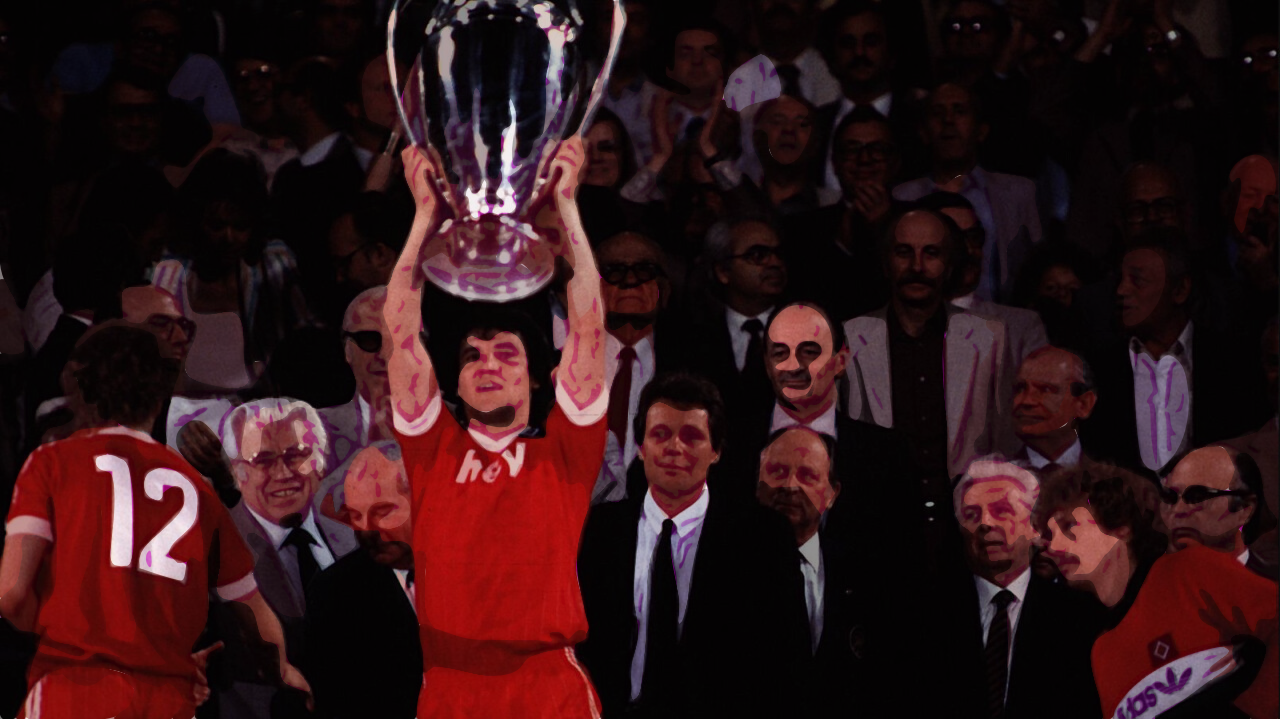
Introduction: Setting the Scene
In 1983, the European Cup stood as the pinnacle of club football in Europe, a trophy that defined legacies and immortalized those who claimed it. For Hamburg and Juventus, this final was not just another match—it was a defining moment in their respective histories. Juventus had long been on the cusp of European dominance, a club filled with world-class talent and the expectation of success on the grandest stage. For Hamburg, it was a chance to carve their name into football’s elite, to stand alongside Europe’s most prestigious clubs, and claim their first European crown.
The road to Athens had been hard-fought for both teams. Juventus, the giants of Italian football, boasted a squad filled with international stars—none more celebrated than Michel Platini, the French playmaker who had become the heart and soul of the team. Alongside him stood Paolo Rossi, the Golden Boot winner from the 1982 World Cup, and Dino Zoff, Italy’s legendary goalkeeper, whose experience and leadership gave Juventus a formidable backbone. For Juventus, this final was about cementing their place at the top of European football, a club rich in tradition and on the brink of adding the ultimate honor to their storied cabinet.
Hamburg, meanwhile, approached the final with a quiet determination. This was their moment, their opportunity to bring the European Cup back to West Germany. Led by the innovative and astute Ernst Happel, Hamburg was a side built on discipline and efficiency. Their journey through the competition had seen them outthink and outlast their opponents, relying on a team ethic that highlighted the sum being greater than the individual parts. The talismanic Felix Magath had been a driving force in their midfield, while the towering presence of Horst Hrubesch provided a physical edge that many teams struggled to handle. For Hamburg, this final was a chance to fulfill a dream that had been years in the making.
The venue for this clash of titans was the Olympiacos Stadium in Athens, a fitting stage for what promised to be a showcase of contrasting styles and football philosophies. On one side, Juventus represented the tactical intricacies and defensive solidity of Italian football. On the other, Hamburg embodied the efficiency and directness of German football, where organization and physicality reigned supreme. The stadium, packed with tens of thousands of fans, reverberated with the anticipation of a classic final.
The stakes could not have been higher. Juventus, who had dominated Italian football for much of the past decade, finally sought to conquer Europe and stand on the same pedestal as Real Madrid and Liverpool. For Hamburg, this was the culmination of years of steady progress, a chance to secure their first European title and bring glory to German football. The weight of expectation hung heavy on both teams as they took to the field, knowing that the margin for error would be razor-thin in a contest of this magnitude.
With everything to play for, the stage was set for a European Cup final that would be remembered for years to come. It would take just one moment, one strike of genius, to tip the balance. Both sides knew it. Only one, however, would seize that moment.
The Road to the Final
Hamburg’s Journey: The German Resilience
Hamburg’s route to the 1983 European Cup final was one defined by a blend of tactical brilliance, resilience, and a touch of fortune. As one of the powerhouses of German football during the early 1980s, Hamburg had been steadily building a team capable of challenging Europe’s best. Under the guidance of the legendary Austrian manager Ernst Happel, a man who already had a European Cup triumph to his name with Feyenoord in 1970, Hamburg had developed into a disciplined, efficient side that could adapt to any opponent.
The Bundesliga side had established themselves as a dominant force domestically, but it was on the European stage where their credentials were truly tested. Their campaign began with a tricky tie against East Germany’s BFC Dynamo. The first leg in East Berlin proved to be a stern test, with Hamburg only managing a 1-1 draw. However, in the return leg at home, they showed their class, comfortably dispatching their opponents 2-0 to move into the second round. This early test set the tone for the campaign: Hamburg were a team that could grind out results, no matter the conditions.
Their next hurdle came in the form of Olympiacos, a club steeped in Greek football tradition. The tie carried a certain level of unpredictability, especially with Olympiacos playing the first leg at home in front of a passionate crowd in Athens. The atmosphere was hostile, the heat intense, but Hamburg remained unflappable. With a professional 4-1 win in Germany, they had done enough to secure a spot in the quarter-finals, despite a narrow 1-0 defeat in the second leg.
The quarter-finals saw Hamburg drawn against one of Europe’s rising forces, the Soviet Union’s Dynamo Kyiv. Known for their technical ability and disciplined structure, Dynamo posed a serious threat. The first leg in Kyiv was a tight affair, ending in a 0-0 stalemate. The second leg, back in Hamburg, saw Happel’s side deliver one of their finest performances of the tournament. Goals from Horst Hrubesch and Lars Bastrup sealed a 3-0 victory, and with it, a place in the semi-finals.
As the competition progressed, Hamburg’s style of play became more evident. Built on a solid defensive foundation, the team prided itself on its ability to transition quickly from defence to attack, a tactic masterminded by Happel. Felix Magath pulled the strings in midfield, providing the creativity, while Hrubesch’s aerial prowess and physicality made him a constant threat to opposition defences. The team’s work ethic and unity were their greatest strengths, and as they reached the final four, they had begun to believe that the trophy was within their grasp.
The semi-final presented Hamburg with their toughest challenge yet: Spain’s Real Sociedad, a team that had been steadily rising in prominence. The first leg, played in San Sebastián, ended 1-1, with Bastrup’s goal giving Hamburg a crucial away advantage. The return leg in Germany was a nervy encounter. Real Sociedad, knowing they needed to score, pushed forward relentlessly, but Hamburg’s defensive resilience shone through once again. A goal from Jürgen Milewski secured a 2-1 win on aggregate, sending Hamburg to their first European Cup final.
For Hamburg, the journey to Athens had been one of perseverance, tactical discipline, and a belief that they could compete with the very best. Ernst Happel’s influence on the team had been transformative. His calm demeanour, tactical nous, and ability to extract the best from his players had taken Hamburg to the cusp of European glory.
Juventus’ Journey: The Italian Juggernaut
Juventus, on the other hand, entered the 1982-83 European Cup campaign as one of the pre-tournament favourites. Boasting a squad laden with some of the finest talents in world football, they were a team on a mission to finally conquer Europe. Led by the meticulous Giovanni Trapattoni, Juventus blended Italian tactical mastery with flair and invention. Their mix of experience and youthful exuberance made them a formidable outfit.
The Bianconeri’s campaign began with a commanding display against Danish side Hvidovre, where Juventus showcased their attacking prowess with a 4-1 aggregate victory. The tie may not have posed the sternest of tests, but it allowed the Italians to find their rhythm early in the competition. Their second-round opponents were Standard Liège, a side that had been known for its physical approach and ability to cause upsets. Juventus, however, remained unfazed. In the first leg in Belgium, a brace from Paolo Rossi ensured a comfortable 3-0 victory. The second leg in Turin was a formality, with Juventus progressing with a 5-2 aggregate win.
The quarter-final saw Juventus face the reigning European champions, Aston Villa, in what was billed as one of the tournament’s standout ties. Villa, who had lifted the trophy in 1982, were determined to defend their crown, but Juventus had other ideas. The first leg in Turin saw Michel Platini orchestrate a 2-1 win for Juventus, with Villa unable to cope with the Frenchman’s vision and creativity. The second leg in Birmingham was a cagey affair, but Juventus’ defensive discipline and the ever-reliable Dino Zoff ensured they held on for a 1-1 draw, sending them into the semi-finals.
If Juventus’ path to the last four had been smooth, the semi-final against Polish side Widzew Łódź proved to be a far more challenging contest. Widzew had shocked Europe with their dynamic performances, and in the first leg in Łódź, they managed to hold Juventus to a 2-2 draw. It was a scoreline that left the tie delicately poised ahead of the second leg in Italy. In Turin, however, Juventus showed their class. Goals from Platini and Rossi secured a 2-0 win, booking their place in the final.
For Juventus, the journey to the final was seen as a natural progression for a club that had been knocking on the door of European success for several years. Trapattoni’s tactical acumen, combined with the individual brilliance of players like Platini, Rossi, and Zoff, made Juventus one of the most well-rounded teams in the competition. They had overcome strong opponents with a blend of defensive solidity and attacking flair, and now, only Hamburg stood between them and their first European Cup.
As the two teams prepared for the final, the narrative was set: Hamburg, the disciplined underdogs with a point to prove, against Juventus, the favourites looking to assert their dominance on the European stage. Both teams had navigated tough paths to reach Athens, and both were hungry for victory.
The stage was now truly set for a classic European Cup final.
Tactical Preparations and Pre-Match Build-Up
Hamburg’s Tactical Setup: Structured Discipline
As Hamburg prepared for the biggest match in their history, Ernst Happel knew that tactical discipline would be key. The German side had built their European campaign on defensive solidity, with a well-drilled backline and an industrious midfield. Happel’s strategy was clear: deny Juventus space and control the game by breaking quickly on the counter. With players like Felix Magath capable of orchestrating from the middle, and Horst Hrubesch’s towering presence up front, Hamburg aimed to exploit any defensive lapses by Juventus while staying compact at the back. Happel trusted his team’s ability to remain patient and hit Juventus when the opportunity arose.
Juventus’ Tactical Plan: Trapattoni’s Mastery
Giovanni Trapattoni’s Juventus, by contrast, were a team built on the principles of defensive organisation, combined with the creativity of Michel Platini. Trapattoni’s approach was to control possession, slowly wear down the opposition, and utilise Platini’s passing range to open up spaces in the final third. Paolo Rossi’s instinctive movement in and around the box was crucial, as was the experience of Dino Zoff in goal, providing a reliable safety net. Juventus planned to take advantage of any gaps in Hamburg’s defence, knowing that one moment of brilliance from Platini could be decisive. The key to their strategy was to maintain composure and stick to their possession-based play.
The Build-Up: Anticipation and Pressure
The atmosphere in Athens was electric in the days leading up to the final. The media buzzed with speculation over how each side would approach the game, and the players were under no illusions about the magnitude of the occasion. For Juventus, the pressure was immense; they were favourites and expected to win their first European Cup. For Hamburg, this was a once-in-a-lifetime opportunity, but the belief within the squad was strong. Both teams had their game plans, but much would come down to the execution on the night.
The Match: Key Moments and Turning Points
The Opening Phase: Hamburg’s Early Strike
The game began at a blistering pace, and it was Hamburg who struck first. In just the eighth minute, Felix Magath produced a moment of magic that would define the final. Picking up the ball in midfield, Magath drove forward before unleashing a powerful, dipping shot from outside the box that sailed past Dino Zoff and into the net. The early goal stunned Juventus and changed the complexion of the game. Hamburg, now with a lead to protect, settled into their defensive shape, while Juventus were forced to chase the match.
Juventus’ Response: Platini’s Struggles
Juventus, shaken by the early goal, struggled to find their rhythm. Michel Platini, so often the creative spark for the Italian side, found himself tightly marked by Hamburg’s midfield. The German side’s defensive organisation was exemplary, with Manfred Kaltz and Wolfgang Rolff disrupting Juventus’ attempts to build attacks. Paolo Rossi, too, was largely isolated, as Hamburg’s defence closed down any space in the final third. Despite Juventus’ possession, they found themselves frustrated by Hamburg’s compact shape and defensive discipline.
Hamburg’s Defensive Masterclass
As the match wore on, Hamburg’s focus shifted to protecting their lead. Felix Magath, already the hero, dropped deeper to help his team control the midfield. Juventus pressed forward, but Hamburg’s defenders, led by goalkeeper Uli Stein, absorbed the pressure with a calmness that belied the occasion. Stein made crucial saves to deny Rossi and Platini, while Kaltz’s leadership at the back kept Hamburg organised. Juventus were relentless in their pursuit of an equaliser, but Hamburg’s determination never wavered.
Juventus’ Frustration Grows
By the final whistle, Juventus had thrown everything at Hamburg but failed to break through. Trapattoni’s side grew increasingly frustrated as their attacks broke down time and time again. Platini, though trying valiantly, was unable to unlock Hamburg’s defence, and Rossi cut a frustrated figure up front. Hamburg, with their disciplined performance, held firm to claim a famous 1-0 victory. It was a masterclass in tactical execution from Ernst Happel’s side, and Juventus, despite their quality, had been undone by a single moment of brilliance and Hamburg’s collective resolve.
The Aftermath: Legacy of the 1983 Final
Hamburg’s Triumph: German Glory
Hamburg’s victory in Athens marked the pinnacle of their footballing history. The win not only secured their first European Cup but also cemented their place among the elite of European football. Ernst Happel’s tactical acumen and Felix Magath’s decisive contribution became the defining stories of the final. For German football, Hamburg’s triumph symbolised the growing strength of the Bundesliga in Europe. The victory resonated across Germany, inspiring a generation of players and managers to follow in Hamburg’s footsteps.
Ernst Happel’s Managerial Genius
For Ernst Happel, this triumph was a testament to his ability to mould a team capable of winning at the highest level. Having already won the European Cup with Feyenoord in 1970, Happel became one of the few managers to win the competition with two different clubs. His meticulous approach to preparing his teams and his calmness on the biggest stage were key factors in Hamburg’s success. Happel’s legacy, both in Hamburg and across Europe, was cemented with this victory, and he remains one of the most revered figures in European football management.
Juventus’ Heartbreak: Lessons Learned
For Juventus, the defeat was a bitter pill to swallow. Trapattoni’s side had come so close to achieving European glory, but they left Athens empty-handed. However, this loss was not the end of their European journey. It served as a valuable lesson, and just two years later, Juventus would lift the European Cup for the first time, defeating Liverpool in the 1985 final. The defeat in Athens, while painful, was a stepping stone in Juventus’ journey to becoming a dominant force in European football in the years that followed.
The Iconic Moment: Felix Magath’s Goal
Felix Magath’s goal in the eighth minute of the 1983 European Cup final will forever be remembered as one of the great moments in the competition’s history. His strike from distance, beating Dino Zoff, became the defining image of Hamburg’s triumph. Magath’s ability to deliver in such a high-pressure moment highlighted his class and composure. For Hamburg fans, Magath’s goal symbolised their club’s greatest night, and for Magath himself, it was a crowning achievement in a glittering career. The goal is still spoken of in reverent tones in Hamburg, where it holds a special place in the club’s lore.
Player Profiles: The Stars of the Night
Felix Magath: The Decisive Playmaker
Magath’s performance in the final was nothing short of heroic. His goal not only decided the match but also exemplified his influence in Hamburg’s midfield. Known for his vision and creativity, Magath had been a driving force throughout Hamburg’s European campaign, and his ability to control the game in the final was pivotal. Magath’s legacy at Hamburg is defined by that single moment, but it was his consistency and leadership that made him one of the greatest players in the club’s history.
Horst Hrubesch: The Towering Presence
Though he didn’t get on the scoresheet, Hrubesch’s contribution to Hamburg’s victory was immense. His physical presence and aerial ability provided an outlet for Hamburg’s counter-attacks, while his leadership on the pitch was invaluable. Hrubesch’s ability to win headers and hold up the ball helped relieve the pressure on Hamburg’s defence, making him one of the unsung heroes of the night.
Michel Platini: The Playmaker Thwarted
For Michel Platini, the 1983 final was a rare disappointment in an otherwise illustrious career. Despite his best efforts, the Frenchman was unable to break down Hamburg’s stubborn defence. Platini’s frustration grew as the match wore on, and while he showed flashes of brilliance, he found himself marked out of the game by Hamburg’s disciplined midfield. Nevertheless, Platini’s class and creativity were evident, and the defeat only spurred him on to greater success in the years to come.
Cultural and Historical Significance
German Football in the 1980s: A Rising Force
Hamburg’s victory in 1983 was a significant moment for German football. Alongside Bayern Munich’s European successes, it showcased the strength of the Bundesliga on the continent. The tactical discipline, physicality, and efficiency of German teams became a hallmark of the 1980s, with Hamburg leading the way. Their triumph added to the growing respect for German football across Europe and solidified the country’s reputation as a footballing powerhouse.
Juventus and Italy: A Determined Pursuit
For Italian football, Juventus’ defeat in 1983 was a moment of reflection. While Serie A was regarded as one of the strongest leagues in the world, European success had often eluded its clubs. Juventus’ journey to the final and their subsequent defeat laid the groundwork for future Italian success in Europe. By the mid-1980s, Italian clubs would regularly feature in European finals, and Juventus, in particular, would return stronger to claim the European Cup in 1985. The 1983 final was a stepping stone in Italy’s pursuit of continental dominance.
The European Cup’s Evolution
The 1983 final highlighted a tactical shift in European football. The dominance of possession-based play, exemplified by Juventus, was met by the defensive discipline and counter-attacking style of Hamburg. This clash of philosophies would come to define European football in the years to come, as teams across the continent sought to find the perfect balance between attacking flair and defensive organisation. The 1983 final was not only significant for the result but also for the tactical evolution it represented.
