


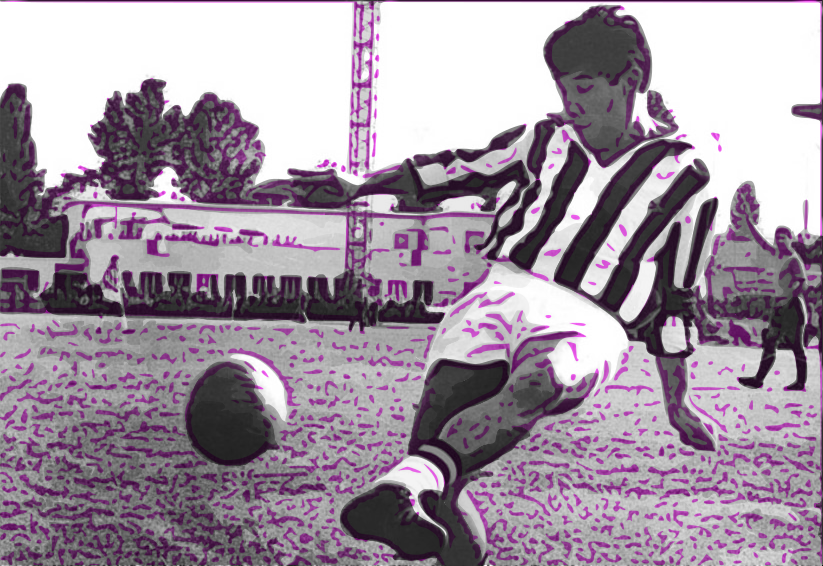
1. Introduction: The Dual Legacy of Omar Sívori
Omar Sívori’s football journey is the story of a boy from the small Argentine town of San Nicolás who rose to become a footballing icon on two continents. His name is etched in the annals of both Argentine and Italian football, an enduring reminder of a player whose influence transcended borders at a time when such feats were rare. Sívori’s genius on the pitch, his fiery temperament, and his innovative style of play left an indelible mark, making him one of the early South American players to conquer European football.
Born to Italian immigrants, Sívori’s roots in both Argentina and Italy shaped his career and legacy. In Argentina, he dazzled fans with his agility and guile, becoming a key figure in River Plate’s attack in the 1950s. His performances in the famed La Máquina system earned him a reputation as one of the most technically gifted forwards of his generation. But it was his move to Europe, and particularly to Juventus, where Sívori truly cemented his place in football history.
Standing at just 5 feet 6 inches, Sívori was never the most physically imposing player on the field, but what he lacked in height, he more than compensated for with his intelligence and skill. His low centre of gravity allowed him to glide past defenders with ease, while his quick thinking made him a dangerous playmaker and goal-scorer. Sívori’s ability to find space, create chances, and dictate the tempo of matches was unmatched, particularly during his years with Juventus, where he formed part of a legendary attacking trio with John Charles and Giampiero Boniperti.
Yet, Sívori was not merely a talented player—he was a player who reflected the merging of two footballing cultures. His South American flair combined with the tactical discipline of European football created a style that was ahead of its time. He wasn’t just revered for his skill but also for his relentless competitive spirit, which often saw him toe the line between brilliance and controversy. His fiery temperament and frequent run-ins with referees gave him a reputation as a player who wore his heart on his sleeve, a trait that endeared him to fans in both Argentina and Italy.
Culturally, Sívori’s significance goes beyond his individual achievements. He was among the first South American stars to cross the Atlantic and thrive in Europe, a feat that set the stage for future generations of players. In a sense, Sívori became a bridge between the footballing traditions of two continents, embodying the artistry of South America and the tactical acumen of Europe. His success with Juventus, particularly winning the Ballon d’Or in 1961, was not just a personal triumph but also a moment of pride for South American football, proving that the continent could produce players capable of excelling on the world’s biggest stage.
Omar Sívori’s legacy is one of duality—an Argentine hero who became an Italian icon, a small player who made a huge impact, and a pioneer whose influence resonates across the footballing world to this day. His career, marked by moments of brilliance and controversy, is a testament to the power of football to transcend borders and cultures, creating legends whose stories are woven into the fabric of the sport.
2. Early Life and Football Beginnings in Argentina
Omar Enrique Sívori was born on 2 October 1935 in San Nicolás, a modest riverside town in Argentina’s Buenos Aires Province. Growing up in a football-mad nation, it wasn’t long before his love for the sport emerged. As a child, he often played in the narrow streets of his neighbourhood, honing his skills in small spaces and developing the quick reflexes that would later become his hallmark on the professional stage.
Football, in Argentina at the time, was not just a pastime; it was a way of life. For young boys like Sívori, the dream of playing for one of the country’s biggest clubs was always in their hearts. But what set him apart was his natural ability—his ability to dribble, his sharp footballing brain, and his audacious flair with the ball. He may have been small in stature, but his performances in local youth leagues quickly caught the eye of scouts from the capital.
It wasn’t long before the powerhouse of Argentine football, River Plate, came calling. In the early 1950s, River Plate was one of the most prestigious clubs in South America, boasting a rich history and a reputation for nurturing young talent. When they spotted Sívori’s potential, they saw in him a player who could one day embody the club’s ethos of attacking football and technical superiority. At just 18 years old, Sívori made his way to Buenos Aires, ready to seize his opportunity at one of the country’s footballing giants.
River Plate Debut: A Young Star Emerges
Sívori made his debut for River Plate in 1954, a club that was already home to legendary names such as Ángel Labruna and Félix Loustau. He was entering an environment where excellence was expected, and the pressure to succeed was immense. But Sívori, despite his youth, thrived in the competitive atmosphere. His fearless nature and determination to succeed quickly made him a favourite among River Plate fans.
Playing as an inside forward, Sívori exhibited a remarkable level of creativity and confidence for his age. His dribbling skills left defenders chasing shadows, while his vision allowed him to link up seamlessly with his more experienced teammates. It didn’t take long for the fans and media alike to recognise that this was no ordinary talent. Sívori was seen as the future of Argentine football—a player who could transcend the domestic game and become a symbol of the nation’s rich footballing culture.
La Máquina Legacy: Learning from Legends
Sívori’s rise at River Plate coincided with the tail end of the legendary ‘La Máquina’ era, a team renowned for its fluid and attacking football. Although the original La Máquina had peaked a decade earlier, the philosophy of fast, technical play and constant movement remained ingrained in the club’s DNA. For a player like Sívori, this environment was the perfect place to flourish.
He played alongside the likes of Ángel Labruna, who became both a mentor and a partner in the attack. Labruna, a figure synonymous with River Plate’s golden era, shared a similar playing philosophy with Sívori. The two formed a formidable attacking partnership, blending the experience of Labruna with the youthful exuberance and flair of Sívori. Together, they spearheaded River Plate’s attack, with Sívori quickly proving he could match the high standards expected at such an illustrious club.
Key Matches and Performances
Between 1954 and 1957, Sívori’s performances for River Plate were nothing short of spectacular. One of the standout moments of his early career came in the 1955 season when River Plate secured the Argentine championship. Sívori’s performances in crucial matches, particularly against fierce rivals like Boca Juniors, showcased his ability to perform under pressure. He was more than just a young talent—he was a match-winner, capable of turning the tide of a game with a moment of individual brilliance.
Sívori’s quick feet, ability to dribble past multiple defenders, and his penchant for scoring decisive goals made him a constant threat. His audacious style, which often included dazzling solo runs, earned him the nickname ‘El Cabezón’ (The Big-Headed One), not only because of his large head but also for the confidence and swagger he displayed on the pitch.
Copa América Success and International Recognition
By 1956, Sívori’s talent had earned him a place in the Argentina national team, a significant achievement for a player so young. His performances in the 1957 Copa América were particularly noteworthy, where he played a pivotal role in Argentina’s victorious campaign. Alongside stars such as Humberto Maschio and Antonio Angelillo, Sívori helped Argentina secure the title in style, defeating Brazil 3-0 in the final match of the tournament.
This triumph cemented Sívori’s place among Argentina’s brightest talents, and it wasn’t long before European clubs began to take notice. While South American football had produced many legends, it was still relatively rare for players to make the journey to Europe in the 1950s. However, for Sívori, this was just the beginning of a career that would take him across the Atlantic and establish him as one of the first South American players to make a significant impact on European football.
3. Move to Europe: Juventus
In 1957, Omar Sívori made a groundbreaking move that would change the course of his career and European football. Juventus paid a record £93,000 to secure his services, a transfer fee that stunned the footballing world. It was a monumental moment not only for Sívori but for South American football as a whole. His arrival in Italy marked a shift in how European clubs viewed South American talent. Settling into life in Turin wasn’t without its challenges, but Sívori’s technical brilliance and fiery temperament quickly won over the Juventus faithful. Playing alongside Welshman John Charles and Italian legend Giampiero Boniperti, Sívori became a key figure in one of the most formidable attacking trios in football history. His dribbling, vision, and ability to score from seemingly impossible positions made him a star, and within a few short years, Sívori was not just thriving—he was dominating.
4. Juventus’ Golden Era (1957–1965)
Sívori’s years at Juventus were nothing short of spectacular. During this period, Juventus enjoyed a golden era of success, with Sívori at the heart of their attack. His impact was immediate, helping the club to win three Serie A titles (1957-58, 1959-60, 1960-61) and establishing them as a powerhouse in Italian football. One of Sívori’s greatest achievements came in 1961 when he was awarded the prestigious Ballon d’Or, becoming the first naturalized Italian to receive the honour. His fiery nature, however, led to frequent clashes with referees, earning him a reputation as both a genius and a troublemaker. Yet, his brilliance on the pitch was undeniable, with his solo runs, quick dribbles, and audacious goals becoming the stuff of legend. His rivalry with Milanese clubs, particularly Inter, added to the spectacle of his career, making Sívori a beloved figure in the eyes of Juventus supporters.
5. International Career: The Argentina and Italy Connection
Sívori’s international career was as unique as his club trajectory. He first represented Argentina, contributing to their 1957 Copa América triumph. However, after his move to Italy, Sívori made the decision to switch allegiances and represent the Italian national team. His dual nationality allowed him to play for the Azzurri, and he quickly became a key figure in Italy’s attack. Although his international career with Italy was relatively brief, Sívori played in the 1962 World Cup, representing his adopted country with the same flair that defined his club performances. His decision to play for Italy added a layer of complexity to his legacy, but for Sívori, football transcended borders, and his brilliance was appreciated in both Argentina and Italy.
6. The End of the Juventus Era and Move to Napoli
After nearly a decade of success at Juventus, Sívori’s relationship with the club began to sour. Conflicts with management and the club’s changing direction led to his departure in 1965. Sívori moved south to Napoli, where he continued to mesmerise fans with his skill, even though Napoli did not enjoy the same level of success as Juventus. His time at Napoli was marked by moments of individual brilliance, and while he was no longer the dominant force he had been in Turin, Sívori’s ability to inspire and lead was still evident. He became a hero in Naples, further solidifying his legacy as one of Italy’s most beloved imports.
7. Playing Style: Genius and Flaws
Sívori’s playing style was a blend of South American flair and European tactical discipline, making him one of the most innovative forwards of his era. His low centre of gravity allowed him to weave through defences with ease, while his quick feet and sharp mind made him a constant threat. Sívori wasn’t just about goals; he was a creator, orchestrating attacks with precision passes and intelligent movement. Yet, for all his genius, Sívori’s fiery temperament often led to disciplinary issues. His clashes with referees were frequent, and his temper sometimes overshadowed his performances. Still, his undeniable talent and creativity made him one of the most exciting players of his time, with a legacy that would influence future generations of forwards.
8. Post-Retirement and Managerial Career
After hanging up his boots in the late 1960s, Sívori took a step into management, albeit briefly. His most notable managerial stint was with the Argentina national team, which he led during the early 1970s. Although his managerial career never reached the heights of his playing days, Sívori’s deep understanding of the game and his passion for football made him a respected figure in Argentine football circles. Away from the limelight, Sívori maintained a low profile, choosing to stay out of the spotlight while enjoying the legacy he had built across two continents.
9. Legacy: Sívori’s Influence on Football
Omar Sívori’s legacy is one that stretches far beyond his individual accomplishments. He was a pioneer for South American players in Europe, paving the way for the likes of Diego Maradona and Lionel Messi. His ability to blend the artistry of South American football with the tactical demands of the European game made him a trailblazer. At Juventus, he is still regarded as one of the club’s greatest players, while in Argentina, he is remembered as one of the brightest talents of his generation. Sívori’s story is one of breaking barriers and proving that football’s greatness knows no borders. His dual legacy, in both Argentina and Italy, is a testament to his extraordinary talent and his ability to capture the hearts of fans across the world.
