


Introduction
Setting the Scene: Early 20th Century Football
In the early 1900s, football was a sport in transition, a burgeoning force on the cusp of global recognition. Born from the public schools and industrial heartlands of Britain, it was spreading its roots across Europe and beyond, capturing the imagination of a generation eager for new forms of athletic competition. By the time the first decade of the 20th century had closed, football was no longer merely a local pastime; it was a sport with an international reach, with burgeoning leagues and competitions that reflected its growing popularity.
The transformation of football into a global phenomenon was driven by a combination of factors. The Industrial Revolution had brought with it not only the means to mass-produce footballs and kits but also the infrastructure to support the game’s expansion. Railways connected cities, allowing teams to travel and compete against one another, while newspapers carried reports of matches to a readership hungry for news of this new and exciting sport. This was a time when football began to establish itself as a central part of the social fabric, particularly in working-class communities where it provided an outlet for both participation and spectating.
As football clubs multiplied and domestic leagues formed, the idea of international competition began to take shape. The earliest international match, contested between England and Scotland in 1872, had set a precedent, and by the turn of the century, international fixtures were becoming more common, particularly among the Home Nations. Yet, these matches were often informal, arranged by the associations involved rather than by any centralised body, and there was no formal structure for international competition.
The Olympic Games, revived in 1896 by Pierre de Coubertin, presented an ideal platform for football to establish itself on the world stage. The modern Olympics were designed to bring together athletes from across the globe in the spirit of friendly competition, and football, with its rapidly growing popularity, was a natural fit for the programme. However, it wasn’t until the 1908 London Olympics that football was formally included as a medal event, marking a significant step forward in the sport’s evolution.
The 1908 tournament, though small in scale, was a milestone. It featured only six teams, and the competition was dominated by Great Britain, represented by an amateur side drawn from the country’s upper echelons. The success of the tournament proved that football could attract an international audience, and it laid the groundwork for its inclusion in future Olympic Games. By the time the 1912 Stockholm Olympics approached, football’s place in the Olympic programme was assured, and the tournament was eagerly anticipated as a showcase of the sport’s growing international appeal.
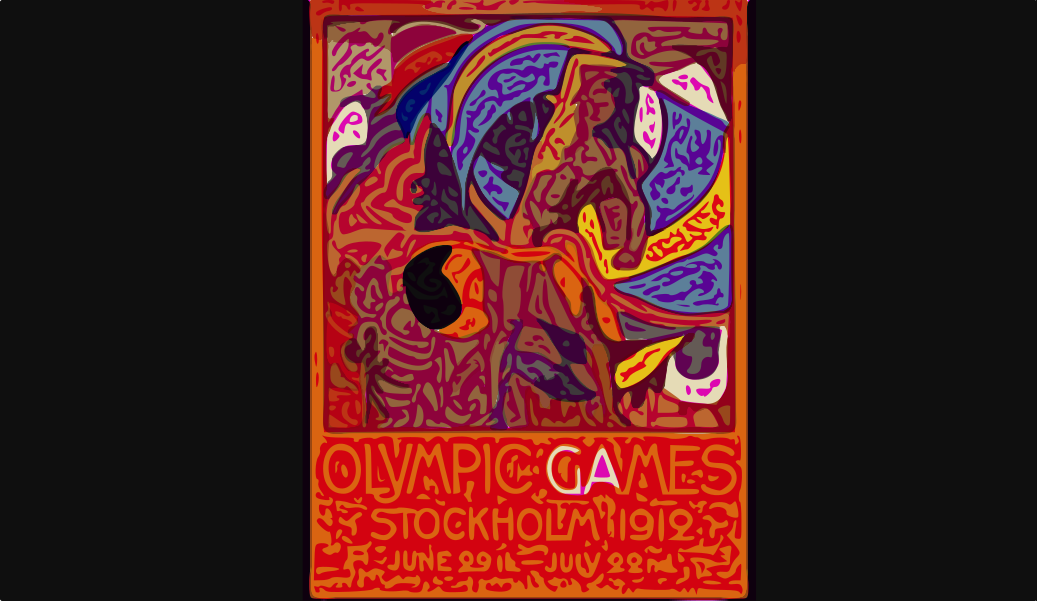
The 1912 Stockholm Olympics came at a crucial moment in football’s development. Europe was on the brink of monumental change, with tensions that would soon lead to the outbreak of the First World War. Against this backdrop, the Olympic football tournament offered a rare opportunity for nations to come together in the spirit of friendly competition, a chance to put aside political differences and unite through sport. It was also a moment for football to demonstrate its potential as a truly global game, capable of captivating audiences across continents.
As the world gathered in Stockholm, the football tournament promised to be one of the highlights of the Games. The Swedish hosts were determined to make their mark, both on and off the field, and the tournament attracted teams from across Europe, eager to compete on the international stage. This was an era before the professionalisation of football, where amateur players represented their countries with pride, and where the ideals of sportsmanship and fair play were held in the highest regard.
The 1912 tournament was more than just a series of matches; it was a statement of football’s growing importance in the world of sport. It marked a moment when football began to transcend its origins, becoming not just a game, but a symbol of national pride and international camaraderie. As the teams took to the field in Stockholm, they were not only competing for a place on the podium but for the honour of their nations, and for the future of football itself.
The tournament would go on to leave a lasting legacy, influencing the development of international football for decades to come. It was a pivotal moment in the history of the sport, one that would set the stage for the future of Olympic football and the rise of global competitions like the FIFA World Cup. As we look back on the 1912 Stockholm Olympics, we see not just a series of matches, but the dawn of a new era in football history.
The Road to Stockholm
The Birth of Olympic Football
As the curtain rose on the 20th century, football was beginning to carve out a place for itself on the international sporting calendar. The Olympic Games, a beacon of modern athleticism revived in 1896, quickly recognised the potential of this burgeoning sport. Football’s inclusion in the 1900 Paris Olympics was a tentative first step—a demonstration sport with little fanfare and no official medals awarded. Yet, it hinted at the growing appetite for international competition.
The early Olympic tournaments were informal, reflecting the nascent state of international football at the time. In Paris, only a handful of teams participated, and the matches were largely overshadowed by other events. Still, the seeds were planted. By the time of the 1904 St. Louis Olympics, football had gained more traction, with a tournament featuring club teams from Canada and the United States. However, it wasn’t until the 1908 London Olympics that football was given full recognition as an official Olympic sport, marking a turning point in its development.
The 1908 tournament was organised under the auspices of the Football Association (FA), the governing body of English football, which was then one of the most powerful and influential football organisations in the world. The tournament featured six teams, with Great Britain, represented by the amateur side from the English FA, emerging as the dominant force. Their resounding victory over Denmark in the final showcased the superiority of British football at the time and set a high standard for future Olympic tournaments.
This success laid the groundwork for football’s continued inclusion in the Olympic Games. The 1912 Stockholm Olympics were the next chapter, and expectations were high. The International Olympic Committee (IOC), in collaboration with FIFA, the newly formed governing body for world football, sought to build on the momentum of the London Games. The Stockholm tournament was seen as an opportunity to further legitimize football as an Olympic sport and to promote it as a key element of the Games.
In the years leading up to the 1912 Olympics, FIFA had been working diligently to standardize the rules of the game and to establish a framework for international competition. The organisation, founded in 1904, was still in its infancy, but it was beginning to assert its authority over the sport. The decision to include football in the Stockholm Olympics was part of a broader strategy to expand the game’s global reach and to ensure that it was governed by a unified set of rules and regulations.
For the 1912 tournament, FIFA played a crucial role in overseeing the selection of teams and the organisation of the competition. The decision to limit participation to amateur players was in keeping with the Olympic spirit of the time, which emphasised fair play and sportsmanship over commercial interests. This was a period before the professionalisation of football had taken hold in most countries, and the Olympic tournament was seen as a showcase for the best amateur talent in the world.
The selection process for the 1912 tournament reflected the diversity of football’s development across Europe. While some nations, like Great Britain and Denmark, had well-established football cultures, others were still in the early stages of developing their national teams. The tournament featured a mix of experienced footballing nations and relative newcomers, each eager to make their mark on the international stage.
Great Britain, as the defending champions, were once again among the favourites. Their victory in 1908 had cemented their reputation as the preeminent footballing nation, and they approached the 1912 tournament with confidence. Denmark, too, had emerged as a strong contender, with a growing football tradition that had seen them reach the final in 1908. The Netherlands, who had also competed in London, were expected to be competitive, while Finland, Russia, and Hungary were looking to establish themselves as serious footballing nations.
The tournament’s format was designed to maximise the competitive element, with a knockout structure that ensured every match had high stakes. The draw was made with great anticipation, and the stage was set for what promised to be a thrilling competition. The Swedish organisers, keen to promote their country as a modern and progressive nation, spared no effort in preparing for the event. The tournament was to be held at the newly constructed Olympic Stadium in Stockholm, a state-of-the-art venue that reflected the ambitions of the hosts.
As the teams arrived in Stockholm, there was a palpable sense of excitement in the air. This was more than just a football tournament; it was a celebration of the sport’s growing international stature and a testament to its universal appeal. The 1912 Stockholm Olympics football tournament was poised to be a landmark event, one that would leave an indelible mark on the history of the game.
The Host Nation: Sweden’s Football Scene in 1912
Football in Sweden: An Emerging Force
As the 1912 Stockholm Olympics approached, Sweden found itself at a crossroads in its footballing journey. Football had taken root in the country relatively late compared to the rest of Europe, with the first organised matches being played in the late 19th century. Yet, by the early 20th century, the sport had gained a foothold in Swedish society, especially in the cities of Stockholm, Gothenburg, and Malmö.
The Swedish Football Association, founded in 1904, had been working tirelessly to promote the game across the country. Clubs were being established in major cities, and the sport was slowly becoming a regular fixture in Swedish sporting life. The rise of football in Sweden coincided with a broader movement toward modernisation, as the country sought to position itself as a progressive and forward-thinking nation. Hosting the 1912 Olympics was part of this strategy, and football was seen as a key element of the Games.
In the years leading up to the Olympics, Swedish football had begun to make strides on the international stage. The national team had competed in friendly matches against neighbours such as Denmark and Finland, gradually building its experience and reputation. However, the country was still in the early stages of developing a truly competitive footballing culture, and the 1912 Olympics were seen as a golden opportunity to showcase Swedish football to the world.
The decision to host the Olympics in Stockholm was a significant moment for Swedish sport. It was a chance for Sweden to demonstrate its organisational capabilities and its commitment to the ideals of the Olympic movement. The Swedish Olympic Committee, in collaboration with the Swedish Football Association, spared no effort in preparing for the tournament. A new Olympic Stadium was constructed, designed to be one of the most modern sporting venues in the world. The stadium would become the centrepiece of the Games, symbolising Sweden’s ambition to make its mark on the international sporting stage.
The Swedish football team that would compete in the tournament was a mix of seasoned players and promising young talents. Although the country’s football infrastructure was still developing, there was a sense of optimism surrounding the team. The players were drawn from the country’s leading clubs, many of which were based in Stockholm, and they were eager to prove themselves against the best teams in Europe. The tournament represented not only a challenge but also an opportunity for Sweden to establish itself as a serious footballing nation.
The Swedish public, too, was excited about the prospect of hosting the Olympics. The Games were seen as a celebration of Swedish culture and identity, and football, as one of the headline events, was expected to draw large crowds. The anticipation was palpable as the tournament approached, with the local newspapers covering every detail of the preparations. Football was still a relatively new sport in Sweden, but the enthusiasm for the game was growing rapidly, and the 1912 Olympics were set to be a turning point in the country’s footballing history.
The Teams: A Gathering of Football Pioneers
The Participants: Who Were They?
The 1912 Stockholm Olympics football tournament brought together a diverse group of nations, each with its own footballing traditions and ambitions. The tournament featured six teams: Great Britain, Denmark, the Netherlands, Finland, Russia, and Hungary. Each of these teams represented a different stage in the evolution of football in Europe, and their participation reflected the growing internationalisation of the sport.
Great Britain entered the tournament as the defending champions, having won the gold medal at the 1908 London Olympics. The British team was drawn from the ranks of the English Football Association’s amateur sides, which were widely regarded as the best in the world at the time. Football in Britain was deeply entrenched in the culture, with a long history of organised competition dating back to the 19th century. The British team was expected to dominate the tournament once again, and they approached the competition with a sense of confidence and determination.
Denmark was another strong contender, having finished as runners-up in 1908. Danish football had been on the rise since the late 19th century, and the country had developed a reputation for producing skilful and disciplined players. The Danish team was well-organised and tactically astute, with a core of players who had competed in the previous Olympic tournament. Denmark’s footballing culture was deeply rooted in the country’s social clubs, which provided a strong foundation for the development of the sport. The Danish team was eager to challenge Great Britain for the gold medal and to build on their success from 1908.
The Netherlands had also competed in the 1908 Olympics, finishing in fourth place. Dutch football was still in its formative years, but the country had a strong tradition of amateur clubs, particularly in cities like Amsterdam and Rotterdam. The Dutch team that travelled to Stockholm was composed of players from the leading clubs of the time, and they were seen as a competitive side capable of causing an upset. Football in the Netherlands was growing rapidly, with the establishment of regional leagues and the increasing popularity of the sport among the general public.
Finland was a newcomer to the international football scene, having only recently established a national football association. The Finnish team was an unknown quantity, but they were determined to make their mark in Stockholm. Football in Finland was still in its early stages of development, with the sport primarily centred around the capital, Helsinki. The Finnish team faced an uphill battle against more established footballing nations, but their participation in the tournament was a significant step forward for the sport in the country.
Russia was another nation in the early stages of developing its footballing identity. The Russian Empire had a small but growing football scene, with the sport gaining popularity in cities like St. Petersburg and Moscow. The Russian team that competed in Stockholm was composed of players from the country’s nascent football clubs, and they faced a steep learning curve against more experienced opponents. Nevertheless, the tournament was an important opportunity for Russian football to gain exposure and to learn from the more established teams.
Hungary rounded out the field, bringing a team that reflected the country’s growing passion for football. Hungarian football had begun to take off in the early 20th century, with the establishment of the first national league in 1901. The Hungarian team that competed in Stockholm was composed of players from the country’s leading clubs, and they were eager to prove themselves on the international stage. Hungary’s participation in the tournament was a sign of the sport’s rapid development in Central Europe and a precursor to the country’s later success in international football.
The tournament’s lineup was a reflection of the diverse state of football in Europe at the time. While some nations had well-established footballing traditions, others were still finding their feet. The 1912 Stockholm Olympics provided a unique opportunity for these teams to test themselves against one another and to contribute to the growing internationalisation of the sport.
The Tournament: Match-by-Match Analysis
The First Round
The 1912 Stockholm Olympics football tournament kicked off with a series of matches that set the tone for the competition. The first round saw some expected results but also a few surprises, as teams from different footballing traditions clashed on the international stage.
Great Britain opened their campaign with a dominant performance against Hungary, asserting their superiority from the outset. The British side, composed of players from the upper echelons of amateur football, demonstrated their skill and tactical nous, overwhelming the Hungarian team with a display of crisp passing and clinical finishing. Hungary, although outclassed, showed flashes of promise, but they were ultimately unable to cope with the relentless pressure from the British. The match ended in a convincing victory for Great Britain, who looked every bit the defending champions.
Denmark also made a strong start to their tournament, defeating Norway in a match that showcased their disciplined approach and technical ability. The Danish team, building on their success from 1908, played with a cohesion that was lacking in their opponents. Norway, making their Olympic debut, struggled to find their rhythm, and despite their best efforts, they were unable to break down the Danish defence. Denmark’s victory set up a highly anticipated semi-final clash with Great Britain, a repeat of the 1908 final.
The first round also saw the Netherlands take on Sweden in a closely contested match. The Dutch, with their well-organised team, were able to edge out the hosts in a hard-fought encounter. Sweden, despite the backing of the home crowd, were unable to convert their chances, and the Netherlands’ superior experience told in the end. The match was a disappointment for the Swedish supporters, but it was a valuable learning experience for the host nation, which was still developing its footballing identity.
In the other first-round match, Finland faced off against Russia in a battle of two relatively unknown quantities. The Finnish team, despite their lack of experience, managed to secure a victory in a match that was more competitive than many had expected. Russia, while showing potential, were unable to find the back of the net, and Finland’s solitary goal was enough to see them through to the next round. The result was a significant achievement for Finnish football, marking their first victory on the international stage.
The Semi-Finals
The semi-finals of the 1912 Stockholm Olympics football tournament brought together four teams with contrasting styles and histories. The stage was set for two intriguing matchups, with Great Britain taking on Denmark and the Netherlands facing Finland.
The clash between Great Britain and Denmark was a rematch of the 1908 final, and it lived up to its billing as the marquee match of the tournament. Both teams entered the match with a point to prove—Great Britain as the defending champions and Denmark as the team looking to dethrone them. The match was a tense and tactical affair, with neither side willing to give an inch. Great Britain, with their superior technique and experience, eventually found a breakthrough, but Denmark responded with a goal of their own, setting up a thrilling finish. In the end, it was Great Britain who emerged victorious, securing their place in the final with a hard-fought win. Denmark, although disappointed, could hold their heads high after pushing the British team to the limit.
In the other semi-final, the Netherlands faced Finland in a match that pitted two relative newcomers to the international stage against each other. The Dutch team, buoyed by their victory over Sweden, were the favourites, but Finland, fresh from their win over Russia, were determined to cause an upset. The match was a tight contest, with both teams creating chances but struggling to find the finishing touch. The Netherlands, with their greater experience, eventually managed to break the deadlock, securing a place in the final against Great Britain. Finland’s journey ended in the semi-finals, but their performance had earned them respect and recognition as a team on the rise.
The Final: Great Britain vs. Denmark
The final of the 1912 Stockholm Olympics football tournament was a highly anticipated encounter between two of Europe’s strongest footballing nations. Great Britain, the defending champions, were looking to retain their title, while Denmark, the runners-up from 1908, were eager to claim the gold medal that had eluded them four years earlier.
The match took place in front of a large and expectant crowd at the Olympic Stadium in Stockholm. The atmosphere was electric, with both sets of supporters confident that their team could emerge victorious. The British team, composed of some of the best amateur players in the world, started the match strongly, controlling possession and dictating the pace of the game. Denmark, however, were not overawed by their opponents and defended resolutely, looking to catch the British on the counterattack.
As the match progressed, it became clear that this would be a closely contested affair. Both teams had their chances, but it was Great Britain who eventually made the breakthrough, scoring a goal that sent their supporters into raptures. Denmark responded with renewed vigour, pressing forward in search of an equaliser, but the British defence held firm. As the final whistle blew, Great Britain emerged as the victors, retaining their Olympic title and confirming their status as the dominant force in international football.
For Denmark, the defeat was a bitter pill to swallow, but they had once again proven themselves as one of the top teams in Europe. The final had been a showcase of high-quality football, with both teams demonstrating the skill, determination, and sportsmanship that the Olympic Games sought to promote.
The Aftermath: Legacy of the 1912 Tournament
Impact on the Participating Nations
The 1912 Stockholm Olympics football tournament left a lasting impact on the nations that took part, shaping the development of the sport in the years that followed. For Great Britain, the tournament reinforced their dominance in the amateur game, but it also highlighted the need for continued development as the sport moved towards professionalism. The British team’s success was a source of national pride, but there was a growing recognition that other nations were catching up, and that the future of football would require greater organisation and investment.
Denmark, despite their defeat in the final, emerged from the tournament with their reputation enhanced. The Danish team had shown that they were capable of competing with the best, and their performances in Stockholm laid the groundwork for the further development of football in Denmark. The tournament also helped to popularise the sport in the country, leading to increased participation and the growth of domestic competitions.
For the Netherlands, the tournament was a stepping stone in their footballing journey. The Dutch team’s strong showing in Stockholm boosted the profile of the sport in the Netherlands and contributed to the establishment of a more organised football structure in the country. The experience gained from competing against top-level opposition was invaluable, and it helped to accelerate the development of Dutch football in the years that followed.
Finland’s participation in the tournament marked the beginning of their journey on the international stage. Although they were eliminated in the semi-finals, their performances had demonstrated that they could compete with more established nations. The tournament provided a platform for the development of Finnish football, and it encouraged greater investment in the sport, both at the grassroots and national levels.
For Russia and Hungary, the tournament was a valuable learning experience. Both nations were still in the early stages of developing their footballing infrastructure, and the opportunity to compete against more experienced teams was a crucial step in their footballing evolution. The lessons learned in Stockholm would help to shape the future of the sport in both countries, contributing to the growth of football in Eastern Europe.
Influence on Future Olympic Football Tournaments
The 1912 Stockholm Olympics football tournament was a landmark event in the history of the sport, setting a standard for future competitions. The success of the tournament demonstrated the potential of football as a key part of the Olympic programme and helped to establish the sport as a central element of the Games. The lessons learned from the organisation of the tournament, particularly in terms of the format and the selection of teams, would inform the planning of future Olympic football competitions.
The tournament also highlighted the importance of international collaboration in the development of football. The involvement of FIFA in the organisation of the tournament helped to standardise the rules and ensure that the competition was conducted fairly. This collaboration between FIFA and the IOC would continue to play a crucial role in the evolution of Olympic football, leading to the establishment of the sport as a truly global competition.
The legacy of the 1912 tournament can be seen in the continued inclusion of football in the Olympic Games, as well as in the development of other international competitions, such as the FIFA World Cup. The tournament helped to lay the foundations for the future of football as a global sport, and its influence can still be felt today.
Profiles of Key Figures
Great Britain’s Golden Generation
The success of the Great Britain team in the 1912 Stockholm Olympics was built on the talents of a group of players who would go on to be remembered as one of the golden generations of British football. These players were drawn from the ranks of the best amateur clubs in the country, and they brought with them a wealth of experience and skill.
Harold Walden, the team’s star striker, was one of the standout performers of the tournament. Walden, who played for Bradford City in the Football League, was known for his exceptional goal-scoring ability and his composure in front of goal. He scored multiple goals during the tournament, including crucial strikes in the semi-final and final, and his performances were instrumental in Great Britain’s success.
Arthur Berry, the team’s captain, was another key figure. Berry, who had also captained the team to victory in 1908, was a skilful winger with a keen tactical mind. His leadership on and off the field was crucial to the team’s success, and he played a vital role in organising the team’s defence and attack. Berry’s experience and calm under pressure were invaluable, particularly in the tense moments of the final against Denmark.
Gordon Hoare, another forward in the team, was also a key contributor. Hoare, who played for both Arsenal and Fulham during his career, was known for his speed and agility. He provided the perfect complement to Walden’s goal-scoring prowess, and his partnership with Walden was one of the highlights of the tournament.
The success of these players in the 1912 tournament was a testament to the strength of amateur football in Britain at the time. However, it also marked the end of an era, as the sport began to move towards greater professionalism. The achievements of the 1912 team would be celebrated for years to come, but they also served as a reminder of the challenges that lay ahead for British football.
Denmark’s Brave Contenders
The Danish team that competed in the 1912 Stockholm Olympics was a well-drilled and disciplined side, known for their tactical intelligence and technical skill. Although they fell short in the final, their performances throughout the tournament were a reflection of the strength of Danish football at the time.
Sophus Nielsen, the team’s star forward, was one of the standout players of the tournament. Nielsen had made a name for himself in the 1908 Olympics, where he scored 10 goals in a single match against France—a record that still stands today. In 1912, he continued to demonstrate his goal-scoring ability, leading the Danish attack with aplomb. Nielsen’s speed, positioning, and clinical finishing made him a constant threat to opposing defences, and he was instrumental in Denmark’s run to the final.
Nils Middelboe, Denmark’s captain and a key figure in the team’s midfield, was another player who made a significant impact. Middelboe, who would later go on to play for Chelsea in the English Football League, was known for his vision and passing ability. He was the engine room of the Danish team, dictating the tempo of the game and linking defence with attack. Middelboe’s leadership and tactical awareness were crucial to Denmark’s success, and he was widely regarded as one of the best players of the tournament.
Harald Hansen, Denmark’s goalkeeper, also played a vital role in the team’s success. Hansen was known for his agility and shot-stopping ability, and he made several crucial saves throughout the tournament. His performances in the semi-final against the Netherlands and the final against Great Britain were particularly noteworthy, and he was widely praised for his bravery and composure under pressure.
The Danish team’s performance in the 1912 tournament was a source of great pride for the nation. Although they were unable to claim the gold medal, they had proven themselves as one of the top teams in Europe, and their success helped to raise the profile of football in Denmark. The players who competed in Stockholm would go on to become legends in Danish football, and their achievements would inspire future generations of Danish footballers.
Sweden’s Football Visionaries
As the host nation, Sweden played a central role in the organisation of the 1912 Stockholm Olympics football tournament. Although the Swedish team was eliminated in the first round, the tournament was a significant moment in the history of Swedish football, and it helped to lay the foundations for the sport’s future development in the country.
Gustaf Bergström, the president of the Swedish Football Association, was one of the key figures behind the tournament. Bergström had been instrumental in promoting football in Sweden, and he was a driving force behind the country’s bid to host the Olympics. His vision and determination were crucial to the success of the tournament, and he played a leading role in organising the event and ensuring that it ran smoothly.
Karl G. Andersson, the coach of the Swedish national team, was another important figure. Andersson was a passionate advocate for the development of football in Sweden, and he was committed to building a competitive national team. Although the Swedish team’s performance in the tournament was disappointing, Andersson’s work laid the groundwork for the future success of Swedish football. He was known for his innovative coaching methods and his emphasis on discipline and teamwork, and he would go on to play a key role in the development of football in Sweden.
Erik Börjesson, one of Sweden’s star players, was another key figure in the tournament. Börjesson was known for his skill and flair on the ball, and he was one of the few Swedish players to make an impact in the tournament. Although Sweden’s participation in the tournament was brief, Börjesson’s performances were a highlight, and he would go on to become one of the leading figures in Swedish football.
The 1912 Stockholm Olympics were a turning point for Swedish football, and the tournament played a key role in raising the profile of the sport in the country. The efforts of Bergström, Andersson, Börjesson, and others helped to establish football as a major sport in Sweden, and their work laid the foundations for the future success of the national team.
Cultural and Social Impact
Football and National Identity
The 1912 Stockholm Olympics football tournament was more than just a sporting event; it was a reflection of the growing importance of football as a symbol of national identity. For many of the nations that competed, the tournament was an opportunity to showcase their footballing prowess and to assert their place on the international stage.
For Great Britain, the tournament was a continuation of their dominance in the amateur game. The British team’s success was a source of national pride, and it reinforced the country’s reputation as the birthplace of modern football. The victory in Stockholm was seen as a validation of the British approach to the game, with its emphasis on skill, sportsmanship, and fair play. However, there was also an awareness that other nations were closing the gap, and that the future of football would require greater adaptation and innovation.
Denmark’s performance in the tournament was a reflection of the country’s growing footballing culture. The Danish team’s success was a source of pride for the nation, and it helped to raise the profile of football in Denmark. The tournament was also a moment of national unity, as the country rallied behind its team and celebrated their achievements. Denmark’s participation in the 1912 tournament was a significant step in the development of the country’s footballing identity, and it laid the groundwork for future successes.
For the Netherlands, the tournament was an opportunity to establish themselves as a serious footballing nation. The Dutch team’s strong showing in Stockholm was a reflection of the country’s growing football culture, and it helped to boost the popularity of the sport in the Netherlands. The tournament was also a moment of national pride, as the Dutch team’s performances captured the imagination of the public and helped to build a sense of national identity around the sport.
Sweden’s participation in the tournament was a reflection of the country’s ambition to establish itself as a modern and progressive nation. The decision to host the Olympics in Stockholm was part of a broader strategy to promote Sweden as a forward-thinking country, and football was seen as a key element of this effort. Although the Swedish team’s performance in the tournament was disappointing, the event helped to raise the profile of football in the country and to build a sense of national pride around the sport.
The tournament also had a broader cultural impact, as it helped to popularise football in countries where the sport was still developing. For Finland, Russia, and Hungary, the tournament was a valuable learning experience, and it provided a platform for the development of football in these countries. The opportunity to compete against more established nations was crucial in building the foundations for the future growth of the sport in these countries.
Football as a Global Game
The 1912 Stockholm Olympics football tournament was a milestone in the development of football as a global sport. The tournament brought together teams from across Europe, each representing a different stage in the evolution of the sport. The success of the tournament demonstrated the potential of football to bring nations together and to promote international understanding through sport.
The tournament was also a reflection of the growing importance of football as a key part of the Olympic programme. The inclusion of football in the Olympics helped to raise the profile of the sport and to establish it as a central element of the Games. The success of the 1912 tournament laid the groundwork for the continued inclusion of football in the Olympics and contributed to the development of other international competitions, such as the FIFA World Cup.
The tournament also highlighted the importance of international collaboration in the development of football. The involvement of FIFA in the organisation of the tournament helped to standardise the rules and ensure that the competition was conducted fairly. This collaboration between FIFA and the IOC played a crucial role in the evolution of Olympic football and helped to establish the sport as a truly global competition.
The 1912 Olympic Football Legacy
Monuments and Memories
The legacy of the 1912 Stockholm Olympics football tournament can still be seen today, both in the physical monuments that commemorate the event and in the memories of those who witnessed it. The Olympic Stadium in Stockholm, where the tournament was held, remains a symbol of the Games and a testament to Sweden’s ambition to establish itself as a modern and progressive nation.
In the years following the tournament, several memorials and statues were erected to commemorate the event. In Stockholm, a statue of Harold Walden, Great Britain’s star striker, was unveiled at the Olympic Stadium, celebrating his achievements in the tournament. Similar tributes were made in Denmark, where Sophus Nielsen was honoured for his contributions to Danish football.
The tournament also left a lasting impact on the participating nations. In Great Britain, the success of the 1912 team was celebrated for many years, and the players who competed in the tournament were hailed as heroes. The tournament was seen as a high point in the history of British amateur football, and it helped to inspire future generations of footballers.
In Denmark, the tournament was remembered as a moment of national pride, and the players who competed in Stockholm became legends in Danish football. The tournament helped to raise the profile of the sport in Denmark, and it contributed to the growth of football in the country.
The legacy of the tournament can also be seen in the continued inclusion of football in the Olympic Games. The success of the 1912 tournament demonstrated the potential of football as a key part of the Olympic programme, and it helped to establish the sport as a central element of the Games.
The Tournament’s Place in Football History
The 1912 Stockholm Olympics football tournament occupies a special place in the history of the sport. It was a turning point in the development of international football, setting a standard for future competitions and helping to establish football as a global game.
The tournament was also a reflection of the broader changes that were taking place in football at the time. It marked the end of an era of amateur dominance, as the sport began to move towards greater professionalism. The success of the British team in 1912 was a testament to the strength of amateur football, but it also highlighted the need for continued development as the sport evolved.
The tournament also played a key role in the development of football as a symbol of national identity. The participation of teams from across Europe helped to build a sense of national pride around the sport, and the tournament was seen as an opportunity to showcase the footballing prowess of each nation.
In the years that followed, the lessons learned from the 1912 tournament would inform the development of future international competitions, including the FIFA World Cup. The tournament helped to lay the foundations for the future of football as a global sport, and its legacy can still be felt today.
