


1. Introduction
The Day the Maracanã Stood Still
On the 16th of July, 1950, the Maracanã Stadium in Rio de Janeiro was a cauldron of anticipation. The air was thick with expectation as nearly 200,000 spectators, draped in the canary yellow of Brazil, filled the stands. The crowd, the largest ever to witness a football match, buzzed with the certainty of victory. The Brazilian team, dazzling and dominant throughout the tournament, seemed destined to claim the Jules Rimet Trophy on home soil. Samba rhythms reverberated around the colossal structure, a symphony of celebration seemingly heralding an inevitable triumph.
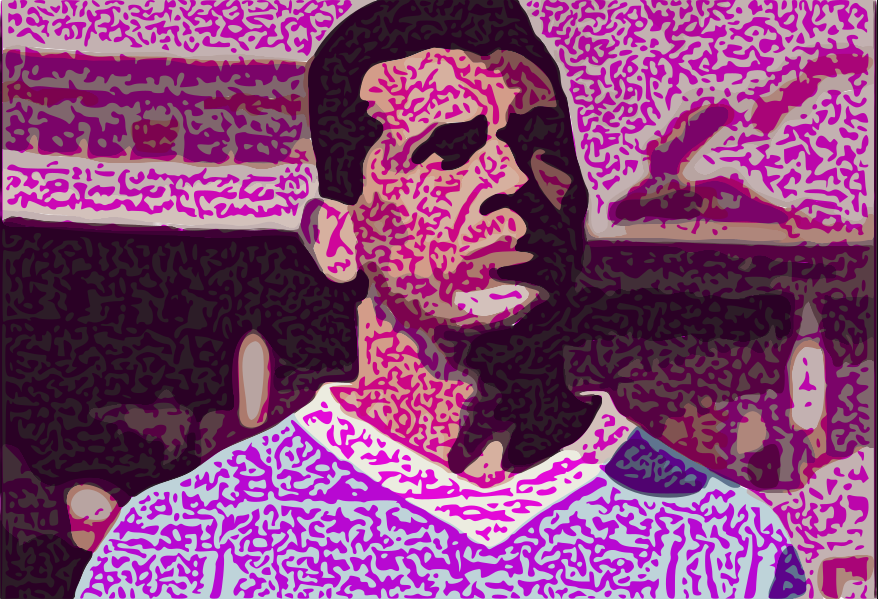
Yet, amid the cacophony, one man stood calm and resolute. Obdulio Varela, the captain of the Uruguayan national team, embodied an unyielding spirit. With his broad shoulders and steely gaze, Varela was the personification of leadership. He surveyed the scene, not as a man daunted by the fervour of the Brazilian supporters, but as a warrior ready to lead his team into the most significant battle of their lives.
Introducing Obdulio Varela
Varela’s journey to this historic moment was one marked by resilience and determination. Born in 1917 in the modest neighbourhood of La Teja in Montevideo, his rise through the ranks of Uruguayan football was a testament to his indomitable spirit. Known as “El Negro Jefe” (The Black Chief), he was more than just a player; he was the heart and soul of the Uruguayan team. His midfield prowess, characterized by his ability to read the game and his fierce tackling, made him a formidable presence on the pitch. However, it was his leadership, his ability to inspire and galvanize his teammates, that set him apart.
Uruguay’s Football Heritage
To understand the magnitude of Varela’s impact, one must appreciate the rich football heritage of Uruguay. The small South American nation had already etched its name in the annals of football history by winning the inaugural World Cup in 1930. Football was more than a sport in Uruguay; it was a source of national pride and identity. The 1950 World Cup presented an opportunity for Uruguay to reaffirm its status as a footballing powerhouse.
Uruguay’s journey to the final was anything but straightforward. They faced formidable opponents and navigated a path fraught with challenges. Yet, under Varela’s captaincy, the team displayed a blend of tactical acumen and sheer determination. His leadership was instrumental in fostering a sense of unity and belief among the players, driving them to overcome the odds and reach the pinnacle of world football once more.
As the sun began to set over the Maracanã, casting long shadows on the hallowed turf, Varela knew that this was more than just a match. It was a defining moment, not only for himself but for an entire nation. The stage was set for a clash that would go down in history, and at the heart of it all was Obdulio Varela, ready to lead his team into immortality.
2. Early Life and Rise to Prominence
Humble Beginnings in La Teja
Obdulio Jacinto Muiños Varela was born on September 20, 1917, in the gritty neighbourhood of La Teja, Montevideo. La Teja, a working-class district, was a place where resilience was not merely a trait but a necessity. The cobbled streets, lined with modest homes, bore witness to the daily struggles and triumphs of its inhabitants. It was in this environment that Varela’s character was forged, shaped by the lessons of hard work and perseverance.
From a young age, Varela displayed a natural aptitude for football. The dusty streets of La Teja served as his first training ground, where he honed his skills and nurtured his passion for the game. Football was a universal language in Uruguay, a means of escape and a source of hope. Varela’s early encounters with the sport were informal, yet they laid the foundation for his illustrious career.
The Path to Professional Football
Varela’s talent did not go unnoticed. In 1938, he joined the ranks of Club Atlético Progreso, a local team where he began to make a name for himself. His performances caught the eye of several top clubs, and it wasn’t long before he made the move to Club Atlético Wanderers. It was at Wanderers that Varela started to demonstrate the leadership qualities that would later define his career.
His commanding presence on the field, coupled with his exceptional ability to read the game, set him apart. Varela was not just a player; he was a tactician, orchestrating the play from midfield with a blend of intelligence and physicality. His reputation grew, and in 1943, he made a significant transfer to Club Nacional de Football, one of Uruguay’s most prestigious clubs.
Establishing Himself at Nacional
At Nacional, Varela’s career truly flourished. The club, steeped in history and tradition, provided the perfect platform for him to showcase his talents. Varela quickly became a cornerstone of the team, his influence extending beyond his on-field contributions. He was a natural leader, earning the respect of his peers and the adoration of the fans.
Nacional’s success during this period was in no small part due to Varela’s presence. His ability to dominate the midfield, breaking up opposition attacks and initiating offensive plays, made him indispensable. His leadership was equally impactful off the pitch, where he played a crucial role in maintaining team morale and unity.
Breaking into the National Team
Varela’s performances at the club level inevitably led to his selection for the national team. He made his debut for Uruguay in 1939, and it was immediately apparent that he was destined for greatness on the international stage. His debut was marked by a display of maturity and composure that belied his years. Varela quickly established himself as a key figure in the national setup, his leadership qualities earning him the captaincy.
As captain, Varela led by example. His presence was a source of inspiration for his teammates, who looked to him for guidance and motivation. Varela’s leadership style was characterized by a quiet confidence and an unshakeable belief in his team’s abilities. He was not one for grand gestures or fiery speeches; his actions on the field spoke louder than words.
The Build-Up to the 1950 World Cup
By the time the 1950 World Cup approached, Varela had cemented his reputation as one of the finest midfielders in the world. His leadership had been instrumental in guiding Uruguay through the qualifiers, and there was a palpable sense of anticipation as the tournament drew nearer. Uruguay had a proud footballing heritage, and the nation’s hopes rested heavily on Varela’s broad shoulders.
The 1950 World Cup was unique in many ways. Held in Brazil, it was the first World Cup after a 12-year hiatus due to World War II. The format was different, with the final round being a group stage rather than a single knockout match. For Uruguay, the path to glory was fraught with challenges, but with Varela at the helm, there was a steely determination to succeed.
As the team prepared for the tournament, Varela’s leadership was more crucial than ever. He instilled a sense of belief and unity within the squad, emphasizing the importance of resilience and teamwork. The stage was set for Uruguay to make their mark on the world stage once again, and at the heart of their quest for glory was Obdulio Varela, the indomitable captain ready to lead his team into battle.
3. The Journey to the 1950 World Cup
Navigating the Qualifiers
Uruguay’s path to the 1950 World Cup was not without its challenges. The South American qualifiers, though not as expansive as modern tournaments, were fiercely competitive. Uruguay faced Bolivia in a decisive match, a game that would determine their participation in the World Cup. Under Varela’s leadership, the team displayed a blend of tactical acumen and sheer determination. The match ended in a resounding 5-0 victory for Uruguay, securing their place in Brazil.
Varela’s role in this triumph was pivotal. His presence on the pitch was calming, his instructions clear and decisive. He orchestrated the midfield, breaking down Bolivian attacks and initiating forward plays with precision. This match was a testament to his ability to influence the game and inspire his teammates, setting the stage for what was to come in Brazil.
Arriving in Brazil
The journey to Brazil was filled with a mixture of excitement and anticipation. For many of the Uruguayan players, it was their first time competing on such a grand stage. The team arrived in Rio de Janeiro to a warm reception, though they were well aware that they were entering enemy territory. Brazil, the host nation, was considered the overwhelming favourite to win the tournament.
The Uruguayan squad settled into their training routine, with Varela ensuring that the team remained focused and united. His experience and leadership were invaluable during these early days. He organized team meetings, where he emphasized the importance of discipline and belief. The Brazilian media, and indeed the world, paid little attention to Uruguay, but Varela knew that this underestimation could be turned to their advantage.
The Group Stage Matches
Uruguay was placed in Group 4, alongside Bolivia. Their only group stage match was against Bolivia, due to the withdrawal of other teams. The encounter was crucial, as a victory would propel Uruguay into the final round. Varela led his team onto the pitch with his usual composure, knowing that a strong performance was essential.
The match was a display of Uruguay’s attacking prowess, ending in an 8-0 demolition of Bolivia. Varela’s midfield mastery was on full display, as he dictated the tempo and distributed the ball with surgical precision. His leadership was evident not only in his play but also in his ability to keep the team grounded despite the overwhelming victory. This win ensured Uruguay’s progression to the final round, where they would face Spain, Sweden, and the mighty Brazil.
Facing Spain and Sweden
The final round was a true test of Uruguay’s mettle. Their first match was against Spain, a formidable opponent with a reputation for skill and flair. The game was a hard-fought battle, ending in a 2-2 draw. Varela’s influence was crucial in maintaining the team’s composure and securing the valuable point. His defensive skills and ability to break up Spanish attacks were vital, as was his encouragement to his teammates to push forward and seek goals.
Next up was Sweden, a team known for their physicality and tactical discipline. This match was another stern test for Uruguay, who needed a win to stay in contention. Varela’s leadership shone once again, as he inspired his team to a 3-2 victory. His goal from the penalty spot was a moment of immense pressure, but he converted it with confidence, showcasing his nerve and composure.
The Decisive Showdown with Brazil
As Uruguay prepared for the final match against Brazil, the atmosphere was charged with anticipation. The hosts had been dominant throughout the tournament, scoring freely and capturing the imagination of the fans. The Brazilian media had already declared their team champions, with the final match seen as a mere formality.
Varela, however, had other plans. In the days leading up to the match, he focused on building his team’s confidence. He downplayed the hype surrounding Brazil and reminded his teammates of their own strengths and capabilities. His calm demeanor and unwavering belief instilled a sense of determination within the squad.
On the eve of the match, Varela made a symbolic gesture that would resonate deeply with his teammates. He took a walk around the Maracanã Stadium, absorbing the atmosphere and visualizing the game ahead. This act of quiet contemplation was a testament to his leadership style – one of reflection, resolve, and readiness.
The stage was set for one of the most iconic matches in football history. Varela knew that this was more than just a game; it was an opportunity to etch their names into the annals of football lore. With his leadership, Uruguay was ready to face the might of Brazil in a showdown that would become legendary.
4. The Maracanazo: A Historic Triumph
The Match Begins
The day of the match dawned with a palpable sense of destiny in the air. The Maracanã was a sea of Brazilian supporters, their cheers echoing through the massive stadium. Uruguay, under the leadership of Obdulio Varela, took to the pitch with a quiet determination. They knew the odds were stacked against them, but they were resolute in their belief that they could achieve the impossible.
The game kicked off with Brazil immediately asserting their dominance. Their attacking play was fluid and relentless, pinning Uruguay back into their own half. Varela, stationed in the heart of midfield, was a calming presence amidst the Brazilian onslaught. His tactical acumen allowed him to break up plays and direct his teammates, ensuring that Uruguay remained organized and focused.
Brazil Takes the Lead
Early in the second half, Brazil’s persistence paid off. Friaça, the Brazilian forward, found the back of the net, sending the Maracanã into rapturous celebrations. The Brazilian fans, convinced that victory was now assured, erupted with joy. For Uruguay, the challenge had just intensified. Varela, however, remained unflappable. He immediately took action to settle his team, famously holding onto the ball and arguing with the referee, a calculated move to diffuse the Brazilian momentum and calm his teammates.
Varela’s Inspirational Leadership
Varela’s leadership at this critical juncture was nothing short of inspirational. He rallied his teammates, urging them to remain focused and reminding them that they were still in the game. His belief in their ability was unwavering, and his confidence had a galvanizing effect on the team. As play resumed, Uruguay began to find their rhythm. Their passes became more precise, their movements more coordinated.
The Equaliser
Uruguay’s persistence bore fruit in the 66th minute. Juan Alberto Schiaffino, one of the team’s most talented forwards, received a precise pass from Ghiggia and coolly slotted the ball past the Brazilian goalkeeper. The Maracanã fell silent, the shock palpable among the Brazilian supporters. Uruguay had drawn level, and the match was now wide open.
The Winning Goal
With the scores level, the tension was unbearable. Brazil continued to press forward, but Uruguay’s defense, marshalled by Varela, held firm. Then, in the 79th minute, came the moment that would define the match and etch Uruguay’s name into football history. Alcides Ghiggia, a player of remarkable skill and composure, broke down the right wing, evading Brazilian defenders with ease. As he approached the Brazilian goal, he unleashed a powerful shot that slipped past the goalkeeper and into the net.
The Maracanã was stunned into silence. The unthinkable had happened – Uruguay had taken the lead. Varela’s reaction was one of controlled celebration. He knew there was still work to be done, and he immediately refocused his team, urging them to maintain their concentration and composure.
The Final Whistle
The remaining minutes of the match felt like an eternity for both sets of supporters. Brazil threw everything they had at Uruguay, but Varela and his teammates were resolute. When the final whistle blew, it signaled one of the greatest upsets in football history. Uruguay had triumphed against all odds, and Varela’s leadership was at the heart of this historic victory.
5. Aftermath and Legacy
Celebrations and Reactions
The victory sparked jubilant celebrations in Uruguay. The streets of Montevideo were filled with ecstatic fans, their joy unbounded by the magnitude of the achievement. Varela and his teammates were hailed as national heroes, their triumph a source of immense pride for the country. In Brazil, the reaction was one of profound shock and disappointment. The defeat, known as the “Maracanazo,” became a defining moment in Brazilian football history.
Varela’s Enduring Influence
Obdulio Varela’s influence extended far beyond the pitch. His leadership during the 1950 World Cup became a benchmark for future generations. He was celebrated not just for his footballing skills, but for his ability to inspire and unite his team. Varela’s calm under pressure, his tactical intelligence, and his unyielding belief in his teammates set a standard for what it meant to be a captain.
The Man Behind the Legend
Away from the spotlight, Varela was known for his humility and dedication to the sport. He continued to play for Nacional until his retirement, and his legacy was celebrated both in Uruguay and internationally. Varela’s story is one of resilience, leadership, and the power of belief. He remained involved in football, mentoring young players and sharing his vast knowledge of the game.
Conclusion: A Legacy of Leadership
Obdulio Varela’s legacy is one that transcends football. He exemplified the qualities of a true leader – resilience, tactical brilliance, and an unshakeable belief in his team. His role in Uruguay’s 1950 World Cup triumph is a testament to his impact on the sport. Varela’s story continues to inspire, reminding us that with determination and leadership, even the greatest challenges can be overcome. His legacy lives on, not just in the annals of football history, but in the hearts of those who cherish the beautiful game.
