


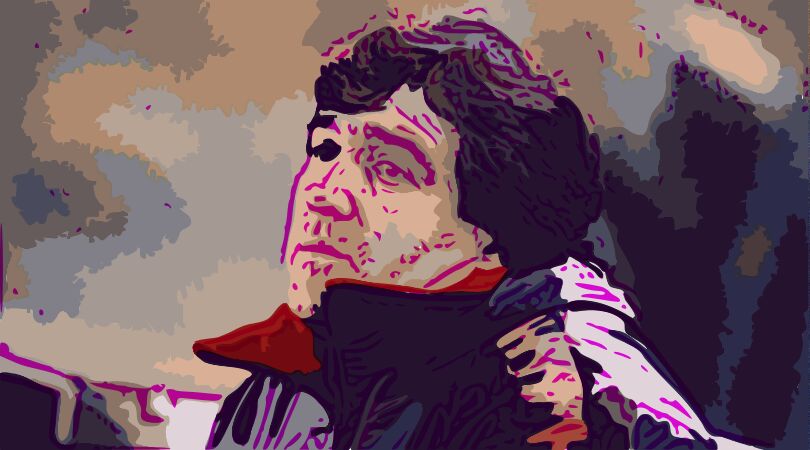
Following the sad loss of Terry Venables last week, Pete Spencer has written a series of obituary articles – this is the second in the series, you can read part one here.
Once into the top tier, QPR decided to offload Venables to Crystal Palace in an exchange deal seeing him and Ian Evans go to Selhurst Park as Don Rogers went the other way.
Palace were then in the Third Division having just suffered back-to-back relegations. He only made 14 appearances before retiring as arthritis took hold.
The Eagles were managed by Malcolm Allison. He’d earned a reputation as Joe Mercer’s assistant in a successful Manchester City side of the early 1970s. He immediately saw Venables’ coaching qualities and gave him a permanent role from 1975-76.
The two were building an exciting young team. Having been a winner of the FA Youth Cup as a player, the team he was coaching now lifted the trophy twice in successive seasons.
Also, in his first season as coach, they reached the FA Cup Semi-Finals. They lost to eventual winners, Southampton but the achievement of a Third Division club getting that far was huge news.
A month later Allison was off and Venables was now in charge of First Team duties.
In full control, he built on the success of the Youth team assembling a side which won two promotions in three years to reach the First Division, after an absence of six years.
The hype around the club was gathering pace. Former player Jimmy Greaves, who’d been in both England sides Venables played in, had become a pundit after his playing career was over. He predicted Palace could become the “team of the eighties”.
Things began well for the Eagles and when they beat Bobby Robson’s Ipswich Town, 4-1 at the end of September. They were top of the league. They didn’t lose a league game till the second week of October. Unable to maintain their early season form they still finished mid-table.
In the summer of 1980 Arsenal came calling for Palace’s talented left-back, Kenny Sansom. Unwilling to sell one of their greatest prospects, the club negotiated. Arsenal had only just signed another exciting young player, Clive Allen from QPR. Venables identified him as a player he admired. Goalkeeper Paul Barron was also part of the move, but Palace fans always felt the loss of Sansom.
Their second season in the First Division was in complete contrast to their first. By the second week of October 1979, they’d been near the top of the table. 12 months later they were rock bottom.
Behind the scenes, financial troubles were looming large.
There seems to have been a difference of opinion between the board and the manager. Venables left to return to QPR, then back in the Second Division.
Several players followed him such as Mike Flanagan, Terry Fenwick and then Clive Allen.
Still a Second Division team, QPR began an FA Cup run. They reached the Quarter-Finals and in a wonderful twist of fate, they were drawn out to meet Crystal Palace. They won the tie 1-0 and after beating West Brom by the same scoreline in the Semis, they were into their first ever FA Cup Final.
Venables proudly led his team out at Wembley against one of his former clubs, Tottenham. Spurs were the defending cup holders and filled with star names such as Glenn Hoddle, Ray Clemence, Steve Archibald and Garth Crooks.
A 1-1 draw saw both sides back again for a replay five days later. Another tight match was ultimately decided early on when Tony Currie brought down Graham Roberts in the penalty area and Glenn Hoddle scored from the spot.
Despite the defeat, Venables had earned many plaudits for the side he’d put together at Loftus Road. Rangers finished just two points off a promotion place. Things appeared rosy for promising young English managers as David Pleat’s Luton won the Second Division with Graham Taylor’s Watford in second.
Never a man to shirk from controversy, QPR caused a stir as they installed a ‘plastic pitch’ at Loftus Road. English football was beset by problems during the winter months as bad weather played havoc with the grassy pitches. Rangers were one of the first to make the decision to use a synthetic surface where snow could just be brushed away, allowing matches to go ahead.
Several other clubs followed suit, such as Luton and Preston but QPR always carried the label as the club which introduced the idea. Venables, as the figurehead took a lot of the brunt of the criticism from the rest of the league.
By now Venables had many business interests outside the game, such as a nightclub he owned. It never seemed to deflect him from his work around any club he was in charge of, but gradually the press became more obsessed with it.
Back in the early seventies, he co-wrote a series of novels about a cockney private detective called James Hazell. It was made into a TV series. Terry also appeared on television singing. He was always a fan of karaoke.
In addition to writing a novel, he invented a board game called, The Manager.
On the pitch, he guided QPR back to the First Division as Second Division champions in 1983, 10 points clear of Wolves. Their first season back saw them finish fifth, their highest finish since they were second in 1976.
UEFA Cup football beckoned for the following season. But then came the call from Spain.
The Barcelona board interviewed Alex Ferguson, then Aberdeen manager and Bobby Robson who was then the England boss. Robson’s England team had just failed to qualify for the European Championships but he wanted to continue his work there. Both suggested they employ Venables.
Many in Spain considered it a huge gamble. But Venables had earned a reputation as a tactical coach. Initially, the club offered him a one-year contract. He argued he needed at least two years otherwise it wasn’t worth him going over there. They eventually settled on three years.
The club had two of the best players around, Diego Maradona and Bernd Schuster. Almost as soon as he got his feet under the table at the Nou Camp, Maradona was off to Italy. The decision to offload the most expensive player in the world was out of his hands. Maradona had debt problems and was also in trouble with one or two unsavoury characters within the city in relation to his drug issues.
Unbowed, Venables had a solution. He swooped for Steve Archibald from Tottenham. To say the fanbase was underwhelmed was an understatement. But Venables had other ideas.
It took him just a couple of weeks to drill his defence into the way he wanted them to play. He employed a pressing system we’re all familiar with these days. Back then, no one had seen it.
They raced to the La Liga title in his first year. It was not a narrow win, they won it by 10 points when there were just two points for a win. Even better they were a massive 17 points ahead of Real.
Only two players scored more goals than Archibald, whose 15 goals vindicated his manager’s faith in him.
EL Tel was the toast of Barcelona.
The following season they were back in the European Cup after a gap of 10 years. They beat Juventus in the Quarter-Finals but then lost 0-3 in the first leg against Gothenburg in the Semi-Finals. Pichi scored a hat-trick back at the Nou Camp in front of 120,000 people and the tie went to a penalty shootout. They were the first to miss but went on to win 5-4.
The Final was in Seville against Romanian champions, Steaua Bucharest. A dire game was goalless after 120 minutes. Another shootout ensued.
In one of the worst shootouts ever seen, both sides missed their first two kicks. The Romanians scored their third but again Barca missed. When Balint scored it put all the pressure on Marcos. He missed and Steaua became the only Romanian club to win a European trophy.
It was a huge disappointment for the manager, especially after they’d finished well short of Real in La Liga.
The season ended with victory over Real Betis in the Copa de la Liga but then defeat to Real Zaragoza in the Copa del Rey.
During the summer Venables pounced again on talent from the English league. The 1986 World Cup in Mexico had seen England’s Gary Lineker finish with the Golden Boot as top scorer. He was playing with Everton, who’d just finished second in the league to Liverpool. One of the most sought-after players in the world was now a Barcelona player.
Not content with that, he plumped for Manchester United’s Mark Hughes as an attempt to bolster their striking options.
What El Tel didn’t realise at the time was he didn’t truly understand the psyche of the Catalonian. He thought having brought a long-awaited La Liga title and then a European Cup Final to the place, it would cement his position as a sort of messiah. He probably thought La Liga was the most important title but the locals really wanted a European Cup trophy. Real had five by that stage. Back in 1960-61 Barca became the first club to knock Real out of the European Cup. Eventually losing in the Final to Benfica.
If Venables thought the Seville defeat could be a stepping stone for a club getting back on its feet, he hadn’t figured on the supporters mourning it like the loss of a child.
The contrast in fortunes for the new signings couldn’t have been more stark. Hughes proved to be a big disappointment scoring just five goals all season. Lineker hit 21 in all matches that season. He scored within two minutes of the opening game of the season against Racing Santander, hitting a second later in the game. At the end of the season, Hughes was loaned out to Bayern Munich where he seemed far happier, eventually finding his way back to Old Trafford.
They were in with a shout of the La Liga 1986-87 until defeat at Real Sporting in the penultimate game put paid to those hopes.
In the UEFA Cup, there were mutterings amongst the locals after they struggled to get past Albanian and Portuguese opposition on away goals. Into the Quarter-Finals they were up against Dundee United. Trailing from the first leg at Tannardice they lead at half-time in the second leg. But two late goals from the Scots caused a huge shock.
The knives were well and truly out.
Defeats in each of the opening three matches of the new season finally closed the page on El Tel’s Spanish chapter as the Barcelona board had, had enough.
Join us soon for the next part in the Terry Venables story.
